
Liquid Crystal Display (LCD) Modules Information
Last revised: January 24, 2025

Liquid crystal display (LCD) modules are used at the component level in place of less efficient displays such as cathode ray tubes (CRTs). These modules do not include housing and must be incorporated into a larger instrument or system. Liquid crystal displays (LCD) belong to the class of nonemissive technologies, or displays that do not generate light of their own but control the transmission or reflection of an external light source.
A liquid crystal display utilizes two sheets of polarizing material with a liquid crystal solution between them. When an electric current is passed through the liquid it causes the crystals to align so that light cannot pass through them. Each crystal acts as a shutter, either allowing light to pass through or blocking the light. LCDs alter the optical path of light when an electric field is placed across the liquid crystal material.
Display Type
Liquid crystal display (LCD) modules can have a character or graphic display.
- Character displays can show only numbers or letters and numbers.
- Graphic displays are capable of displaying graphs and pictures. They are dot matrix displays.
Physical Specifications
Important physical specifications to consider for liquid crystal display (LCD) modules include character specifications, viewing area specifications, and external dimensions.
- Character specifications include number of lines in the display and the number of characters per line.
- Viewing area includes the width and the height.
- External dimensions of width, height, and length should also be considered.
Module Type
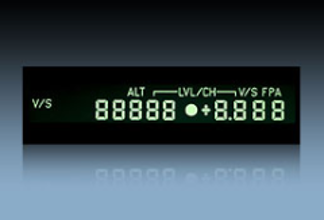
The type of liquid crystal display (LCD) modules defines how the display will look. It defines the character, the background color, and the character to background contrast. Types include twisted nematic (TN), super twisted nematic (STN), and film compensated super twisted nematic (FSTN).
Twisted nematic is the most basic LCD display. It is also the least expensive. It produces black characters on a gray background. It provides the smallest viewing angle.
Super-twisted nematic displays employ up to a 270-degree rotation. This extra rotation gives the crystal a much steeper voltage-brightness response curve and also widens the angle at which the display can be viewed before losing much contrast. Yellow - Yellow-green background with dark blue pixels. Gray - Light gray background with dark gray pixels. Blue is also available.
Film compensated super twisted nematic is the high end of LCD displays, and provides the best contrast. It produces black characters on a white background. It provides a good viewing angle. This technology is typically available only on the larger graphic modules.
Backlights for liquid crystal display (LCD) modules include electro luminescent (EL), light emitting diode (LED), and fluorescent lamp (CCFL). Electro luminescent and LED backlit LCDs are usable in all lighting conditions. Fluorescent lamp backlit LCDs are not usable in high ambient light conditions.
Some LCD modules do not have backlights; these are not usable in ambient light conditions. Liquid crystal display (LCD) modules may have built-in controllers and serial interface options.
Standards
BS EN 61747-3 — Liquid Crystal Display Devices — Part 4-1: Matrix Color LCD Modules — Essential Ratings And Characteristics
IEC 61747-4-1 — Liquid Crystal Display Devices — Part 4-1: Matrix Color LCD Modules — Essential Ratings And Characteristics
SEMI D36 — This standard is applicable to backlight units. The standard includes the terminologies of components used in backlight units, inspection and measurement used in backlight unit industry as well as panel and instrument industry. The other areas are handled in other SEMI standard documents.
LCD Modules FAQs
How do physical specifications like resolution and contrast ratio influence the choice of an LCD module for specific applications?
The choice of an LCD module for specific applications is significantly influenced by physical specifications such as resolution and contrast ratio. Here’s how each factor plays a role:
Resolution
Graphic Detail: Resolution determines the level of graphic detail that can be displayed in a single image frame. Higher resolutions allow for more detailed and clearer images, which is crucial for applications requiring precise visual representation, such as medical imaging or detailed graphical interfaces.
Readability and Data Display: In industrial applications, increased resolution allows for better readability and the ability to display more data on a single screen. This is particularly useful for viewing complex figures, waveforms, and graphical data without cluttering the display.
Contrast Ratio
Readability in Various Lighting Conditions: A higher contrast ratio improves display readability, especially in bright environments. For instance, industrial displays often require contrast ratios of 500:1 or greater to ensure visibility from a distance and under varying lighting conditions.
Color Differentiation: Contrast is crucial for distinguishing between different colors and shades, which is essential for applications where accurate color representation is necessary, such as in design and media.
These specifications must be carefully matched to the requirements of the application to ensure optimal performance and user satisfaction.
How do different environments affect the choice of LCD modules?
The choice of LCD modules is influenced by the environment in which they will be used. Here are some key environmental factors that affect this choice:
Lighting Conditions
Brightness and Contrast: In environments with varying lighting conditions, such as outdoor settings or industrial environments, the brightness and contrast of the LCD are crucial. High contrast ratios, such as 500:1 or greater, are recommended for better readability in bright environments. Additionally, transflective LCDs, which can operate in both transmissive and reflective modes, are suitable for environments with variable lighting, as they can use a backlight in dim lighting and reflective properties in bright lighting.
Temperature Variations
Operating and Storage Temperature: LCD modules must be chosen based on their ability to operate and be stored within the temperature ranges of the intended environment. Extreme temperatures can affect the performance and lifespan of the display.
Viewing Angles
Readability from Different Angles: In industrial or public display settings, the viewing angle is important to ensure that the display is readable from various positions. This is particularly relevant in environments where users may not be directly in front of the display.
Power Consumption and Heat Dissipation
Efficiency in Power Usage: In environments where power efficiency is critical, such as portable devices or battery-operated equipment, choosing LCDs with lower power consumption and effective heat dissipation is important.
Reflectivity
Glare Reduction: In environments with high ambient light, such as outdoors, displays with low reflectivity are preferred to reduce glare and improve visibility.
These factors must be carefully considered to ensure that the LCD module performs optimally in its intended environment.
What are the trade-offs between resolution and power consumption in LCD modules?
The trade-offs between resolution and power consumption in LCD modules can be understood through the following points:
Resolution and Graphic Detail
Higher resolution in LCD modules allows for more detailed and clearer images, which is crucial for applications requiring precise visual representation, such as medical imaging or detailed graphical interfaces.
However, increasing resolution typically requires more pixels to be driven, which can lead to higher power consumption as more energy is needed to control and illuminate these additional pixels.
Power Consumption
Power consumption is a critical factor, especially in portable and battery-operated devices. Higher resolution displays generally consume more power due to the increased number of pixels and the need for more complex driving electronics.
Transflective LCDs can help mitigate power consumption by using reflective properties in bright lighting conditions, reducing the need for backlighting and thus saving power.
Balancing Act
The challenge is to find a balance between achieving the desired resolution for clarity and detail, and managing power consumption to ensure efficiency and longer battery life in portable devices.
This balance is often application-specific, where the requirements for image quality and power efficiency must be carefully weighed against each other.
What are the best practices for maintaining LCD longevity in harsh environments?
Temperature Management
Ensure that the LCD modules are capable of operating and being stored within the temperature ranges of the intended environment. Extreme temperatures can affect performance and lifespan, potentially causing slower response times or permanent damage.
Lighting and Contrast
Use displays with high contrast ratios, such as 500:1 or greater, to improve readability in bright environments without increasing power consumption. This can indirectly affect longevity by reducing strain on the display's components.
Power Consumption and Heat Dissipation
Choose displays with efficient power usage and effective heat dissipation. Excessive heat can degrade display components over time, so selecting displays with lower power consumption and good heat management is beneficial.
Reflectivity and Glare Reduction
In environments with high ambient light, opt for displays with low reflectivity to reduce glare and improve visibility. This can help prevent the need for excessive brightness, contributing to longer display life by reducing stress on the backlight and other components.
How does power consumption affect the lifespan of LCD displays?
The impact of power consumption on the lifespan of LCD displays can be understood through several factors related to heat generation and component stress:
Heat Generation
Higher power consumption in LCD displays often leads to increased heat generation. Excessive heat can degrade the components of the display over time, potentially reducing its lifespan. Effective heat dissipation is crucial to maintaining the longevity of the display.
Component Stress
Increased power consumption can put additional stress on the electronic components of the display. This stress can accelerate wear and tear, leading to potential failures or reduced performance over time.
Efficiency and Longevity
Choosing displays with lower power consumption can help mitigate these issues by reducing heat generation and stress on components. This is particularly important in environments where power efficiency is critical, such as in portable or battery-operated devices.
What are the best practices for reducing power consumption in LCD displays?
Use of Transflective LCDs
Transflective LCDs are effective in environments with variable lighting. They can operate in both transmissive and reflective modes, using a backlight in dim lighting and reflective properties in bright lighting. This reduces power consumption and heat production in reflective mode since the backlight isn’t used.
Optimize Contrast Ratio
Increasing the display’s contrast ratio can improve readability in bright environments without increasing power consumption. Displays with higher contrast ratios, such as 500:1 or greater, are better suited for industrial environments and help maintain visibility without additional power usage.
Efficient Power Management
Selecting displays with lower power consumption and effective heat dissipation is crucial. Excessive heat can degrade display components over time, so choosing displays with good heat management can help maintain longevity and reduce power usage.
How does contrast ratio optimization contribute to power efficiency in LCD displays?
Contrast ratio optimization contributes to power efficiency in LCD displays primarily by enhancing readability without increasing power consumption. Here’s how it works:
Improved Readability
Increasing the contrast ratio of an LCD display improves its readability in bright environments. This is particularly important in industrial settings where displays need to be visible from a distance or under direct sunlight.
Power Efficiency
A higher contrast ratio allows for better visibility without the need to increase the display's brightness. This means that the display can maintain good readability without consuming additional power, which is beneficial for power efficiency.
Reduced Backlight Usage
In environments with variable lighting, displays with optimized contrast ratios can reduce the reliance on backlighting. This is especially true for transflective LCDs, which can use reflective properties in bright lighting conditions, thereby reducing power consumption and heat production since the backlight isn’t used.
Overall, optimizing the contrast ratio helps in achieving a balance between maintaining display quality and reducing power consumption, which is crucial for applications where power efficiency is a priority.
LCD Modules Media Gallery
References
Image credits:
Lika Electronic | CEF Industries LLC
- AMLCD
- ARINC / Avionics
- Automotive Applications
- Built-in Controller
- Character Display
- Computer Applications
- Electro Luminescent (EL)
- Film Compensated Super Twisted Nematic (FSTN)
- Fluorescent Lamp (CCFL)
- Graphic Display
- Light Emitting Diode (LED)
- MIL-SPEC / Military
- Backlight: None
- Serial Interface Option
- Super Twisted Nematic (STN)
- Thin Film Transistor (TFT)
- Twisted Nematic (TN)
- LCD module
- small LCD display
- liquid crystal displays
- IR emitter
- LED backlight
- 8x1 Character LCD
- phico LCD
- low cost LCD display
- display alps LCD
- EEPROM 24c02 datasheet
- LCD board
- LCD cholesteric
- LCD module distributor
- nan ya LCD display
- 162a LCD
- 2x16 LCD display
- 3 digit LCD display
- 3.5 digit LCD display
- 4x16 LCD display
- 5.7 stn LCD
- electrochromic display
- futaba display
- head up display
- keychain thermometer
- LCD 18 pin
- LCD 2x20
- LCD display 4 digit numeric
- LCD display 4x20 control
- LCD display RS232
- lph display