Blowout and Well Control Handbook

Providing the most up-to-date techniques and tools for blowout and well control, this comprehensive guide reviews specific situations along with detailed procedures to analyze alternatives and tackle problems.
 TABLE OF CONTENTS
 In any well control situation, the pressures at the surface reflect the heart of the problem. A well out of control must obey the laws of physics and chemistry. Therefore, it is for the well control specialists to analyze and understand the problem. The well will always accurately communicate its condition. It is for us to interpret the communication properly.
As discussed in Chapter 2 on classical pressure control, when a kick is taken while drilling and the well is shut in, the shut-in drillpipe pressure and the shut-in casing pressure are routinely recorded. The relationship between these two pressures is very important. The applicability of the classic Driller's or Wait and Weight Method must be considered in light of the relationship between the shut-in drillpipe pressure and the shut-in casing pressure.
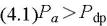
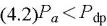
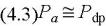
Consider the classical U-Tube Model presented as Figure 4.1. In this figure, the left side of the U-Tube represents the drillpipe while the right side represents the annulus. When the well is first shut in, the possible relationships between the shut-in drillpipe pressure, P dp, and the shut-in annulus pressure, P a, are described in In equalities 4.1 and 4.2 and Equation 4.3 as follows:
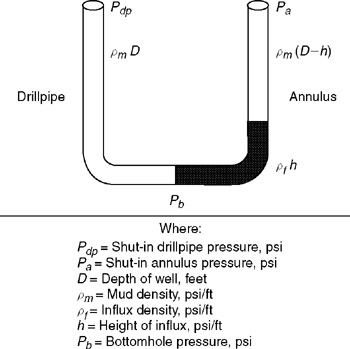
With respect to the U-Tube Model in Figure 4.1, the bottomhole pressure, P b, may be defined by the conditions on the drillpipe side and the conditions on the annulus side pursuant to Equations 2.6 and...