1.1 A Historical Perspective
One of man's earliest reasons for attempting to understand the motions of the sun, moon, and planets was his belief that they controlled his destiny. Other reasons were his need to measure time and later to use the celestial objects for navigation. Thus, the names assigned to the days of the week are closely related to the names of the celestial bodies: Saturn, Jupiter, Mars, sun, Venus, Mercury, and moon; by taking the first name and skipping two and repeating in this way, we have a partial derivation of the names of the week in French ( mardi, mercredi, jeudi, vendredi for (Tuesday-Friday) or English (Saturday, Sunday, Monday).
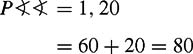
The earliest evidence of man's interest in the universe dates back to 1650 B.C. in Babylon and Egypt (e.g., the Ahmes Papyrus). This evidence shows an elaborate system of numeration in which positional or place-value notation was used. For example, clay tablets with cuneiform writing show that the following sexagesimal (base 60) system notation was used:
But
or
Thus, in this notation, 3; 3,45 would mean 3 + 3/60 + 45/3600 = 3.0625, etc. This system of numeration remained in use through the time of Copernicus, who would write 2, 9: 17, 22, 36 to mean 129th day (2 60 + 9), 17th h, 22nd min, and 36th s. The sexagesimal system is, of course, still the basis for modern timekeeping (i.e., 60 s/min, etc.).
In 300 B.C., Aristarchus developed a theory in which the sun...


 TABLE OF CONTENTS