Six Sigma Deployment
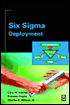
Offering a chronology of events from the origin of Six Sigma to the present, this unique book introduces the currently popular breakthrough strategy and explains how this compares to the original methodology.
 TABLE OF CONTENTS
 From the beginning of the quality revolution, Dr. W. Edwards Deming focused on the need for management leadership in the transformation of organizations into world class performers. In Six Sigma Deployment, the authors are not teaching statistical tools, but rather focusing on the critical role of management in developing and implementing a Six Sigma strategy for improvement. This book acknowledges that the Six Sigma DMAIC (define, measure, analyze, improve, and control) process is implemented through both the people and the systems and processes that are at work in the organization.
The authors'premise for the role of management is on the mark. If implementation of Six Sigma is to bring about world class performance in a company, then management must be able to see the opportunities for improvement and identify the criteria for prioritizing these opportunities. In order to achieve improvement in these opportunities, management must also be able to select and provide the proper training, career path, and compensation for the people who will lead the projects as Black Belts. Then management must be relentless in supporting Six Sigma and promoting awareness of the need to improve through the use of data in making decisions.
If the reader believes that defects cost money, that fewer defects means lower cost, that lowest costs give the ability to compete, that anything less than ideal is an opportunity for improvement, and that gaining data-generated knowledge for improvement of the processes is the most efficient path for lasting improvements, then the reader will...