Integral Mechanical Attachment: A Resurgence of the Oldest Method of Joining
Fully illustrating the major classes of integral mechanical attachments, this invaluable book explains how they work, and how they can be put to use to save time and money.
 TABLE OF CONTENTS
 There are some parts that have the function of holding other parts of an assembly together, of linking parts of one assembly to another, and/or of supporting and transmitting loads and/or motion in the process. This is often their sole function, and, yet, they cannot be considered to be mechanical fasteners. They also are, for the most part, rigid. That is, they maintain the shape and dimensions under all types of loading for which they are designed.
For lack of any better designation, these types of parts are grouped in this treatment under the sub-class of rigid couplings and connectors. Included under this sub-class are:
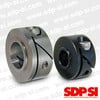
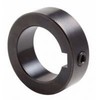
Collars and sleeves
Couplings
Clutches
The last category of parts is rather unique, as will be seen, in that they enable a connection to be made between parts or assemblies intermittently, as desired that is, on or off.
Collars are rigid parts used instead of shoulders or flanges to provide a surface for holding other parts on a shaft. Collars differ from shoulders or flanges in that they must be added to rather than being an integral part of the shaft, although the degree to which a collar can be made permanent (and, thereby, integral) varies with the means by which it is attached. At one extreme, collars can be made permanent and fully integral by welding them to the shaft. Only slightly less permanent, in reality, are collars that are press-fit or thermal shrink-fitted to...