Integral Mechanical Attachment: A Resurgence of the Oldest Method of Joining
Fully illustrating the major classes of integral mechanical attachments, this invaluable book explains how they work, and how they can be put to use to save time and money.
 TABLE OF CONTENTS
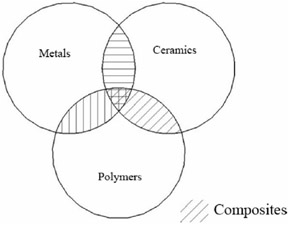
 Materials can be divided into three fundamental types or classes: metals, ceramics, and polymers, as shown schematically in Figure 8.1. [1] Metals are defined and described in Chapter 7, Section 7.1. Ceramics are defined and described in Chapter 9, Section 9.1. Polymers will be defined and described here, in preparation for consideration of attachment schemes and attachments appropriate to these interesting and important materials.
Polymers are defined as solid, nonmetallic, normally-organic [2] compounds of high molecular weight, the structure of which is composed of small repeat units known as mers (Callister, 2005). Many polymers occur naturally, being derived from plants and animals. Examples of such naturally-occurring polymers are wood (which is actually a composite of several polymers), rubber, cotton, wool, leather, and silk. Other natural polymers that are part of plants or animals are cellulose, starches, proteins, and enzymes, all of which are important in the biological and physiological processes that occur in living things.
Modern chemistry has enabled the creation of polymers that do not occur naturally. [3] These are synthesized from small organic molecules to produce much larger, higher molecular weight molecules. All plastics, many types of rubber, and many fiber materials are synthetic polymers. What is particularly exciting about synthetic polymers is that most can be produced relatively inexpensively, and their properties...