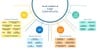
IT Manager's Handbook: Getting Your New Job Done

This is a how to be an IT manager book, and it covers every area possible and then some.
 TABLE OF CONTENTS
 A LAN (local area network) refers to the network that connects the devices in one geographic location, such as a single building. A LAN is based on any physical network technology designed to span distances up to a few thousand meters, although the "local" in LAN can sometimes be extended to include all the devices in a campus environment. As a general rule, a LAN's boundary is telecommunication facilities (T-1 lines, ISDN, etc.). These facilities are generally considered to be part of the WAN (wide area network).
Designing a LAN is like designing a house. It is dependent on needs, plans for future growth, and changes of use, and the definition of a good design can vary with changes and trends in the marketplace. The goals of a good LAN design should include the following:
Of course, there is no black and white, right or wrong, when it comes to LAN designs. Like designing a house,...