Class A ERP Implementation: Integrating Lean and Six Sigma
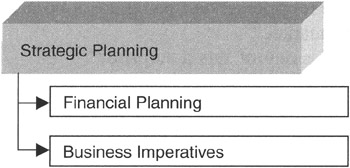
The enterprise resource planning (ERP) business model starts with the top-management vision. In Class A ERP, the business plan is made up of at least three components: (1) strategic planning, (2) financial planning, and (3) business goals (Figure 3.1).
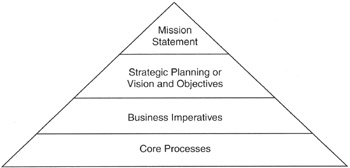
If we take business planning out of the ERP business model and look at it by itself in detail, it might be better depicted as a hierarchy of actions, only some of which are governed by the Class A ERP process itself.
Figure 3.2 depicts the elements in robust business planning and the processes that must exist for these objectives to take hold. The Class A ERP process itself does not dictate or prescribe methods for determining the vision of market success. Class A ERP performance does ensure the delivery of same. If a business expects a good-quality, sustainable experience within the performance objectives it has chosen, it just makes good sense that the business has processes in place that can deliver those results on a repeated basis. This means it must be easier to execute the process to the expected levels of performance than to not meet the goals.
There is an old saying: "Don't expect different results when you keep doing the same thing you did yesterday." There is a lot of truth to this. Too many businesses think improvement is about doing the same thing the same way, but working much harder and faster...