Fundamentals of Solid State Engineering, 2nd Edition
Problems

  1. In a space mission to Mars, it is needed to equip the research robot with a single mode laser to make sample absorbance/transmittance analysis to identify the unknown gases. Assume that all types of lasers (e.g. gas, solid state, liquid, semiconductor lasers) specified in the Chapter are offering wavelength ranges and power levels adequate for this application. Which one would you choose for this application? Specify which properties of this type of laser make it more suitable?

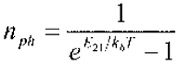
  2. Using the definition of the coefficients B 12 and B 21 given in sub-section 18.3.1, show that B 12= B 21. Take the photon field ?( E 21) as N( E 21) , n ph where N( E 21) is the density of energy states for the photon field and n ph is the average number of photons defined as .

  3. A laser diode has a gain peak between 4.45 4.65 ?m, and we want to have only a single mode at 4.5 ?m as output of this laser diode. What should be the length of the laser so that only a single mode is allowed within the laser? Take the refractive index within the active region as 3.2. (This type of laser is called short cavity laser).

  4. Find the spacing (free spectral width) of wavelengths between adjacent modes in a Fabry Perot cavity. Compare this with the mode spacing in terms of frequency. Which one would you prefer...

UNLIMITED FREE
ACCESS
TO THE WORLD'S BEST IDEAS

SUBMIT
Already a GlobalSpec user? Log in.

This is embarrasing...

An error occurred while processing the form. Please try again in a few minutes.

Customize Your GlobalSpec Experience

Category: Lasers
Finish!
Privacy Policy

This is embarrasing...

An error occurred while processing the form. Please try again in a few minutes.