MIMO Wireless Communications: From Real-World Propagation to Space-Time Code Design
Chapters 4 to 8 have dealt extensively with frequency flat fading channels. This last chapter is dedicated to signaling techniques in MIMO frequency selective channels, covering both single-carrier and multi-carrier transmissions. The same aspects as in the previous chapters will be addressed: the mutual information, the error probability and the code design.
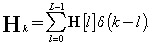
In Chapters 2 and 3, we have introduced the frequency selective MIMO channel matrix in the continuous time-delay domain as
| (9.1) | |
In what follows, we consider slow fading channels (the channel is constant over each frame) and the delay-sampled frequency selective representation, which is the combination of L flat fading taps (as already mentioned, L is generally different from n s)
| (9.2) | |
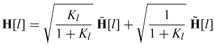
The l th tap H[ l] is characterized on its own by a statistical (flat fading) model
| (9.3) | |
where K l denotes the Ricean K-factor,
is the coherent component (constant from frame to frame) and
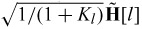
is the variable (Rayleigh) component whose entries are spatially correlated circularly symmetric complex Gaussian random variables. It is also generally assumed that taps fade independently (see Chapter 2).
There are basically two different approaches to transmit information over frequency selective MIMO channels. The first one consists in modulating a single carrier over the full bandwidth B (MIMO-SC), whereas the second approach converts the frequency selective channel into a set of multiple parallel flat fading channels in the frequency domain. This is realized by means of...