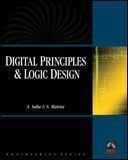
 | This text/reference provides students and practicing engineers with an introduction to the classical methods of designing electrical circuits, but incorporates modern logic design techniques used in the latest microprocessors, microcontrollers, microcomputers, and various LSI components. The book provides a review of the classical methods e.g., the basic concepts of Boolean algebra, combinational logic and sequential logic procedures, before engaging in the practical design approach and the use of computer-aided tools. The book is enriched with numerous examples (and their solutions), over 500 illustrations, and includes a CD-ROM with simulations, additional figures, and third party software to illustrate the concepts discussed in the book. |
 TABLE OF CONTENTS
 Digital Principles & Logic Design
Chapter 9 - Counters
Counters are one of the simplest types of sequential networks. A counter is usually constructed from one or more flip-flops that change state in a prescribed sequence when input pulses are received. A counter driven by a clock can be used to count the number of clock cycles. Since the clock pulses occur at known intervals, the counter can be used as an instrument for measuring time and therefore period of frequency. Counters can be broadly classified into three categories:
- (i) Asynchronous and Synchronous counters.
- (ii) Single and multimode counters.
- (iii) Modulus counters.
The asynchronous counter is simple and straightforward in operation and construction and usually requires a minimum amount of hardware. In asynchronous counters, each flip-flop is triggered by the previous flip-flop, and hence the speed of operation is limited. In fact, the settling time of the counter is the cumulative sum of the individual settling times of the flip-flops. This type of counters is also called ripple or serial counter.
The speed limitation of asynchronous counters can be overcome by applying clock pulses simultaneously to all of the flip-flops. This causes the settling time of the flip-flops to be equal to the propagation delay of a single flip-flop. The increase in speed is usually attained at the price of increased hardware. This type of counter is also known as a parallel counter.
The counters can be designed such that the contents of the counter advances by one with each clock pulse; and is said to operate in the count-up mode. The opposite is also possible, when the counter is said to operate in the count-down mode. In both cases the counter is said to be a single mode counter. If the same counter circuit can be operated in both the UP and DOWN modes, it is called a multimode counters.
Modulus counters are defined based on the number of states they are capable of counting. This type of counter can again be classified into two types: Mod N and MOD < N. For example, if there are n bits then the maximum number counted can be 2n or N. If the counter is so designed that it can count up to 2n or N states, it is called MOD N or MOD 2n counter. On the other hand, if the counter is designed to count sequences less than the maximum value attainable, it is called a MOD < N or MOD < 2ncounter.
© 2006-2026 Infinity Science Press. All rights reserved.