International Accounting Standards: From UK Standards to IAS: An Accelerated Route to Understanding the Key Principles
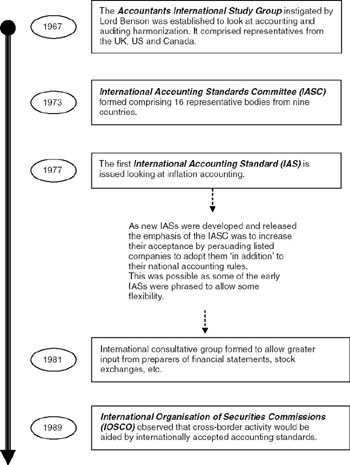
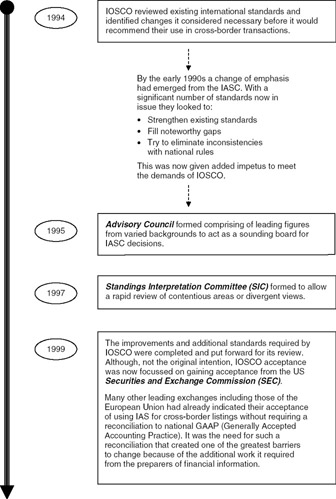
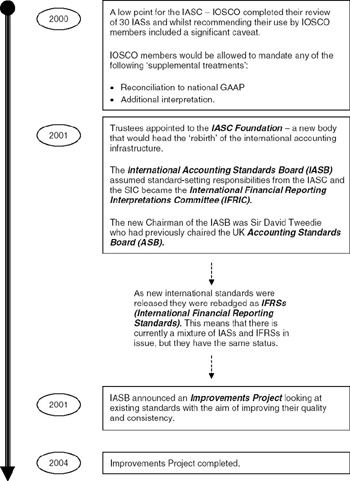
Our priority is to understand the impact of the transition from UK to current international accounting rules on company financial statements, but this will be easier if we have an overview of the sequence of events that brought us to the brink of this groundbreaking transition.


The member states of the European Union (EU) each have a rich social and economic history, and this extends to the development of national accounting best practice. However, this independent evolution creates challenges to the EU when trying to balance the retention of individual identity with the development of a single market that both encourages and reduces the costs of international trade between members.
The most common mechanism for creating uniformity has been the issue of Directives, which require member states to modify their national legislation to ensure compliance. This concept will be very familiar to accountants in the UK who have been effectively required to follow the EU Fourth and Seventh Directives.
| Fourth Directive | Prescribes financial statement formats, note disclosures and provides rules on valuation |
| Seventh Directive | Prescribes rules for the preparation of consolidated financial statements |
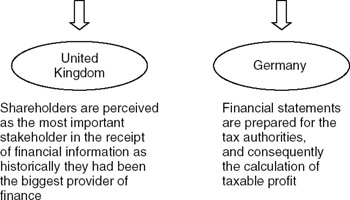
Some aspects of these Directives were undoubtedly compromises. This was not ideal but necessary to bridge some core conceptual differences between member states, the most noteworthy of which was the very purpose for which financial information was being created.

The EU recognized that, with aspirations to increase the number of member states,...