International Accounting Standards: From UK Standards to IAS: An Accelerated Route to Understanding the Key Principles

There is a basic premise common to both GAAPs that transactions only need to be disclosed if they are material. However, UK GAAP also contains the concept of two-way materiality when one of the related parties is an individual.
Materiality of related party transactions under UK GAAP
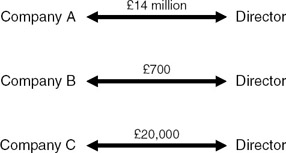
Companies A, B and C each have annual profits of 100 million. During the course of the last financial year they entered into transactions with a board director.
Under UK GAAP the director is a deemed related party, but the company finance directors now have to consider if the value of the transactions between the parties during the course of the last financial year warrant disclosure.

In the case of Company A there is no doubt that the amount is a material-related party transaction as it is material to the company and the individual.
The situation for Company B would seem equally clear-cut as 700 is not material to the company, and is unlikely to be material to a main board director of a public company.
Company C faces more of a dilemma as the amount is not material to the company but may be material to the director. If this is true UK GAAP will require disclosure in the financial statements as it requires a two-way view of materiality when one of the parties to the transaction is an individual.
In practice the situation is made more complex as the normal rules o
materiality do not apply when the...