Introducing Management: A Development Guide, Third Edition

Ideal for both new and existing managers, this comprehensive text incorporates the latest innovations in management thinking and reflects the changes within the management standards.
 TABLE OF CONTENTS
 Chapter Objectives
Who monitors results?
Who controls results?
Managers achieve results through people and other resources. That summarizes (though in a much over-simplified way) the message of the first chapter of this book. But it leaves several basic questions unanswered. It does not explain:
What results managers should achieve
How to make the best use of people
How to use other resources
What to do to ensure that work achieves the desired results.
This chapter provides answers to all of these questions.
People at work must know what is expected of them; they otherwise have no way of telling whether they have succeeded or failed. Even more importantly, they cannot decide what to do, what their priorities are or where to focus their effort. Equally, without objectives as a manager you will have no means of measuring performance.
Most organizations tackle this issue by ensuring that managers have a set of objectives to achieve. Traditionally those objectives were set using a cascade system. In other words, the organization would decide its corporate objectives through the strategic planning process, then pass those down, translating them at each level into objectives that would contribute to the achievement of the organization's corporate goals, as shown in Figure 23.1.
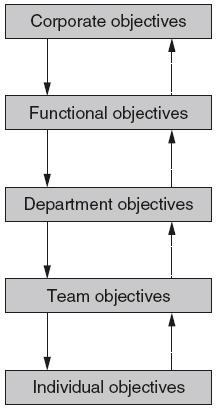
Many organizations still follow this traditional approach. Others, however, use what is known as a 'bottom-up, top-down' approach: this embraces the philosophy of greater staff consultation and involvement. This approach involves the organization setting broad corporate aims...