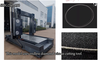
If a two axis CNC lathe programming presents enough challenges, the idea of a four axis lathe programming may seem a bit too much to handle, at least for the beginner in the CNC field. The actual situation is much simpler than that and here is the good news any four axis lathe is generally programmed as two independent two axis lathe programs. Of course, there are some expected differences, the greatest of them relates to certain several special functions the control system has to support. These are special programming functions that are specific to most of four-axis lathe applications these are functions unique to the particular 4-axis CNC lathe.
In principle, a four-axis lathe can be visualized as two two-axis lathes in one along with two control systems but both contained in a single machine. In terms of design, a four-axis lathe usually has one spindle and two independent turrets that must be synchronized to work simultaneously. The major advantage of using a four-axis CNC lathe is reduced setup and cycle time. That is not to say that all parts are suitable to machine on four-axis lathes. Although more tools can be mounted on two turrets than on one (usually up to 8 per turret), the main problem is often the lack of clearance, particularly for parts that are too small or too large.
Manual and CNC lathes with two turrets have been around for a long time, usually designed as flat-bed lathes, where the one turret is used mainly for external tools,...
Copyright Industrial Press Inc. 2005 under license agreement with Books24x7


 TABLE OF CONTENTS