Electrical Equipment Handbook: Troubleshooting and Maintenance

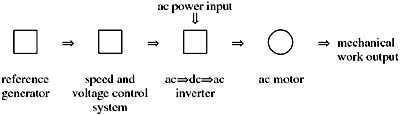
A variable-speed drive (VSD) is used to drive a motor at variable speed. The main parts of a VSD are

The control system of the VSD adjusts the output voltage and frequency so that the ratio of voltage to frequency remains constant at all times. The two modes of operation are as follows:
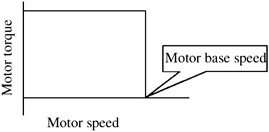
In this region, the motor increases in speed from zero to the rated base speed while the torque remains at the rated value (Fig. 10.1). The motor produces its maximum (rated) power at the base speed.
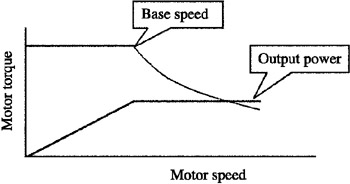
In this region, the motor operates beyond its base speed (Fig. 10.2). The frequency of the VSD is increased and the flux is decreased while the armature voltage is kept at its rated value. Since the motor was at its maximum power at base speed, the torque must be reduced when the speed is increased (power = torque speed).
The main component of a VSD is the inverter. It is a power converter that converts the fixed ac input voltage and frequency to a controlled variable voltage and frequency to operate a motor at the required speed (Fig. 10.3). An energy storage device separates the input from the output and allows each to operate independently. It is called a link filter. The incoming power can be structured to give a very high power factor and low harmonics...