Electrical Equipment Handbook: Troubleshooting and Maintenance

The typical operational problems encountered with generator rotors are
Shorted turns
Field grounds
Thermal sensitivity
Negative sequence heating
Contamination
Misoperation
Forging damage
A shorted turn fault (known also as a winding short or an interturn fault) occurs due to failure of the insulation between the winding turns of the rotor. These faults are not desirable. However, rotors have operated with a limited number of short turns without suffering significant effects on generator operation. Shorts can occur anywhere in the rotor winding. However, they are frequently located in the end windings under the retaining rings.
Ground faults are caused by the failure of the ground wall insulation. The generator should not be operated following a grounded fault in the rotor. A single ground fault will not cause a circulating current in the forging (the rotor body) because the source of excitation is ungrounded. However, if a second ground fault occurs, the current will circulate in the forging, causing melting and serious damage to the rotor insulation.
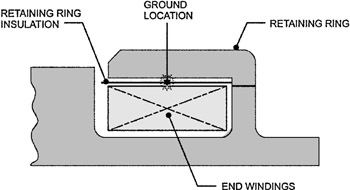
Figure 18.1 illustrates a winding short and a ground fault in the slot of a generator rotor. Figure 18.2 illustrates a ground fault in the end winding between the top turn of the winding and the retaining ring.
The following conditions can cause breakdown in the rotor insulation:
Operation Time During normal operation, the insulation is exposed to electrical, mechanical, and thermal...