7.4 Channel Protection
If the mean velocity exceeds that permissible for the particular kind of soil, the channel should be protected from erosion. Grass linings are valuable where grass can be supported. Ditch bottoms may be sodded or seeded with the aid of temporary quick-growing grasses, mulches, jute bagging, or fiberglass. Grass may also be used in combination with other, more rigid types of linings, the grass being on the upper bank slopes.
Linings may consist of stone dumped, hand placed, or grouted, preferably laid on a filter blanket, gravel, or crushed stone.
Asphalt and concrete-lined channels are used on many steep erodible channels.
Corrugated steel flumes or chutes (and pipe spillways) are favored especially in wet, unstable, or frost-heaving soils. They should be anchored to prevent undue shifting. Most types of fabricated or poured channels should be protected against buoyancy and uplift, especially when empty. Cutoff walls, half diaphragms, or collars are used to prevent undermining.
Ditch checks (slope-control structures) are used in arid and semi-arid areas where grass won't grow. However, where grass will grow, the use of ditch checks in roadway or toe-of-slope channels is discouraged because they are a hazard to traffic and an impediment to mowing equipment.
High velocity at channel exits must be considered and some provision made to dissipate the excess energy.
This subsection courtesy of American Iron and Steel Institute.
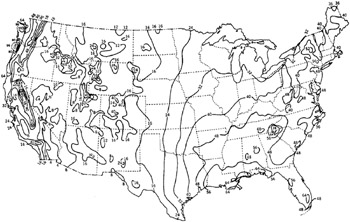 Figure 7.38: Average annual precipitation in United States. ( Source National Weather Service.)
 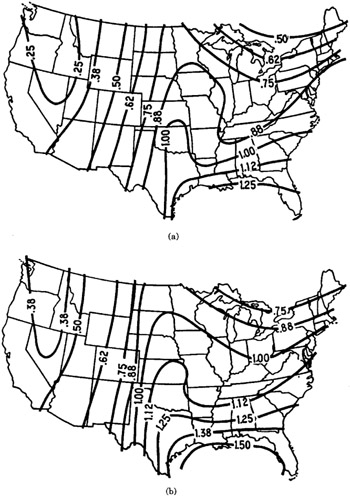 Figure 7.39: Fifteen-minute rainfall (in inches) expected once...
 TABLE OF CONTENTS