Mechanical Alloying: Fundamentals and Applications

Since its advent, the MA technique has been applied to develop various novel compositions and improve the performance of existing materials. Many of these are produced at industrial level and find applications in the commercial sector, while many are potential candidates to find an application. This is discussed in the following section.
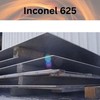
Four nickel-base superalloys are now produced commercially using the MA technique [1]. These are INCONEL MA 754, MA 758, MA 6000 and MA 760. The nominal composition of these alloys is given in Table 12.1. MA 754 has a solid solution strengthened Ni-20% Cr matrix with only low levels of titanium (0.5%) and aluminium (0.3%) along with 0.6% Y 2O 3 as the dispersoid. It can withstand up to 1100 C. MA 758 has been developed for resistance to molten glass corrosion. In MA 6000 alloy, tungsten and molybdenum provide solid solution strengthening. Chromium and aluminium with titanium, tantalum and tungsten improve oxidation and sulphidation resistance. MA 760 is a relatively new variant of commercial alloys prepared by MA. It has been designed for the purpose of achieving a balance of high-temperature strength, long-term microstability and oxidation resistance.
| Alloy | Ni | Cr | Al | Ti | Mo | W | Y 2O 3 |
|---|---|---|---|---|---|---|---|
| MA 754 | Bal. | 20 | 0.3 | 0.5 |
|
| 0.6 |
| MA 758 | Bal. | 30 | 0.3 | 0.5 |
|
| 0.6 |
| MA 6000 | Bal. | 15 | 4.5 | 2.5 | 2.0 | 4.0 | 1.1 |
| MA 760 | Bal. | 20 | 6.0 |
| 2.0 | 3.5 | 0.95 |
| [*] |