Mechanical Engineering Problems and Solutions, 6th Edition

With this guide, you'll hone your problem-solving skills as well as your understanding of both fundamental and more difficult topics for the Professional Engineering exam.
 TABLE OF CONTENTS
 In this chapter the performance characteristics of pumps, fans and turbines of the hydrodynamic type are reviewed. Emphasis is placed on the determination of the operating point for specific conditions and on the selection of appropriate machines.
Dimensional analysis leads to the definition of the following dimensionless variables:
| Capacity Coefficient | |
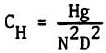
| Head Coefficient | |
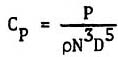
| Power Coefficient | |
| Efficiency | |
| Machine Reynolds Number | |
N is the machine speed in revolutions per unit of time; D is a characteristic dimension of the machine, such as the impeller or runner diameter. H is the change of total head across the machine. For fans, H is generally replaced by  where ?p is the increase in total pressure produced by the fan. Other symbols are as defined in Chapter 6.
When dealing with low viscosity fluids such as water and air, the effects of changes in the machine Reynolds number are negligible for the machine sizes and speeds generally encountered. For this reason the machine Reynolds number is omitted from the following relationships.
For geometrically similar pumps operating under conditions which ensure that the pressure is everywhere greater than the vapor pressure of the fluid, the head coefficient is a function of the capacity coefficient only. The significance of this statement is that the relationship among H, Q, N, and D for an entire family of geometrically similar pumps operating at different speeds can be represented by a single curve of C H vs. C Q. This knowledge...