Microchip Fabrication: A Practical Guide to Semiconductor Processing, Fifth Edition
Contamination Sources

General sources

Contamination in a cleanroom is defined as anything that interferes with the production of the product and/or its performance. The stringent requirements of solid-state devices define levels of cleanliness that far exceed those of almost any other industry. Literally everything that comes in contact with the product during manufacture is a potential source of contamination. The major contamination sources are:

  1. Air

  2. The production facility

  3. Cleanroom personnel

  4. Process water

  5. Process chemicals

  6. Process gases

  7. Static charge

Each source produces specific types and levels of contamination and requires special controls to render it acceptable in the cleanroom.

Air

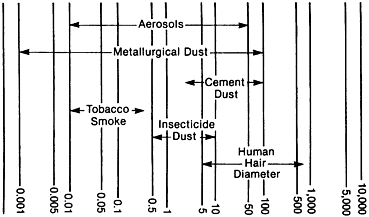
Normal air is so laden with contaminants that it must be treated before entering a cleanroom. A major problem is airborne particles, referred to as particulates or aerosols. Normal air contains copious amounts of small dust and particles, as illustrated in Fig. 5.5. A major problem with small particles (called aerosols) is that they "float" and remain in the air for long periods of time. Air cleanliness levels in cleanrooms are identified by the particulate diameters and their density in the air.


Figure 5.5: Relative size of airborne particulates (in microns).

Air quality is designated by the class number of the air in the area as defined in Federal Standard 209E.5 This standard designates air quality in the two categories of particle size and density. The class number of an area is defined as the number of...

UNLIMITED FREE
ACCESS
TO THE WORLD'S BEST IDEAS

SUBMIT
Already a GlobalSpec user? Log in.

This is embarrasing...

An error occurred while processing the form. Please try again in a few minutes.

Customize Your GlobalSpec Experience

Category: Air Showers
Finish!
Privacy Policy

This is embarrasing...

An error occurred while processing the form. Please try again in a few minutes.