Oscillator Design and Computer Simulation, Second Edition
Oscillators using resonators constructed from inductors and capacitors find wide application in electronic systems. L-C oscillators are more stable than R-C oscillators for both the long and the short term. As a consequence, L-C oscillators are almost exclusively used for general oscillator applications above the lower-frequency limit for which inductors are practical in size. Economic high quality capacitors are available for a wide range of values and seldom affect oscillator design as much as inductors. At low frequencies, the value of inductance required for reasonable reactance becomes large. Cores using magnetic materials help decrease the practical lower-frequency limit.
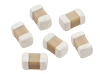
Capacitors used in the resonators of L-C oscillators should have a high Q and a stable temperature coefficient. Porcelain, ceramic, polystyrene, and silver mica capacitors are generally suitable, although silver mica capacitors can be somewhat erratic with temperature. At HF frequencies, polystyrene capacitors are an excellent choice. At VHF and higher frequencies, porcelain and ceramic are the best choices.
Ceramic material is available with a wide variety of temperature characteristics. The ceramic used in resonator capacitors should have an NPO or COG temperature characterization. Ceramic capacitors are available with a specified temperature characteristic, such as N750, N2200, and so on. N750 signifies a negative temperature characteristic of 750 parts per million per degree Celsius. Specified temperature characteristic capacitors are used to compensate the known or measured temperature drift of inductors or of the entire oscillator.
The Electronic Industries Association maintains standards on capacitors [1]. For example, the EIA designation...