Oscillator Design and Computer Simulation, Second Edition
As the operating frequency is increased, oscillator phase noise performance degrades. Oscillators with improved phase noise require higher loaded Q. Higher loaded Q requires higher unloaded Q, and for L-C oscillators, this means increased inductor physical size. There is an upper limit on inductor size before distributed self-capacitance and stray capacitance to ground become a problem. A potential solution to this problem is to use distributed (transmission line) resonators which may be larger and therefore have higher unloaded Q than inductors.
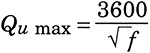
Recall from Chapter 8 that the maximum unloaded Q of inductors as a function of frequency in megahertz is approximately
| (9.1) | ![]() |
In practice this expression is optimistic at low frequencies and pessimistic at high frequencies. Above several hundred megahertz, higher unloaded Q can be obtained using transmission line resonators. For a given volume, transmission lines have an unloaded Q similar to that of inductors. However, transmission lines at a given frequency can be physically larger than an inductor. The upper frequency of transmission lines is limited by high-order moding. The unloaded Q and upper frequency limit for representative quarter-wave transmission line resonators are given in Table 9-1. The transmission line unloaded Q and moding frequency limits are computed using the physical model transmission line program, =TLINE= [1]. The unloaded Qs are with copper or silver metallization and the stated dielectric material, and include both conductor loss and dielectric loss.
| Construction |
|---|