Pneumatic Drives: System Design, Modelling and Control
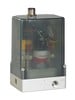
A pressure control valve is defined in ISO 5598 as a "valve whose function is to control pressure". In pneumatics, this usually means the reduction of the supply pressure produced by the compressor by throttling and is carried out by pressure regulators. But for some applications there are also pneumatic relief valves which open a passage to vent compressed air for example to the atmosphere if a critical pressure is reached. They are either used as safety devices to prevent the bursting of vessels or as charging valves in lorries to allow safe operation of several consumers with only one compressor.
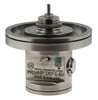
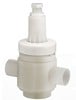
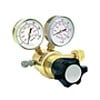
Pressure regulators, also known as pressure reducing valves, are used to reduce the pressure acting on downstream components of a pneumatic circuit. A pressure reducing valve is normally installed in a combined assembly of filter, regulator and sometimes lubricator (FRL unit) to prepare compressed air just before delivering it to pneumatic equipment or machinery. Other typical applications are the control of pressure for air tools such as screwdrivers and impact wrenches or controlling pressure to cylinders.
Typically, no dynamic information is available about pressure reducing valves. They should be regarded as low frequency devices. If high frequency disturbances occur, these are usually compensated for by stored compressed air either in the tubes connecting the components or in a separate storage tank.
General-purpose regulators have flow and regulation characteristics that meet the requirements of most industrial compressed-air applications. For three different set pressures, Fig. 14.2...