Protection of Electrical Networks
Suitable for engineers, technicians, designers and operators working with electrical networks, this book discusses network structures and grounding systems, as well as problems that can occur in networks.
 TABLE OF CONTENTS
 When a short-circuit occurs, a much larger current than the nominal current flows (10 to 100 times its value). This results in cables overheating which may damage the insulating material. The current must therefore be switched by a circuit- breaker or a fuse in a short enough time t s for the cable temperature not to reach a critical value.
The thermal losses per unit of length is proportional to the square of the current:

R L : resistance per unit length of the cable
If the current is not sinusoidal, the energy stored by the cable is:
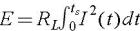
t s : switching time of the switching device
If we take the approximate value of a short-circuit sinusoidal current I sc, then:

I sc : r.m.s. value of the short-circuit current
In practice, the energy able to be stored in the cable depends on the conductor cross-section, the material of the core and the maximum temperature admissible in the insulating material.
A coefficient k, a function of the core material and the type of insulating material, is defined in LV (see Table 5-1) and can be applied in MV as follows:

| Insulating material Conductor | PVC or PE | PR or EPR |
| Copper | 115 | 135 |
| Aluminum | 74 | 87 |
hence:

or where 
where:
I sc : short-circuit current at A
t s : switching time of the switching device in seconds
S:...