Standard Handbook for Electrical Engineers, Fourteenth Edition
Kelly A.Shaw
General Manager, Medium Voltage Switchgear Business Unit,
Siemens Power T&D LLC Member IEEE
Kenneth C.Cornelius
Vice President, Siemens Energy and Automation
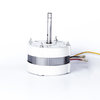
Types of Electric Motors. Electric motors provide motive power to a wide variety of domestic and industrial machinery. Their versatility, reliability, and economy cannot be equaled by any other form of drive. Successful motor application depends on selecting a type of motor which satisfies the kinetic starting, running, and stopping requirements of the driven machinery. There are several methods of classifying electric motors. First, based on the electric power supply, motors are classified as dc and ac motors. Figure 20-1 shows further classification of ac and dc motors based upon the stator and rotor construction.
Classifications based upon size and applications are micro, fractional-horsepower, integral-horsepower, gear, torque, servo, and stepper motors in both standard and premium efficiency designs. Various types of enclosures have been standardized by the National Electric Manufacturers Association, U.S.A. (NEMA). The following are the standard enclosure types and their characteristics:
| Types | Characteristics |
|---|---|
| Open: | |
| Dripproof | Operate with dripping liquids up to 15 from vertical |
| Splashproof | Operate with splashing liquids up to 100 from vertical |
| Guarded | Guarded by limited size openings (less than 3/4 in) |
| Semiguarded | Only top half of motor guarded |
| Dripproof fully guarded | Dripproof motor with limited-size openings |
| Externally ventilated | Ventilated with separate motor-driven blower; can have other types of protection |
| Pipe ventilated | Openings accept inlet ducts or pipe for... |