Steam Plant Operation, Eighth Edition
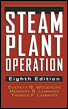
Packed with illustrations and fundamental descriptions, this definitive reference keeps readers current with the latest design methods of various systems and assists in all areas of steam plant operation.
 TABLE OF CONTENTS
 A boiler (or steam generator, as it is commonly called) is a closed vessel in which water, under pressure, is transformed into steam by the application of heat. Open vessels and those generating steam at atmospheric pressure are not considered to be boilers. In the furnace, the chemical energy in the fuel is converted into heat, and it is the function of the boiler to transfer this heat to the water in the most efficient manner. Thus the primary function of a boiler is to generate steam at pressures above atmospheric by the absorption of heat that is produced in the combustion of fuel. With waste-heat boilers, heated gases serve as the heat source, e.g., gases from a gas turbine.
A steam electric power plant is a means for converting the potential chemical energy of fuel into electrical energy. In its simplest form it consists of a boiler supplying steam to a turbine, and the turbine driving an electric generator.
The ideal boiler includes
Simplicity in construction, excellent workmanship, materials conducive to low maintenance cost, high efficiency, and high availability
Design and construction to accommodate expansion and contraction properties of materials
Adequate steam and water space, delivery of clean steam, and good water circulation
A furnace setting conducive to efficient combustion and maximum rate of heat transfer
Responsiveness to sudden demands and upset conditions
In general, the boiler must be conservatively designed to ensure reliable performance over the life of the...