Steam Plant Operation, Eighth Edition
Packed with illustrations and fundamental descriptions, this definitive reference keeps readers current with the latest design methods of various systems and assists in all areas of steam plant operation.
 TABLE OF CONTENTS
 The operators of today s industrial and utility power plants not only must be concerned with the production of steam for process or for the generation of electricity that will meet the demands of the plant, but also they must meet these demands within the confines of environmental restrictions. Thus the operators must be well aware of restrictions associated with their operating permit as related to air pollution, water pollution, noise, and other restrictive areas.
Operators must be well aware of the need for meeting all environmental requirements or their plants will face possible shutdowns and/or severe monetary penalties for not adhering to imposed regulations.
This chapter will concentrate on air pollution requirements and the equipment available to ensure compliance.
Environmental control is driven primarily by government legislation and the resulting regulations at the local, national, and international levels. These emission restrictions have evolved because of the public consensus that has determined that the costs of environmental protection are worth the tangible and intangible benefits now and in the future. The design philosophy of energy-conversion systems, such as steam generators, has evolved from providing the lowest-cost energy to providing low-cost energy with an acceptable impact on the environment.
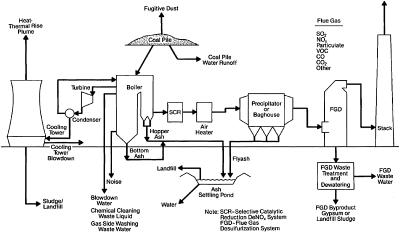
Figure 12.1 shows the significant waste streams from a modern coal-fired power plant. For a new 500-MW coal-fired boiler, the typical discharge rates for the significant emissions with and without control equipment are shown in Table 12.1.