Steam Plant Operation, Eighth Edition
Packed with illustrations and fundamental descriptions, this definitive reference keeps readers current with the latest design methods of various systems and assists in all areas of steam plant operation.
 TABLE OF CONTENTS
 Combustion control regulates the fuel to meet the demands for steam or hot water and maintains the ratio of air to fuel required for the best economy. The operator performs the remaining functions, which include purging the furnace, lighting the burners, adjusting dampers, opening and closing fuel valves, starting and stopping pumps, and turning burners on and off.
The entire combustion process is made automatic by having the unit come into service and shut down, as required, without hand manipulation. The degree of automatic control is made possible by the use of safety monitoring that checks every step of the operation. This is accomplished by means of sensing devices that detect abnormal conditions, including flameout, high pressure, low water level, high temperature, and low fuel pressure. The control either corrects the situation or warns that trouble exists and shuts the unit down safely.
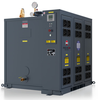
Automatic controls of this type are applied to units of all sizes. However, extensive economic justification has been found in the small and medium-sized package boilers. The package boiler (Fig. 5.44) is equipped with automatic controls capable of starting up and maintaining the firing rate as required for varying demands of steam. The control panel includes pressure and draft gauges, buttons for initiating the startup, lights for indicating the sequence of the cycle, and an annunciator to indicate specific causes of trouble. When two or more boilers are installed, the controls can be arranged to start additional units if a unit...