Steam Plant Operation, Eighth Edition
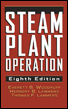
Packed with illustrations and fundamental descriptions, this definitive reference keeps readers current with the latest design methods of various systems and assists in all areas of steam plant operation.
 TABLE OF CONTENTS
 Waste-to-energy facilities are part of the solution of the worldwide solid waste disposal problem. These facilities, when combined with recycling of critical materials, composting, and landfilling, will be a long-term economic solution as long as they are designed and operated in an environmentally acceptable manner. All these options have problems, since they involve considerations such as politics, siting, public acceptance, and financing. However, these problems must be overcome because vast quantities of solid wastes are produced each day, and this waste has to be disposed of in some manner.
Resource-recovery facilities (waste-to-energy facilities) are not a new idea; in the 1890s the city of Hamburg, Germany, incinerated municipal refuse and used the resulting energy to produce steam and electricity. This technology was created in Europe because of the lack of available land for landfilling, and today Europe is a world leader in waste-to-energy facilities. Many portions of the United States now face this same problem. In 1903, the first solid-waste-fired plant that produced electricity in the United States was installed in New York City.
Refuse incinerators, as they were originally called, were basically refractory-lined furnaces that were designed to reduce waste. However, most of these incinerators did not recover the heat energy resulting from the combustion. A few installations did use separate waste-heat boilers for steam production. However, it was not until the early 1950s that waterwall incinerators (boilers) started to be designed and built.
In the 1970s, nearly all the municipal solid waste (MSW) generated in the...