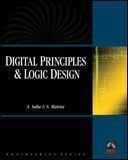
 | This text/reference provides students and practicing engineers with an introduction to the classical methods of designing electrical circuits, but incorporates modern logic design techniques used in the latest microprocessors, microcontrollers, microcomputers, and various LSI components. The book provides a review of the classical methods e.g., the basic concepts of Boolean algebra, combinational logic and sequential logic procedures, before engaging in the practical design approach and the use of computer-aided tools. The book is enriched with numerous examples (and their solutions), over 500 illustrations, and includes a CD-ROM with simulations, additional figures, and third party software to illustrate the concepts discussed in the book. |
 TABLE OF CONTENTS
 Digital Principles & Logic Design
Chapter 3 - Boolean Algebra and Logic Gates
Binary logic deals with variables that have two discrete values 1 for TRUE and 0 for FALSE. A simple switching circuit containing active elements such as a diode and transistor can demonstrate the binary logic, which can either be ON (switch closed) or OFF (switch open). Electrical signals such as voltage and current exist in the digital system in either one of the two recognized values, except during transition.
The switching functions can be expressed with Boolean equations. Complex Boolean equations can be simplified by a new kind of algebra, which is popularly called Switching Algebra or Boolean Algebra, invented by the mathematician George Boole in 1854. Boolean Algebra deals with the rules by which logical operations are carried out.
© 2006-2026 Infinity Science Press. All rights reserved.