
Fuse Power Strips
Description
Fuse power strips are electrical devices designed to distribute power to multiple outlets while incorporating a fuse for overcurrent protection. The primary function of these power strips is to provide a safe and convenient way to connect multiple electrical devices to a single power source, ensuring that the connected devices are protected from potential electrical faults.
Working Principle
Fuse power strips operate by integrating a fuse into the power distribution system. The fuse acts as a safety device that opens the circuit when an overcurrent condition occurs, such as a short circuit or overload. This is achieved by the fuse element, which is designed to melt when the current exceeds a predetermined level, thereby interrupting the flow of electricity and preventing damage to the connected devices. The usefulness of fuse power strips lies in their ability to protect electrical equipment from damage due to excessive current, enhancing the safety and reliability of the electrical system.
Applications
Fuse power strips are commonly used in residential and commercial settings where multiple electronic devices need to be powered simultaneously. Specific examples include home entertainment systems, where televisions, gaming consoles, and audio equipment are connected, and office environments, where computers, printers, and other peripherals require power. They are also used in workshops and laboratories to safely power tools and equipment.
Advantages over other Power Strips
One of the key advantages of fuse power strips over other types of power strips is their ability to provide reliable overcurrent protection. Unlike power strips with circuit breakers that can be reset, fuse power strips offer a more straightforward and often more cost-effective solution for protecting devices from electrical faults. Additionally, the simplicity of the fuse mechanism means fewer moving parts, which can result in increased durability and reliability.
Limitations
A significant limitation of fuse power strips is that once the fuse has blown, it must be replaced before the power strip can be used again. This can be inconvenient and may require keeping spare fuses on hand. Furthermore, if the underlying electrical fault is not addressed, replacing the fuse without fixing the issue can lead to repeated failures.
Considerations
When selecting a fuse power strip, several factors should be considered. Initial costs are generally low, making them an economical choice for basic overcurrent protection. However, operating expenses can increase if fuses need frequent replacement. Durability is typically high due to the simplicity of the design, but accuracy in protection depends on selecting the correct fuse rating for the intended application. Replacement and maintenance costs are generally low, but users should be prepared to replace fuses as needed and ensure that the power strip is used within its specified limits to avoid unnecessary failures.
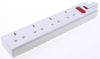
from RS Components, Ltd.
RS PRO ELS134W-01 Trailing Socket [See More]
- Protection: Thermal Fuse
- Outlets: Type g - british
- Number of Outlets: 4
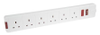
from RS Components, Ltd.
RS PRO SWFG6W Trailing Socket [See More]
- Protection: Thermal Fuse
- Outlets: Type g - british
- Number of Outlets: 6
- Features: On-Off Switch