
UV / Fluorescence Machine Vision Systems
Last Updated: April 1, 2025
Description
UV/Fluorescence Machine Vision Systems are specialized systems designed to automate visual inspection tasks by capturing detailed images using high-resolution cameras. These systems utilize ultraviolet (UV) light to illuminate objects, allowing for the detection of features that are not visible under normal lighting conditions. The systems are equipped with components such as industrial cameras, photodetectors, and electronics to produce output based on the captured images.
Working Principle
The working principle of UV/Fluorescence Machine Vision Systems involves emitting a beam of UV light, typically between 320 and 380 nm, onto the target material. The UV light causes certain materials to fluoresce, emitting visible light that is then captured by the system's cameras. The photodetector detects the UV light, and the electronics process the information to produce an output. This method allows for the detection of surface defects, label orientation, and other features with high precision and speed, often exceeding 30 frames per second. The systems are particularly useful because they can detect information that is invisible to the naked eye, providing a more comprehensive inspection capability.
Applications
UV/Fluorescence Machine Vision Systems are used in a variety of applications. They are employed in semiconductor inspection, where they help identify defects in microchips. In the food processing industry, these systems ensure quality control by detecting contaminants or defects in products. They are also used in forensic applications for the location and identification of materials, as well as in nondestructive testing to evaluate the integrity of materials without causing damage.
Advantages over other Machine Vision Systems
One of the key advantages of UV/Fluorescence Machine Vision Systems over other machine vision systems is their ability to detect features that are not visible under normal lighting conditions. This capability is particularly beneficial in applications like semiconductor inspection and forensic analysis, where detecting minute details is crucial. Additionally, these systems can operate at high speeds, providing rapid inspection and analysis, which is advantageous in high-throughput environments.
Limitations
Despite their advantages, UV/Fluorescence Machine Vision Systems have limitations. The cost of these systems is generally higher than that of standard sensors, which can be a barrier for some applications. Additionally, the systems require specific lighting conditions and may not perform well in environments with high ambient light or where the target material does not fluoresce under UV light.
Considerations
When considering the implementation of UV/Fluorescence Machine Vision Systems, several factors should be taken into account. Initial costs can be significant due to the advanced technology and components involved. Operating expenses may also be higher compared to standard systems, particularly if specialized maintenance is required. However, the durability of modern UV sensors, which offer more than 100,000 hours of operation, can offset some of these costs. Accuracy is generally high, but it is essential to ensure that the system is properly calibrated and maintained to achieve optimal performance. Replacement and maintenance costs should also be considered, as older versions of the technology, such as those using discharge lamps, have shorter lifespans and may require more frequent replacement.
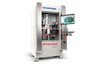
from Marposs Corp
DESCRIPTION. LASER HEADS are integrated over a precision moving axis that is designed to position the laser at the right distance for the 3D acquisition. Thanks to this functionality, the OptoCloud EDU not only can inspect different part typologies, for instance of different lengths. It can also... [See More]
- Image Source: UV / Fluorescence; Laser
- Applications: Gauging, Scanning & Dimensioning
- System Type: Turnkey / Complete System

from KEYENCE
CV-X100 Series Intuitive Auto-Teaching Machine Vision System. Power Meets Simplicity. Auto-Teach Inspection. Intuitive Programming Interface. Point and Click Geometric Measurement. Auto-Generate Manual. Full vision toolset (including 1D/2D/OCR). Intuitive interface allows users of all levels to... [See More]
- Image Source: Area Scan Camera; High Speed / Brightness; Multi-spectral; UV / Fluorescence
- Inspection Rate: 212
- System Type: Embedded / Vision Engine; Modular / PC-Based
- Number of Imagers Processed: 4