
Optical Industrial Joysticks
Description
Optical industrial joysticks are control devices that utilize a non-contact photoelectronic switch to detect movement. Unlike traditional joysticks that rely on mechanical switches or potentiometers, optical joysticks use light-based technology to register directional input. This design allows for precise control and is often used in environments where durability and reliability are critical.
Working Principle
Optical industrial joysticks operate by using a photoelectronic switch, which detects the position of the joystick handle without any physical contact. This non-contact method reduces wear and tear, as there are no mechanical parts that can degrade over time. The optical sensors detect changes in light patterns as the joystick is moved, translating these changes into electrical signals that control machinery or systems. This technology is particularly useful in applications requiring high precision and reliability, as it minimizes the risk of mechanical failure and provides consistent performance.
Applications
Optical industrial joysticks are commonly used in environments where precision and durability are paramount. Specific examples include controlling heavy machinery such as cranes, forklifts, and excavators, where precise movement is crucial for safety and efficiency. They are also used in medical equipment, where non-contact operation can be beneficial for maintaining sterile conditions. Additionally, optical joysticks are employed in flight simulators and other training devices where accurate and reliable input is necessary.
Advantages over other Industrial Joysticks
One of the primary advantages of optical industrial joysticks over other types, such as resistive or inductive joysticks, is their non-contact operation. This feature significantly reduces mechanical wear, leading to longer lifespan and lower maintenance requirements. Optical joysticks also offer higher precision and reliability, as they are less susceptible to environmental factors like dust and moisture that can affect mechanical components. Furthermore, the absence of moving electronic parts enhances their durability and makes them suitable for harsh industrial environments.
Limitations
Despite their advantages, optical industrial joysticks have limitations. They can be more expensive to produce and purchase compared to traditional mechanical joysticks, which may be a consideration for budget-conscious operations. Additionally, while they are less prone to mechanical failure, they may still be affected by extreme environmental conditions, such as intense light interference, which can disrupt the optical sensors.
Considerations
When considering optical industrial joysticks, it is important to evaluate initial costs, which may be higher than other joystick types due to the advanced technology involved. However, the reduced maintenance and replacement costs over time can offset this initial investment. Durability is a significant advantage, as the non-contact design minimizes wear and tear. Accuracy is another key benefit, making them ideal for applications requiring precise control. Operating expenses are generally lower due to the reduced need for repairs and replacements. However, potential buyers should assess their specific application needs and environmental conditions to ensure that optical joysticks are the best fit for their requirements.
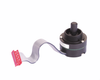
from Grayhill, Inc.
Grayhill ’s joysticks provide the human interface for directional control. They are available with mechanical switching or magnetic Hall-effect sensors for long life. Our NavCoders are unique human interface devices for navigating through on-screen software. They integrate the following three... [See More]
- Joystick Technology: Optical (Noncontact)
- Number of Actuations: 1 Million Rotational Cycles Of Operation
- Number of Axes: 5-Axis Control
- Number of Actuating Directions: 6
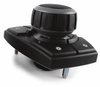
from Grayhill, Inc.
Grayhill ’s joysticks provide the human interface for directional control. They are available with mechanical switching or magnetic Hall-effect sensors for long life. Our NavCoders are unique human interface devices for navigating through on-screen software. They integrate the following three... [See More]
- Joystick Technology: Optical (Noncontact)
- Joystick Application: Heavy Duty Joystick Controller
- Number of Axes: 5-Axis Control
- Grip Style: Custom
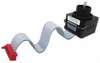
from Grayhill, Inc.
Grayhill ’s joysticks provide the human interface for directional control. They are available with mechanical switching or magnetic Hall-effect sensors for long life. Our NavCoders are unique human interface devices for navigating through on-screen software. They integrate the following three... [See More]
- Joystick Technology: Optical (Noncontact)
- Number of Actuations: 500K Rotational Cycles
- Number of Axes: 2-Axis Control
- Number of Actuating Directions: 6

from Grayhill, Inc.
Grayhill ’s joysticks provide the human interface for directional control. They are available with mechanical switching or magnetic Hall-effect sensors for long life. Our NavCoders are unique human interface devices for navigating through on-screen software. They integrate the following three... [See More]
- Joystick Technology: Optical (Noncontact)
- Number of Actuations: 1 Million Rotational Cycles Of Operation
- Number of Axes: 4-Axis Control
- Number of Actuating Directions: 6
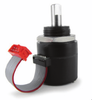
from Grayhill, Inc.
Grayhill ’s joysticks provide the human interface for directional control. They are available with mechanical switching or magnetic Hall-effect sensors for long life. Our NavCoders are unique human interface devices for navigating through on-screen software. They integrate the following three... [See More]
- Joystick Technology: Optical (Noncontact)
- Number of Actuations: 500k Actuations, Minimum In Each Direction
- Number of Axes: 4-Axis Control
- Number of Actuating Directions: 6