
USB Industrial Joysticks
Description
USB Industrial Joysticks are control devices that connect to a computer or control system via a Universal Serial Bus (USB) port. They are designed to provide precise control and input for various industrial applications, allowing operators to manipulate machinery or systems with ease. These joysticks typically feature multiple axes of movement and may include additional buttons or switches for enhanced functionality.
Working Principle
USB Industrial Joysticks operate by translating the physical movement of the joystick handle into electronic signals that are sent to a connected computer or control system. This is achieved through sensors such as potentiometers, inductive sensors, or photoelectric sensors that detect the position and movement of the joystick. The USB interface facilitates easy connection and communication with the host system, allowing for quick and reliable data transfer. These joysticks are useful because they provide an intuitive and ergonomic way for operators to control complex machinery or systems, improving efficiency and reducing the likelihood of errors.
Applications
USB Industrial Joysticks are used in a variety of specific applications. For example, they are employed in the control of heavy machinery such as forklifts, cranes, and excavators, where precise and responsive control is crucial. They are also used in flight simulators for training pilots, as well as in medical equipment for controlling surgical instruments or diagnostic devices. Additionally, these joysticks can be found in camera control systems, allowing operators to smoothly pan, tilt, and zoom cameras in surveillance or broadcasting applications.
Advantages over other Industrial Joysticks
One of the main advantages of USB Industrial Joysticks over other types is their ease of connectivity and compatibility with modern computer systems. The USB interface is widely supported and allows for plug-and-play functionality, reducing setup time and complexity. Additionally, USB joysticks often support multiple axes and additional input options, providing greater flexibility and control for complex applications. The digital nature of USB communication also ensures high accuracy and reliability in signal transmission.
Limitations
Despite their advantages, USB Industrial Joysticks have some limitations. They may not be suitable for environments with extreme temperatures or high levels of electromagnetic interference, which can affect their performance. Additionally, the reliance on a USB connection means that they require a compatible host system, which may not be available in all industrial settings. The physical durability of the joystick can also be a concern in harsh environments, where exposure to dust, moisture, or mechanical stress can lead to wear and tear.
Considerations
When selecting a USB Industrial Joystick, several factors should be considered. Initial costs can vary depending on the complexity and features of the joystick, with more advanced models typically commanding higher prices. Operating expenses may include the need for regular maintenance and calibration to ensure accuracy and reliability. Durability is an important consideration, especially in demanding industrial environments, so it is essential to choose a joystick with robust construction and protective features such as sealing against dust and moisture. Accuracy is another critical factor, as precise control is often necessary for industrial applications. Finally, replacement and maintenance costs should be factored into the overall cost of ownership, as these can impact the long-term affordability of the joystick.
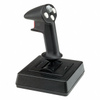
from DigiKey
3 AXIS USB JOYSTICK [See More]
- Connector: USB
- Number of Axes: 3-Axis Control
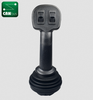
from OTTO Controls
HJMG3-B JHM Joystick with G3-B Grip [See More]
- Connector: USB; CANbus; PWM
- Switches: Friction Hold; Spring Return (Centering)
- Number of Axes: 1-Axis Control; 2-Axis Control
- Joystick Application: Heavy Duty Joystick Controller
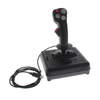
from DigiKey
3 AXIS USB JOYSTICK [See More]
- Connector: USB
- Number of Axes: 3-Axis Control
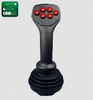
from OTTO Controls
HJMG3-C JHM Joystick with G3-C Grip [See More]
- Connector: USB; CANbus; PWM
- Switches: Friction Hold; Spring Return (Centering)
- Number of Axes: 1-Axis Control; 2-Axis Control
- Joystick Application: Heavy Duty Joystick Controller
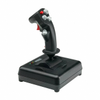
from DigiKey
3 AXIS USB JOYSTICK [See More]
- Connector: USB
- Number of Axes: 3-Axis Control
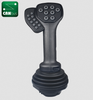
from OTTO Controls
HJMG3-CK JHM Joystick with G3-CK Grip [See More]
- Connector: USB; CANbus; PWM
- Switches: Friction Hold; Spring Return (Centering)
- Number of Axes: 1-Axis Control; 2-Axis Control
- Joystick Application: Heavy Duty Joystick Controller
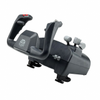
from DigiKey
USB YOKE CONTROL COLUMN [See More]
- Connector: USB
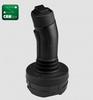
from OTTO Controls
HJMG3-D JHM Joystick with G3-D Grip [See More]
- Connector: USB; CANbus; PWM
- Switches: Friction Hold; Spring Return (Centering)
- Number of Axes: 1-Axis Control; 2-Axis Control
- Joystick Application: Heavy Duty Joystick Controller
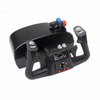
from DigiKey
USB YOKE CONTROL COLUMN [See More]
- Connector: USB
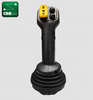
from OTTO Controls
HJMG3-M JHM Joystick with G3-M Grip [See More]
- Connector: USB; CANbus; PWM
- Switches: Friction Hold; Spring Return (Centering)
- Number of Axes: 1-Axis Control; 2-Axis Control
- Joystick Application: Heavy Duty Joystick Controller
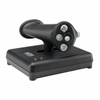
from DigiKey
3 AXIS USB THROTTLE [See More]
- Connector: USB
- Number of Axes: 3-Axis Control
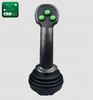
from OTTO Controls
JHM Joystick with G3-A Grip [See More]
- Connector: USB; CANbus; PWM
- Switches: Friction Hold; Spring Return (Centering)
- Number of Axes: 1-Axis Control; 2-Axis Control
- Joystick Application: Heavy Duty Joystick Controller
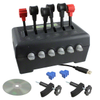
from DigiKey
USB THROTTLE QUADRANT [See More]
- Connector: USB
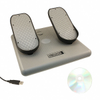
from DigiKey
3 AXIS USB PEDALS [See More]
- Connector: USB
- Number of Axes: 3-Axis Control

from P.I. Engineering, Inc.
Precision three axis USB joystick (twist for Z). Perfect for hand held or small footprint desktop locations. Define unique operations for each program you use. Instantly program macros, hot keys or multiple steps. One tap access to your favorite tools and functions. Supported by MacroWorks 3... [See More]
- Connector: USB
- Number of Actuations: Guaranteed for more than 1 million operations
- Number of Axes: 3-Axis Control
- Number of Actuating Directions: 3