
Resistive Industrial Joysticks
Description
Resistive industrial joysticks are devices used to control machinery or equipment by translating the physical movement of a joystick handle into an electrical signal. These joysticks are equipped with potentiometers that detect the position of the handle and convert it into a variable electrical resistance, which is then interpreted by the connected system to perform the desired action.
Working Principle
Resistive industrial joysticks operate by using potentiometers mounted to spring-loaded bails. When the joystick handle is deflected, it moves these potentiometers, resulting in a change in electrical resistance. This change is read as a variation in voltage, which is then processed by the system to determine the position of the joystick. This mechanism allows for precise control over the movement and operation of machinery, making resistive joysticks useful for applications requiring accurate and reliable input.
Applications
Resistive industrial joysticks are commonly used in various applications where precise control is necessary. Specific examples include their use in heavy machinery such as forklifts, cranes, and excavators, where they provide an ergonomic and efficient means of controlling movement and operation. They are also employed in flight simulators for steering and positioning, as well as in medical equipment, microscopes, and cameras for fine control.
Advantages over other Industrial Joysticks
One of the advantages of resistive joysticks over other types, such as inductive or optical joysticks, is their simplicity and reliability in providing consistent input through mechanical means. Unlike optical joysticks that rely on non-contact photoelectronic switches, resistive joysticks use physical components that can be more robust in certain environments. Additionally, they do not require complex electronic components, which can reduce the likelihood of failure in harsh conditions.
Limitations
Resistive joysticks have some limitations, including potential wear and tear on the mechanical components over time, which can affect their accuracy and reliability. The use of potentiometers means that they may be more susceptible to environmental factors such as dust and moisture, which can lead to degradation of performance. Additionally, they may not offer the same level of precision as some non-contact technologies like Hall Effect sensors.
Considerations
When considering resistive industrial joysticks, it is important to evaluate factors such as initial costs, operating expenses, and maintenance requirements. While they may have lower initial costs compared to more advanced technologies, the potential for wear and tear could lead to higher maintenance and replacement costs over time. Durability is a key consideration, as the mechanical components may require regular inspection and servicing to ensure continued accuracy and performance. Additionally, the operating environment should be assessed to determine if the joystick's design is suitable for conditions that may include exposure to dust, moisture, or extreme temperatures.
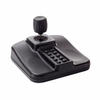
from DigiKey
3 AXIS USB JOYSTICK [See More]
- Joystick Technology: Resistive (Potentiometric)
- Connector: USB
- Number of Axes: 3-Axis Control
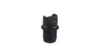
from RS Components, Ltd.
APEM MTG72A3 Joystick [See More]
- Joystick Technology: Resistive (Potentiometric); Single Axis Potentiometric
- Number of Actuations: 1
- Number of Axes: 1-Axis Control
- Agency Approvals: RoHS Compliant

from DigiKey
3 AXIS USB JOYSTICK [See More]
- Joystick Technology: Resistive (Potentiometric)
- Connector: USB
- Number of Axes: 3-Axis Control
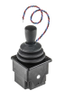
from RS Components, Ltd.
IP65 potentiometer joystick,closed body [See More]
- Joystick Technology: Resistive (Potentiometric); Potentiometric
- Number of Actuations: 1
- Number of Axes: 1-Axis Control
- Grip Style: Knob

from DigiKey
3 AXIS USB JOYSTICK [See More]
- Joystick Technology: Resistive (Potentiometric)
- Connector: USB
- Number of Axes: 3-Axis Control
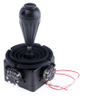
from RS Components, Ltd.
APEM M21L0H1P Joystick [See More]
- Joystick Technology: Resistive (Potentiometric); Potentiometric
- Number of Actuations: 2
- Number of Axes: 2-Axis Control
- Grip Style: Button
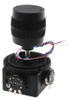
from RS Components, Ltd.
APEM M31L081A Joystick [See More]
- Joystick Technology: Resistive (Potentiometric); Potentiometric
- Number of Actuations: 3
- Number of Axes: 3-Axis Control
- Grip Style: Button
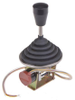
from RS Components, Ltd.
RS PRO J101 169003 R502 Joystick [See More]
- Joystick Technology: Resistive (Potentiometric); Single Axis Potentiometric
- Number of Actuations: 1
- Number of Axes: 1-Axis Control
- Grip Style: Knob
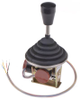
from RS Components, Ltd.
RS PRO J102 169001 R502 Joystick [See More]
- Joystick Technology: Resistive (Potentiometric); Dual Axis Potentiometric
- Number of Actuations: 2
- Number of Axes: 2-Axis Control
- Grip Style: Knob
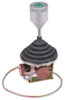
from RS Components, Ltd.
RS PRO J102PB 169002 R502 Joystick [See More]
- Joystick Technology: Resistive (Potentiometric); Dual Axis Potentiometric
- Number of Actuations: 2
- Number of Axes: 2-Axis Control
- Grip Style: Knob

from Ultra Electronics Measurement Systems Inc
Models 475 and 485 have a designator and two axis control with switch. Models 475 and 485 are for use in control grips such as Model 1505. They include a joystick with spring loaded axial motion to operate an SPDT switch. The Model 475 is for less severe environments. Model 485 is sealed for severe... [See More]
- Joystick Technology: Resistive (Potentiometric)
- Number of Actuations: 1000000 Cycles
- Number of Axes: 2-Axis Control
- Number of Actuating Directions: 4
from Ultra Electronics Measurement Systems Inc
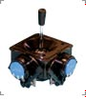
This basic two axis control utilizes a ball and socket joystick pivot with precision metal bails to provide smooth, low friction motion of the X and Y axis. Removable return-to-center detent springs, trim controls for fine adjustment, a round bright chrome bezel with mounting screws are standard. [See More]
- Joystick Technology: Resistive (Potentiometric)
- Number of Actuating Directions: 4
- Number of Axes: 2-Axis Control; 3-Axis Control (optional feature)
- Switches: Friction Hold (optional feature); Spring Return (Centering)
from Ultra Electronics Measurement Systems Inc
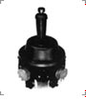
This model has a boot for mounting surface sealing and a smaller boot at the switch to prevent moisture entry through the handle. The switch leads are brought through the handle and then out of the body, below the mounting surface. [See More]
- Joystick Technology: Resistive (Potentiometric)
- Number of Actuating Directions: 4
- Number of Axes: 2-Axis Control; 3-Axis Control (optional feature)
- Switches: Friction Hold (optional feature); Spring Return (Centering)
from Ultra Electronics Measurement Systems Inc
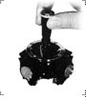
This control is a Model 521 with a single pole, single throw, momentary push button function switch mounted in the joystick handle. The switch is rated at 1 AMP, 115 VAC. [See More]
- Joystick Technology: Resistive (Potentiometric)
- Number of Actuating Directions: 4
- Number of Axes: 2-Axis Control; 3-Axis Control (optional feature)
- Switches: Friction Hold (optional feature); Spring Return (Centering)
from Ultra Electronics Measurement Systems Inc
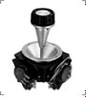
This control features a spring return-to-center twist knob on the joystick handle. A 5K ohm, 1/2 Watt potentiometer housed within the knob can be rotated ±45 degrees for the third axis. [See More]
- Joystick Technology: Resistive (Potentiometric)
- Number of Actuating Directions: 6
- Number of Axes: 3-Axis Control
- Switches: Friction Hold (optional feature); Spring Return (Centering)

from Ultra Electronics Measurement Systems Inc
This model is a single axis proportional joystick with spring return-to-center using a 5K ohm center tapped potentiometer whose electrical angle matches the mechanical angle of the joystick. Stay in place versions with direction switches. [See More]
- Joystick Technology: Resistive (Potentiometric)
- Number of Actuating Directions: 2
- Number of Axes: 1-Axis Control; 3-Axis Control (optional feature)
- Switches: Friction Hold; Spring Return (Centering) (optional feature)

from Ultra Electronics Measurement Systems Inc
Has a smooth action and infinite resolution 1 Watt potentiometer. Our smallest displacement type joystick, it will fit in a space only 1 1/2 inches wide. The handle remains in position where set within a 90 degree wide cone. [See More]
- Joystick Technology: Resistive (Potentiometric)
- Number of Actuating Directions: 4
- Number of Axes: 2-Axis Control; 3-Axis Control (optional feature)
- Switches: Friction Hold; Spring Return (Centering) (optional feature)
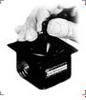
from Ultra Electronics Measurement Systems Inc
Has spring return-to-center in both axes and is supplied with a metal bezel, mounting plate and dust cover. [See More]
- Joystick Technology: Resistive (Potentiometric)
- Number of Actuating Directions: 4
- Number of Axes: 2-Axis Control; 3-Axis Control (optional feature)
- Switches: Friction Hold (optional feature); Spring Return (Centering)
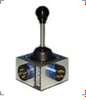
from Ultra Electronics Measurement Systems Inc
A two axis control with rugged all metal construction, environmental boot seal and high reliability conductive plastic, center tapped potentiometers. Options include direction or limit switches together with a finger operated switch in the joystick handle. [See More]
- Joystick Technology: Resistive (Potentiometric)
- Number of Actuating Directions: 4
- Number of Axes: 2-Axis Control; 3-Axis Control (optional feature)
- Switches: Friction Hold (optional feature); Spring Return (Centering) (optional feature)
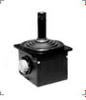
from Ultra Electronics Measurement Systems Inc
These miniature Hall effect joystick controls are available either as stand alone devices for customer integration, installed in Ultra MSI Control Grips for a thumb-operated grip control or integrated into custom input systems and panels per customer requirements. Their small size and weight make... [See More]
- Joystick Technology: Resistive (Potentiometric)
- Number of Actuating Directions: 4
- Number of Axes: 2-Axis Control
- Switches: Spring Return (Centering)
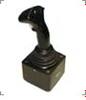
from Ultra Electronics Measurement Systems Inc
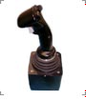
Inherently rugged and work smoothly without loss of precision throughout operational life. The direct coupling of the handle and the shaft of the potentiometer without the use of gears or linkages means the backlash is reduced to a minimum. Also, the spring levers allow the user a choice of various... [See More]
- Joystick Technology: Resistive (Potentiometric)
- Number of Actuating Directions: 4
- Number of Axes: 2-Axis Control
- Switches: Spring Return (Centering)
from Ultra Electronics Measurement Systems Inc
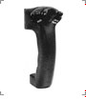
This rugged, precision hand control provides a rotational axis in addition to the conventional displacement X and Y control simply by twisting the hand grip. The three push buttons and trigger switch on the grip allows the operator to perform multiple tasks. Other custom grip configurations are also... [See More]
- Joystick Technology: Resistive (Potentiometric)
- Number of Actuating Directions: 6
- Number of Axes: 3-Axis Control
- Switches: Spring Return (Centering)
from Ultra Electronics Measurement Systems Inc
Included in this hi-fidelity simulated throttle control is the friction adjust handwheel, throttle grip pivot mechanism, 5K ohm potentiometer output, and grip control. This grip includes finger activated input devices to simulate one of a variety of F16 models. [See More]
- Joystick Technology: Resistive (Potentiometric)
- Number of Actuating Directions: 2
- Number of Axes: 1-Axis Control
- Switches: Friction Hold