
Modulation Diodes
Last Updated: April 1, 2025
Description
Modulation diodes are specialized semiconductor devices used to impose information from a lower-frequency electronic signal onto a higher-frequency signal. This process is essential in communication systems where the transmission of signals over long distances is required. Modulation diodes facilitate the modulation process by allowing the carrier signal's properties, such as amplitude or frequency, to be varied in accordance with the modulating signal.
Working Principle
Modulation diodes operate by utilizing the properties of semiconductor materials to alter the characteristics of a carrier signal. The diode's ability to conduct current in one direction and block it in the opposite direction is leveraged to impose the modulating signal onto the carrier. This process is crucial in communication systems as it enables the transmission of information over radio frequencies, which are more suitable for long-distance transmission compared to audio frequencies. The modulation process ensures that multiple signals can be transmitted simultaneously without interference, as each signal is assigned a unique carrier frequency.
Applications
Modulation diodes are used in various applications, particularly in communication systems. They are integral components in both amplitude modulation (AM) and frequency modulation (FM) systems. In AM systems, modulation diodes help vary the amplitude of the carrier signal in accordance with the modulating signal, while in FM systems, they assist in varying the frequency of the carrier signal. These diodes are also used in pulse modulation systems, which are widely employed in digital communication and control systems.
Advantages over other Diodes
Modulation diodes offer specific advantages over other types of diodes, particularly in their ability to handle high-frequency signals and their efficiency in the modulation process. Unlike standard rectifier diodes, modulation diodes are designed to operate effectively at radio frequencies, making them ideal for communication applications. Their construction allows for precise control over the modulation process, ensuring high-quality signal transmission with minimal distortion.
Limitations
One of the limitations of modulation diodes is their sensitivity to phase variations, which can affect performance in certain applications. This sensitivity can lead to performance degradation, especially when used with devices that experience significant phase shifts. Additionally, modulation diodes may not be suitable for applications requiring high power handling capabilities, as excessive forward current can lead to diode failure.
Considerations
When selecting modulation diodes, several factors should be considered, including initial costs, operating expenses, and durability. Modulation diodes are generally cost-effective for communication applications, but their operating expenses can vary depending on the specific application and environmental conditions. Durability is another important consideration, as these diodes must withstand the demands of high-frequency operation without significant degradation over time. Maintenance and replacement costs should also be factored into the overall cost of ownership, as these can impact the long-term viability of the diode in a given application.

from Broadcom Inc.
The HPND-4005 beamlead PIN diode is designed for use in stripline or microstrip circuits. Applications include Switching, attenuating, phase shifting, limiting, and modulating at microwave frequencies. The extremely low capacitance of this device makes it ideal for circuits requiring high isolation... [See More]
- Diode Applications: Limiter; Switching; Modulation; Phase Shifting
- VF: 1
- Diode Type: PIN; RF Diodes
- IF: 20

from SemiGen
SemiGen ’s Silicon Schottky Diodes are designed for applications through 40Ghz. The special process technology utilizes various metal schemes to provide excellent performance of Low, Medium, and High Barrier applications. The end result is a low resistance diode with tightly controlled... [See More]
- Diode Applications: Switching; Modulation; Detector; Mixer
- VF: 295
- Diode Type: Schottky

from Broadcom Inc.
The HSMS-286F family of biased detector diodes have been designed and optimised for use from 915MHz to 5.8GHz. They are ideal for RF/ID and RF tag applications as well as large signal detection, modulation, RF to DC conversion or voltage doubling. VBR=4 V, CT=0.3 pF, RD@5mA=14Ohms, Vf @ 1 mA=350 mV [See More]
- Diode Applications: Modulation; Detector
- VF: 0.2500
- Diode Type: Schottky; RF Diodes
- IF: 1

from SemiGen
SemiGen ’s Silicon Schottky Diodes are designed for applications through 40Ghz. The special process technology utilizes various metal schemes to provide excellent performance of Low, Medium, and High Barrier applications. The end result is a low resistance diode with tightly controlled... [See More]
- Diode Applications: Switching; Modulation; Detector; Mixer
- VF: 295
- Diode Type: Schottky

from Broadcom Inc.
The HSMS-286F family of biased detector diodes have been designed and optimised for use from 915MHz to 5.8GHz. They are ideal for RF/ID and RF tag applications as well as large signal detection, modulation, RF to DC conversion or voltage doubling. VBR=4 V, CT=0.3 pF, RD@5mA=14Ohms, Vf @ 1 mA=350 mV [See More]
- Diode Applications: Modulation; Detector
- VF: 0.2500
- Diode Type: Schottky; RF Diodes
- IF: 1

from SemiGen
SemiGen ’s Silicon Schottky Diodes are designed for applications through 40Ghz. The special process technology utilizes various metal schemes to provide excellent performance of Low, Medium, and High Barrier applications. The end result is a low resistance diode with tightly controlled... [See More]
- Diode Applications: Switching; Modulation; Detector; Mixer
- VF: 0.2500
- Diode Type: Schottky
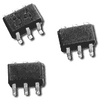
from Broadcom Inc.
The HSMS-286F family of biased detector diodes have been designed and optimised for use from 915MHz to 5.8GHz. They are ideal for RF/ID and RF tag applications as well as large signal detection, modulation, RF to DC conversion or voltage doubling. VBR=4 V, CT=0.3 pF, RD@5mA=14Ohms, Vf @ 1 mA=350 mV [See More]
- Diode Applications: Modulation; Detector
- VF: 0.2500
- Diode Type: Schottky; RF Diodes
- IF: 1

from Broadcom Inc.
The HSMS-286F family of biased detector diodes have been designed and optimised for use from 915MHz to 5.8GHz. They are ideal for RF/ID and RF tag applications as well as large signal detection, modulation, RF to DC conversion or voltage doubling. VBR=4 V, CT=0.3 pF, RD@5mA=14Ohms, Vf @ 1 mA=350 mV [See More]
- Diode Applications: Modulation; Detector
- VF: 0.2500
- Diode Type: Schottky; RF Diodes
- IF: 1