
Displays / FPD Surface Profilometers
Description
Displays / FPD Surface Profilometers are specialized instruments used to measure surface profiles, roughness, waviness, and other finish parameters of flat panel displays (FPDs). These devices provide detailed surface texture data, which is crucial for ensuring the quality and performance of display surfaces.
Working Principle
FPD Surface Profilometers operate using either contact or non-contact methods. Contact profilometers use a stylus that physically traces the surface, recording height variations to create a texture profile. Non-contact profilometers, on the other hand, utilize optical methods such as laser or light scanning, triangulation, or interferometry to capture surface profiles without physical contact. These optical methods allow for high-resolution, three-dimensional measurements, making them particularly useful for detecting minute surface variations and ensuring the precision required in display manufacturing.
Applications
FPD Surface Profilometers are used extensively in the quality control and manufacturing processes of flat panel displays. They are crucial in industries where precise surface texture is vital, such as in the production of LCDs, OLEDs, and other advanced display technologies. For example, they are employed to ensure the smoothness and uniformity of display surfaces, which can affect the visual quality and performance of the final product.
Advantages over other Surface Profilometers
FPD Surface Profilometers, particularly those using non-contact optical methods, offer several advantages over traditional contact profilometers. They provide higher speed measurements and can capture three-dimensional surface data, which is essential for comprehensive surface analysis. Additionally, they are capable of measuring delicate surfaces without the risk of damage that can occur with contact methods. This makes them ideal for applications requiring high precision and minimal surface interference.
Limitations
Despite their advantages, FPD Surface Profilometers have limitations. Optical profilometers require precise light orientation and reflective surfaces to function effectively, which can be challenging in certain environments. Additionally, they may struggle with steep slopes and complex geometries, limiting their applicability in some scenarios.
Considerations
When selecting an FPD Surface Profilometer, several factors should be considered. Initial costs can vary significantly depending on the technology and features of the device. Operating expenses may include maintenance and calibration, which are essential for ensuring accuracy over time. Durability and the ability to withstand industrial environments are also important, as is the accuracy of measurements, which can impact the quality of the final product. Replacement and maintenance costs should be factored into the overall cost of ownership, as these can affect long-term budgeting and operational efficiency.
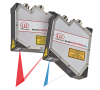
from Micro-Epsilon Group
scanCONTROL 25x0 laser scanners are designed for industrial measurement tasks. Thanks to their high signal stability, versatility and excellent price-performance ratio, the scanners are particularly suitable for measurement tasks involving large quantities. They measure and evaluate, for example,... [See More]
- Applications: Aerospace / Defense; Automotive; Coatings / Films; Flat Panel Display; Electronics; Bearings, Gears, Shafting, Seals, etc.; Medical; MEMS; Precision Machining / Grinding; Semiconductors; Production or Factory Use
- Measurement Capability: 2D / Line Profile; Area or three dimensional profile; Defects, dimples or film residues; Flatness; Step Height; Thickness; Warp / Bow
- Technology: Optical / Laser
- Vertical Range: 7.48 to 11.42
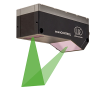
from Micro-Epsilon Group
The new scanCONTROL 8500 laser scanners set new standards in industrial 3D measurement technology. For the first time, complete 3D data processing is performed directly in the sensor head in addition to 2D evaluation. The calculated measurement values are transmitted directly to a controller via... [See More]
- Applications: Aerospace / Defense; Automotive; Coatings / Films; Flat Panel Display; Electronics; Bearings, Gears, Shafting, Seals, etc.; Medical; MEMS; Precision Machining / Grinding; Semiconductors; Production or Factory Use
- Measurement Capability: 2D / Line Profile; Area or three dimensional profile; Defects, dimples or film residues; Flatness; Step Height; Thickness; Warp / Bow
- Technology: Optical / Laser
- Vertical Range: 4.33 to 8.07
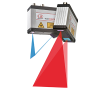
from Micro-Epsilon Group
The scanCONTROL 30x0 laser profile scanners provide calibrated profile data with up to 9.6 million points per second. Thanks to their high accuracy, high profile frequency and versatility, these powerful scanners are suitable for demanding measurement tasks. They measure and evaluate, for example,... [See More]
- Applications: Aerospace / Defense; Automotive; Coatings / Films; Flat Panel Display; Electronics; Bearings, Gears, Shafting, Seals, etc.; Medical; MEMS; Precision Machining / Grinding; Semiconductors; Production or Factory Use
- Measurement Capability: 2D / Line Profile; Area or three dimensional profile; Defects, dimples or film residues; Flatness; Step Height; Thickness; Warp / Bow
- Technology: Optical / Laser
- Vertical Range: 3.05 to 3.64

from Micro-Epsilon Group
The scanCONTROL 30x2 laser profile scanners provide calibrated profile data with up to 7.9 million points per second. Thanks to their high accuracy, high profile frequency and versatility, these powerful scanners are particularly suitable for demanding measurement tasks. They measure and evaluate,... [See More]
- Applications: Aerospace / Defense; Automotive; Coatings / Films; Flat Panel Display; Electronics; Bearings, Gears, Shafting, Seals, etc.; Medical; MEMS; Precision Machining / Grinding; Semiconductors; Production or Factory Use
- Measurement Capability: 2D / Line Profile; Area or three dimensional profile; Defects, dimples or film residues; Flatness; Step Height; Thickness; Warp / Bow
- Technology: Optical / Laser
- Vertical Range: 12.99 to 27.56
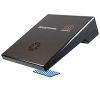
from Micro-Epsilon Group
The reflectCONTROL RCS130-160 3D HLP sensor is designed for three-dimensional shape detection of shiny components. Similar to the 2D model, this sensor projects a striped pattern that is reflected across the object surface and captured by the sensor cameras. The key difference lies in the RCS130-160... [See More]
- Applications: Aerospace / Defense; Automotive; Coatings / Films; Flat Panel Display; Electronics; Bearings, Gears, Shafting, Seals, etc.; Medical; MEMS; Optics / Photonics; Precision Machining / Grinding; Semiconductors; Production or Factory Use
- Measurement Capability: Area or three dimensional profile; Defects, dimples or film residues; Flatness; Step Height; Warp / Bow
- Technology: Optical / Laser
- Vertical Range: 6.89 to 8.86