
Thickness Surface Profilometers
Description
Thickness surface profilometers are precision instruments used to measure the surface profiles, roughness, waviness, and other finish parameters of a material. These devices can capture detailed surface texture data, providing either two-dimensional (2D) or three-dimensional (3D) measurements depending on the technology used. They are essential tools in quality control and research settings, ensuring that surfaces meet specific engineering standards.
Working Principle
Thickness surface profilometers operate using either contact or non-contact methods. Contact profilometers use a stylus that physically traces the surface, recording height variations to create a texture profile. Non-contact profilometers, on the other hand, utilize optical methods such as laser or light scanning, triangulation, or interferometry to capture surface profiles without physical contact. These methods allow for high precision measurements, often at the nanometer scale, making them invaluable for detecting minute surface variations.
Applications
Thickness surface profilometers are used in a variety of industries and applications. For example, in the optics industry, they are employed to measure the surface roughness of lenses and mirrors. In the semiconductor industry, they are used to inspect wafer surfaces for defects. Additionally, they are crucial in the automotive and aerospace sectors for ensuring the smoothness and uniformity of critical components.
Advantages over other Surface Profilometers
Thickness surface profilometers, particularly those using optical methods, offer several advantages over other types of profilometers. They provide higher speed measurements and can capture detailed 3D surface data, which is not possible with traditional contact methods. Optical profilometers are also non-destructive, meaning they do not alter or damage the surface being measured, which is a significant advantage in sensitive applications.
Limitations
Despite their advantages, thickness surface profilometers have limitations. Contact profilometers can be limited by the size of the probe, which may not be suitable for very fine or intricate surfaces. Non-contact profilometers, while highly precise, require specific conditions such as proper light orientation and reflective surfaces to function accurately. Additionally, some optical methods may struggle with steep slopes or complex geometries.
Considerations
When selecting a thickness surface profilometer, several factors should be considered. Initial costs can vary significantly depending on the technology and capabilities of the device. Operating expenses may include maintenance and calibration, which are necessary to ensure continued accuracy. Durability is another consideration, particularly for contact profilometers, which may experience wear over time. Non-contact profilometers generally offer higher accuracy and lower maintenance costs, but they may require more sophisticated setup and calibration. Replacement and maintenance costs should also be factored into the decision-making process, as these can impact the long-term cost-effectiveness of the instrument.
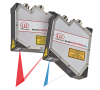
from Micro-Epsilon Group
scanCONTROL 25x0 laser scanners are designed for industrial measurement tasks. Thanks to their high signal stability, versatility and excellent price-performance ratio, the scanners are particularly suitable for measurement tasks involving large quantities. They measure and evaluate, for example,... [See More]
- Measurement Capability: 2D / Line Profile; Area or three dimensional profile; Defects, dimples or film residues; Flatness; Step Height; Thickness; Warp / Bow
- Vertical Range: 7.48 to 11.42
- Technology: Optical / Laser
- Applications: Aerospace / Defense; Automotive; Coatings / Films; Flat Panel Display; Electronics; Bearings, Gears, Shafting, Seals, etc.; Medical; MEMS; Precision Machining / Grinding; Semiconductors; Production or Factory Use
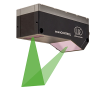
from Micro-Epsilon Group
The new scanCONTROL 8500 laser scanners set new standards in industrial 3D measurement technology. For the first time, complete 3D data processing is performed directly in the sensor head in addition to 2D evaluation. The calculated measurement values are transmitted directly to a controller via... [See More]
- Measurement Capability: 2D / Line Profile; Area or three dimensional profile; Defects, dimples or film residues; Flatness; Step Height; Thickness; Warp / Bow
- Vertical Range: 4.33 to 8.07
- Technology: Optical / Laser
- Applications: Aerospace / Defense; Automotive; Coatings / Films; Flat Panel Display; Electronics; Bearings, Gears, Shafting, Seals, etc.; Medical; MEMS; Precision Machining / Grinding; Semiconductors; Production or Factory Use
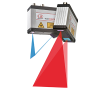
from Micro-Epsilon Group
The scanCONTROL 30x0 laser profile scanners provide calibrated profile data with up to 9.6 million points per second. Thanks to their high accuracy, high profile frequency and versatility, these powerful scanners are suitable for demanding measurement tasks. They measure and evaluate, for example,... [See More]
- Measurement Capability: 2D / Line Profile; Area or three dimensional profile; Defects, dimples or film residues; Flatness; Step Height; Thickness; Warp / Bow
- Vertical Range: 3.05 to 3.64
- Technology: Optical / Laser
- Applications: Aerospace / Defense; Automotive; Coatings / Films; Flat Panel Display; Electronics; Bearings, Gears, Shafting, Seals, etc.; Medical; MEMS; Precision Machining / Grinding; Semiconductors; Production or Factory Use

from Micro-Epsilon Group
The scanCONTROL 30x2 laser profile scanners provide calibrated profile data with up to 7.9 million points per second. Thanks to their high accuracy, high profile frequency and versatility, these powerful scanners are particularly suitable for demanding measurement tasks. They measure and evaluate,... [See More]
- Measurement Capability: 2D / Line Profile; Area or three dimensional profile; Defects, dimples or film residues; Flatness; Step Height; Thickness; Warp / Bow
- Vertical Range: 12.99 to 27.56
- Technology: Optical / Laser
- Applications: Aerospace / Defense; Automotive; Coatings / Films; Flat Panel Display; Electronics; Bearings, Gears, Shafting, Seals, etc.; Medical; MEMS; Precision Machining / Grinding; Semiconductors; Production or Factory Use

from Fischer Technology, Inc.
To ensure that protective layers adhere permanently, the surface roughness of the base material must comply with strict recommended standards. The FPR1 profile probe is the ideal solution in this case: When combined with the FMP10/40 series, the FPR1 profile probe is the ideal solution for testing... [See More]
- Measurement Capability: Roughness; Thickness
- Standards Compliance: ASTMD4417, MethodB, SSPCPA17, AS3894.5-C, U.S.NAVYNSI009-32, SANS5772 and Other Standards
- Technology: Contact / Stylus
- Applications: Measurement of the Surface Profile of Sand-blasted Parts; Onshore and Offshore Steel Structures, Infrastructure, Ship Construction, Wind Turbines

from Bruker Corporation
Bruker's Dektak ® stylus profilers are the product of over four decades of proprietary technology advances. They provide repeatable, accurate measurements on varied surfaces, from traditional 2D roughness surface characterization and step height measurements to advanced 3D mapping and film... [See More]
- Measurement Capability: 2D / Line Profile; Area or three dimensional profile; Roughness; Thickness
- Applications: Electronics (optional feature); Semiconductors (optional feature); Photovoltaic Solar Cell Manufacturing
- Technology: Contact / Stylus
- Mounting / Loading Options: Benchtop (optional feature); Floor (optional feature)

from MTI Instruments Inc.
The Microtrak 3 Thickness Gauge System used for automated metal, fiberboard and cement board sheet production and QA/QC combines our proven non-contact laser triangulation sensors with a modular controller that can operate either as a standalone solution for displacement measurement or with a... [See More]
- Measurement Capability: Thickness
- Mounting / Loading Options: Unit Mounted on Machine or Production Line
- Technology: Optical / Laser
- Display & Special Features: PC Interface / Networkable

from MTI Instruments Inc.
The latest 1D laser displacement sensor from MTI provides excellent speed and accuracy for even the most difficult applications and provides data output and power through a single USB cable. The Microtrak ™ 4 is the ultimate 2d laser measurement sensor for measuring height, thickness,... [See More]
- Measurement Capability: Step Height; Thickness
- Vertical Range: 0.0787
- Technology: Optical / Laser
- Vertical Resolution: 1.50E-6

from MTI Instruments Inc.
High resolution, high speed laser displacement sensor (non-contact linear displacement sensor) utilizes the latest CMOS sensor technology that challenges even the most difficult measurement applications. The Microtrak ™ 3 is undoubtedly an essential measurement tool for process automation,... [See More]
- Measurement Capability: Flatness; Step Height; Thickness; Warp / Bow
- Standards Compliance: ISO / EN
- Technology: Optical / Laser
- Vertical Range: 0.9843