
Optics / Photonics Surface Profilometers
Description
Optics/Photonics Surface Profilometers are advanced instruments designed to measure the surface topography of various materials. They provide detailed quantitative and qualitative information about surface structures, including texture and roughness, by utilizing optical methods. These profilometers are capable of capturing high-resolution 3D surface maps, which are essential for assessing the quality and precision of engineering surfaces.
Working Principle
Optical profilometers operate by employing light sources to measure surface variations without physical contact. Techniques such as interferometry are commonly used, where multiple light beams create interference patterns. These patterns are analyzed to determine the precise distance between the object and the measuring device, effectively mapping the surface contours. The interference fringes produced are directly proportional to the height differences on the surface, allowing for precise measurements at nanometer scales. This non-contact method is particularly useful for delicate or soft surfaces that could be damaged by contact-based methods.
Applications
Optics/Photonics Surface Profilometers are widely used in various fields. In the production environment, they are employed for in-line metrology solutions to ensure quality control. They are also used in research and development settings to analyze the surface characteristics of new materials. Specific applications include measuring the surface roughness of aspheric lenses and characterizing the polishing process of high-quality optical surfaces.
Advantages over other Surface Profilometers
Optical profilometers offer several advantages over traditional contact-based methods. They provide higher speed measurements and can capture a wide range of surface scales with high fidelity. Unlike contact profilometry, which is limited by probe size, optical methods can detect nanometer-scale roughness without physical interaction, reducing the risk of surface damage. Additionally, they offer flexibility in measuring complex geometries and steep slopes, which can be challenging for other methods.
Limitations
Despite their advantages, optical profilometers have limitations. They require precise light orientation and reflective surfaces to function effectively. Complex geometries with steep slopes can pose challenges, as certain techniques like stitching interferometry may struggle with these features. Additionally, the initial setup and calibration can be complex, requiring skilled operators to ensure accurate measurements.
Considerations
When considering the use of optics/photonics surface profilometers, several factors should be taken into account. The initial cost of these instruments can be high, but they offer long-term benefits in terms of accuracy and non-destructive testing. Operating expenses may include maintenance of optical components and software updates. Durability is generally high, as there is no physical contact with the surface being measured, reducing wear and tear. However, regular calibration and maintenance are necessary to maintain accuracy and performance. Replacement costs can vary depending on the complexity of the system and the specific components used.
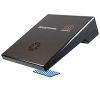
from Micro-Epsilon Group
The reflectCONTROL RCS130-160 3D HLP sensor is designed for three-dimensional shape detection of shiny components. Similar to the 2D model, this sensor projects a striped pattern that is reflected across the object surface and captured by the sensor cameras. The key difference lies in the RCS130-160... [See More]
- Applications: Aerospace / Defense; Automotive; Coatings / Films; Flat Panel Display; Electronics; Bearings, Gears, Shafting, Seals, etc.; Medical; MEMS; Optics / Photonics; Precision Machining / Grinding; Semiconductors; Production or Factory Use
- Measurement Capability: Area or three dimensional profile; Defects, dimples or film residues; Flatness; Step Height; Warp / Bow
- Technology: Optical / Laser
- Vertical Range: 6.89 to 8.86
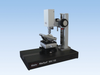
from Mahr Inc.
The precision optical measuring instrument MarSurf WM 100 with sub-nanometer resolution and measuring accuracy. A 3D white light interferometer measuring system. Features. Maximum precision with sub-nanometer resolution and measuring accuracy. Suitable for all optical and reflective surfaces, fine... [See More]
- Applications: Electronics; Bearings, Gears, Shafting, Seals, etc.; Medical; Optics / Photonics
- Measurement Capability: 2D / Line Profile; Area or three dimensional profile
- Technology: Optical / Laser
- Vertical Range: 7.87

from MTI Instruments Inc.
High resolution, high speed laser displacement sensor (non-contact linear displacement sensor) utilizes the latest CMOS sensor technology that challenges even the most difficult measurement applications. The Microtrak ™ 3 is undoubtedly an essential measurement tool for process automation,... [See More]
- Applications: Aerospace / Defense; Automotive; Electronics; Bearings, Gears, Shafting, Seals, etc.; Medical (optional feature); MEMS; Nanomaterials; Optics / Photonics; Precision Machining / Grinding; Semiconductors; Production or Factory Use
- Measurement Capability: Flatness; Step Height; Thickness; Warp / Bow
- Technology: Optical / Laser
- Standards Compliance: ISO / EN
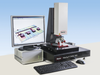
from Mahr Inc.
Product features. The precision, computer-controlled optical measuring instrument MarSurf CWM 100 with sub-nanometer resolution. A combined 3D measuring system comprising a confocal microscope and white light interferometer. Features Advantages. Special microscope technology dedicated to the... [See More]
- Applications: Electronics; Bearings, Gears, Shafting, Seals, etc.; Medical; Optics / Photonics
- Measurement Capability: Area or three dimensional profile
- Technology: Optical / Laser
- Vertical Range: 3.94
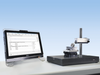
from Mahr Inc.
MarSurf XR 1. The ideal instrument for a low-cost introduction to user-friendly surface metrology. The PC-based instrument delivers all common surface parameters and profiles in accordance with international standards, both in the measuring room and in production. MarSurf XR 1 from Mahr stands for... [See More]
- Applications: Aerospace / Defense; Automotive; Bearings, Gears, Shafting, Seals, etc.; Medical; Optics / Photonics
- Measurement Capability: Roughness
- Technology: Contact / Stylus
- Standards Compliance: ISO / EN; JIS; MOTIF