
Defects / ADC Surface Profilometers
Description
Defects / ADC Surface Profilometers are specialized instruments designed to measure surface texture and topography. They provide detailed information about surface roughness, spacing, waviness, and other parameters critical for assessing the quality and characteristics of engineering surfaces. These profilometers are equipped with automatic defect classification (ADC) capabilities, allowing them to identify and categorize surface defects efficiently.
Working Principle
Surface profilometers operate using either contact or non-contact methods. Contact profilometers use a stylus that physically traces the surface, recording height variations to create a texture profile. Non-contact profilometers, on the other hand, utilize optical methods such as laser scanning, triangulation, or interferometry to measure surface profiles without physical contact. These methods enable the capture of three-dimensional (3D) or areal-topography measurements, providing comprehensive data on surface characteristics. The ADC feature enhances their utility by automatically identifying and classifying defects, making them invaluable for quality control and assurance in manufacturing processes.
Applications
Surface profilometers with ADC capabilities are used in various industries for precise surface measurement and defect detection. Specific applications include:
- Automotive Industry: Ensuring the smoothness and quality of car body panels and components.
- Semiconductor Manufacturing: Measuring wafer surfaces to detect defects that could affect chip performance.
- Optics: Evaluating the surface quality of lenses and mirrors to ensure optimal performance.
- Aerospace: Inspecting turbine blades and other critical components for surface defects that could impact performance and safety.
Advantages over other Surface Profilometers
ADC Surface Profilometers offer several advantages over traditional profilometers:
- Higher Speed: They provide faster measurements, which is crucial for high-throughput environments.
- Non-Contact Measurement: Optical methods eliminate the risk of damaging delicate surfaces, unlike contact-based systems.
- Comprehensive Data: They offer detailed 3D measurements and a wide range of reportable parameters, enhancing their utility in diverse applications.
Limitations
Despite their advantages, ADC Surface Profilometers have limitations:
- Complexity: The advanced technology and features can make them more complex to operate and require specialized training.
- Surface Requirements: Non-contact methods may struggle with surfaces that are highly reflective or have steep slopes and complex geometries.
Considerations
When considering the use of ADC Surface Profilometers, several factors should be taken into account:
- Initial Costs: These instruments can be expensive due to their advanced technology and capabilities.
- Operating Expenses: Maintenance and calibration can add to the overall cost of ownership.
- Durability and Accuracy: While they offer high accuracy, their durability can vary based on the environment and frequency of use.
- Replacement and Maintenance Costs: Regular maintenance is necessary to ensure accuracy and longevity, which can incur additional costs over time.
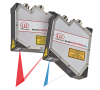
from Micro-Epsilon Group
scanCONTROL 25x0 laser scanners are designed for industrial measurement tasks. Thanks to their high signal stability, versatility and excellent price-performance ratio, the scanners are particularly suitable for measurement tasks involving large quantities. They measure and evaluate, for example,... [See More]
- Measurement Capability: 2D / Line Profile; Area or three dimensional profile; Defects, dimples or film residues; Flatness; Step Height; Thickness; Warp / Bow
- Vertical Range: 7.48 to 11.42
- Technology: Optical / Laser
- Applications: Aerospace / Defense; Automotive; Coatings / Films; Flat Panel Display; Electronics; Bearings, Gears, Shafting, Seals, etc.; Medical; MEMS; Precision Machining / Grinding; Semiconductors; Production or Factory Use
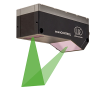
from Micro-Epsilon Group
The new scanCONTROL 8500 laser scanners set new standards in industrial 3D measurement technology. For the first time, complete 3D data processing is performed directly in the sensor head in addition to 2D evaluation. The calculated measurement values are transmitted directly to a controller via... [See More]
- Measurement Capability: 2D / Line Profile; Area or three dimensional profile; Defects, dimples or film residues; Flatness; Step Height; Thickness; Warp / Bow
- Vertical Range: 4.33 to 8.07
- Technology: Optical / Laser
- Applications: Aerospace / Defense; Automotive; Coatings / Films; Flat Panel Display; Electronics; Bearings, Gears, Shafting, Seals, etc.; Medical; MEMS; Precision Machining / Grinding; Semiconductors; Production or Factory Use
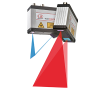
from Micro-Epsilon Group
The scanCONTROL 30x0 laser profile scanners provide calibrated profile data with up to 9.6 million points per second. Thanks to their high accuracy, high profile frequency and versatility, these powerful scanners are suitable for demanding measurement tasks. They measure and evaluate, for example,... [See More]
- Measurement Capability: 2D / Line Profile; Area or three dimensional profile; Defects, dimples or film residues; Flatness; Step Height; Thickness; Warp / Bow
- Vertical Range: 3.05 to 3.64
- Technology: Optical / Laser
- Applications: Aerospace / Defense; Automotive; Coatings / Films; Flat Panel Display; Electronics; Bearings, Gears, Shafting, Seals, etc.; Medical; MEMS; Precision Machining / Grinding; Semiconductors; Production or Factory Use

from Micro-Epsilon Group
The scanCONTROL 30x2 laser profile scanners provide calibrated profile data with up to 7.9 million points per second. Thanks to their high accuracy, high profile frequency and versatility, these powerful scanners are particularly suitable for demanding measurement tasks. They measure and evaluate,... [See More]
- Measurement Capability: 2D / Line Profile; Area or three dimensional profile; Defects, dimples or film residues; Flatness; Step Height; Thickness; Warp / Bow
- Vertical Range: 12.99 to 27.56
- Technology: Optical / Laser
- Applications: Aerospace / Defense; Automotive; Coatings / Films; Flat Panel Display; Electronics; Bearings, Gears, Shafting, Seals, etc.; Medical; MEMS; Precision Machining / Grinding; Semiconductors; Production or Factory Use
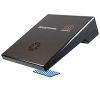
from Micro-Epsilon Group
The reflectCONTROL RCS130-160 3D HLP sensor is designed for three-dimensional shape detection of shiny components. Similar to the 2D model, this sensor projects a striped pattern that is reflected across the object surface and captured by the sensor cameras. The key difference lies in the RCS130-160... [See More]
- Measurement Capability: Area or three dimensional profile; Defects, dimples or film residues; Flatness; Step Height; Warp / Bow
- Vertical Range: 6.89 to 8.86
- Technology: Optical / Laser
- Lateral Resolution: 0.0039