
Charge Coupled Device (CCD) UV and Visible Spectrometers
Description
Charge Coupled Device (CCD) UV and Visible Spectrometers are instruments designed to detect and measure the intensity and spectral distribution of ultraviolet and visible light. They utilize CCD sensors, which are arrays of light-sensitive elements, to capture and convert light into electronic signals. These spectrometers are capable of recording the transmitted light power at multiple wavelengths simultaneously, providing detailed spectral information.
Working Principle
CCD UV and Visible Spectrometers operate by using a CCD chip, which consists of an array of light-sensitive elements known as pixels. When light enters the spectrometer, it is dispersed into its component wavelengths by a monochromator. The dispersed light then strikes the CCD array, where each pixel accumulates charge proportional to the intensity of light it receives. This charge is transferred through the CCD array and converted into a voltage signal by an output amplifier. The resulting electronic image represents the spectral data, which can be analyzed for various purposes. CCD sensors are particularly useful due to their high dynamic range, low noise levels, and ability to capture images with a wide range of brightness levels, making them ideal for precise scientific measurements.
Applications
CCD UV and Visible Spectrometers are used in a variety of specific applications. For instance, they are employed in chemical analysis to determine the concentration of substances by measuring their absorbance at specific wavelengths. They are also used in environmental monitoring to detect pollutants in water or air by analyzing the spectral signatures of different compounds. Additionally, these spectrometers are utilized in the pharmaceutical industry for quality control and in research laboratories for studying the optical properties of materials.
Advantages over other UV and Visible Spectrometers
CCD UV and Visible Spectrometers offer several advantages over other types of spectrometers. They have a high dynamic range, allowing them to capture images with a wide range of brightness levels, which is crucial for accurate measurements in scientific and industrial applications. CCD sensors also exhibit low noise levels, enhancing the precision of the data collected. Furthermore, CCD technology is mature and widely accessible, making these spectrometers more cost-effective compared to newer technologies.
Limitations
Despite their advantages, CCD UV and Visible Spectrometers have some limitations. They tend to have slower readout speeds compared to other sensor technologies like CMOS or sCMOS, which can be a drawback in applications requiring rapid data acquisition. Additionally, CCD sensors consume more power and can be more expensive than alternative sensor types. They also have limited resolution compared to some newer sensor technologies, which may affect the level of detail in the spectral data.
Considerations
When considering the use of CCD UV and Visible Spectrometers, several factors should be taken into account. Initial costs can be higher due to the expense of CCD sensors, but their mature technology often results in lower long-term costs. Operating expenses may include power consumption, which is higher for CCDs compared to other sensors. Durability and maintenance are generally favorable, as CCDs are well-developed and reliable. However, users should consider the potential need for periodic calibration to maintain accuracy. Replacement and maintenance costs are typically manageable, but it's important to factor in the potential need for sensor replacement over time due to wear or damage.

from Electro Optical Components, Inc.
EOC-SI-7000 Fully-automated, Rapid spectrophotometer is designed in order to improve detect throughput, reduce work load and protect operator health. It employs accurate sampling pump, anti-corrosive sampling pin and fluid tube, and in combination with the cutting-edge fluid control technology. [See More]
- Detector Type: Charge Coupled Device
- Absorbance: 3
- Wavelength Range: 190 to 1100
- Computer Interface Options: Serial
from Electro Optical Components, Inc.
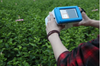
The EOC-SI-9100 is a new handheld hyperspectral field spectroradiometer that employs spectral range between 300-1100nm, and it's applied to fields of remote sensing measurement, crop monitoring, research of forest and oceanography etc. EOC-SI-9100 field spectroradiometer employs high performance,... [See More]
- Detector Type: Charge Coupled Device
- Wavelength Range: 300 to 1100
- Light Source: Tungsten Halogen Lamp (optional feature)
- Spectral Resolution: 1.4

from Electro Optical Components, Inc.
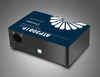
EOC-SI-6500 Fiber Optic Spectrometer employs Miniature, ultra-high performance, 2048 x 64 pixel, semiconductor-cooled, back-thinned CCD array, reduced dark current, CCD cooled down to -15 ºC under constant temperature. It greatly reduces sensor noise resulting in almost 2 times higher SNR than... [See More]
- Detector Type: Charge Coupled Device
- Spectral Resolution: 0.0100
- Wavelength Range: 180 to 1100
- Computer Interface Options: Serial
from Electro Optical Components, Inc.
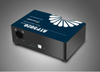
EOC-SI-3000 Series are low-noise, high-resolution optic fiber spectrometer. It employs 2048pixels CCD sensor spectral response covering UV to NIR wavelength. Readout speed reach up to 10MHz, low noise signal process circuit, and fast and accurate spectral data collection. EOC-SI-3040 further improve... [See More]
- Detector Type: Charge Coupled Device
- Spectral Resolution: 0.0100
- Wavelength Range: 180 to 1100
- Computer Interface Options: Serial
from Electro Optical Components, Inc.
EOC-SI-5020/5040 Miniature Fiber Optic Spectrometer employs the ultra-high performance, 2048 x 64 pixel, semiconductor-cooled, back-thinned CCD array, down to - 20 ºC. It greatly reduces sensor noise resulting in almost 2 times higher SNR than other competitors. It increases measuring... [See More]
- Detector Type: Charge Coupled Device
- Spectral Resolution: 0.1000
- Wavelength Range: 165 to 1180
- Computer Interface Options: Serial

from Electro Optical Components, Inc.
EOC-SI-9000, 9010, 9020 are a compact, lightweight, and miniature hyperspectral imager, and it's especially applied to drones. EOC-SI-9000 employs high spatial resolution, spectral resolution, wide imaging range etc. EOC-SI-9000 consist of two parts, one part is imaging camera lens, the other part... [See More]
- Detector Type: Charge Coupled Device
- Wavelength Range: 350 to 1100
- Light Source: Other; Halogen Lamp
- Spectral Resolution: 2.6

from StellarNet, Inc.
StellarNet's miniature fiber optic spectrometers with concave gratings deliver high performance for spectroscopy applications in the UV-VIS wavelength ranges covering 190-850nm (model C), or optionally 280-900nm (model CXR). The instruments are exceptionally robust with no moving parts, and are... [See More]
- Detector Type: Diode Array (optional feature); Charge Coupled Device
- Light Source: Double Deuterium; Light Emitting Diode
- Photometric System Design: Non Scanning
- Wavelength Range: 190 to 850

from Qioptiq
All-in-one package: Spectrometer, software, driver, and updates are all included. The new Qwave Spectrometer is hardly bigger than a cigarette pack, and yet takes measurements with high resolution and sensitivity. The thermal stability of this versatile spectrometer is outstanding as well. The Qwave... [See More]
- Detector Type: Charge Coupled Device
- Spectral Resolution: 0.2000
- Wavelength Range: 220 to 940
- Stray Light: 0.0500
from Ophir-Spiricon Inc.
Unprecedented resolution for a CCD spectrometer [See More]
- Detector Type: Charge Coupled Device
- Wavelength Range: 360 to 625
- Photometric System Design: Single Beam
- Spectral Resolution: 0.5000

from Biochrom, Ltd.
This spectrophotometer takes up just 30cm (11") of bench space and still provide you with the technical performance and on-board analysis capabilities of much larger instruments and without the price tag. The advanced dual channel optics cover all wavelengths in the range (190-1100nm). With no... [See More]
- Detector Type: Diode Array; Charge Coupled Device
- Monochromator: Monochromator
- Photometric System Design: Single Beam
- Light Source: Other; Xenon

from StellarNet, Inc.
The newly released StellarNet BLUE-Wave Spectrometers are fiber optic coupled instruments with a wide selection of models for  measurements in 190-1150nm wavelength ranges. Each unit contains a USB interface with a snap shot memory to provide instantaneous spectral image from the highly... [See More]
- Detector Type: Diode Array; Charge Coupled Device
- Light Source: Double Deuterium; Other; Vis
- Photometric System Design: Non Scanning
- Wavelength Range: 200 to 1150

from Biochrom, Ltd.
The Biochrom WPA Biowave II spectrophotometer takes up just 11" (30cm) of bench space and still provides the technical performance and on-board analysis capabilities of much larger instruments and without the price tag. The advanced dual channel optics cover all wavelengths in the range... [See More]
- Detector Type: Diode Array; Charge Coupled Device
- Monochromator: Monochromator
- Photometric System Design: Single Beam
- Light Source: Other; Xenon

from StellarNet, Inc.
The StellarNet GREEN-Wave Spectrometers are fiber optic coupled instruments with a wide selection of models for measurements in 190-1150nm wavelength ranges. Each unit contains a USB interface with a snap shot memory to provide instantaneous spectral image from the highly sensitive CCD or Photo... [See More]
- Detector Type: Diode Array; Charge Coupled Device
- Light Source: Tungsten Halogen Lamp; Double Deuterium; Light Emitting Diode; Other; Xenon
- Photometric System Design: Non Scanning
- Wavelength Range: 200 to 600

from Biochrom, Ltd.
This spectrophotometer takes up just 30cm (11") of bench space and still provide you with the technical performance and on-board analysis capabilities of much larger instruments and without the price tag! The advanced dual channel optics cover all wavelengths in the range (190-1100nm). With no... [See More]
- Detector Type: Diode Array; Charge Coupled Device
- Monochromator: Monochromator
- Photometric System Design: Single Beam
- Light Source: Other; Xenon