
Products & Services
See also: Categories | Featured Products | Technical Articles | More Information-
Supplier: Dupont Molykote
Description: High-performance industrial lubricants for compressors and vacuum pumps Molykote® compressor and vacuum pump fluids are formulated to meet or exceed the performance of all comparable OEM fill products. Molykote offers solutions for a variety of applications and equipment including rotary and
- Kinematic Viscosity (@ 40°C): 5.3 cSt
- Viscosity Index: 124
- Pour Point: -76 F
- Flash Point: 320 F
-
Supplier: Total Lubricants USA, Inc.
Description: Synthetic (PAO) based, non-reactive mechanical seal oil. Designed for use at both low and high temperatures as a high quality synthetic seal barrier fluid for double and tandem mechanical seals.
- Features: Lubricant
- Composition / Chemistry: PAO / Polyalphaolefin, Synthetic / Semi-synthetic
-
Supplier: Accuris
Description: FLUID-APPLIED MEMBRANE AIR BARRIERS
-
-
Supplier: Accuris
Description: Geosynthetic barriers - Characteristics required for use as a fluid barrier in the construction of tunnels and underground structures
-
Supplier: Accuris
Description: Geosynthetic barriers Characteristics required for use as a fluid barrier in the construction of tunnels and underground structures
-
Supplier: Accuris
Description: Geosynthetic barriers \x96 Characteristics required for use as a fluid barrier in the construction of tunnels and associated underground structures
-
Supplier: Edwards Vacuum
Description: rotary pumps requiring a viscosity equivalent to Fomblin Y25 fluid. Krytox 1514 is recommended for use in perfluoropolyether adapted mechanical booster pumps.
- Viscosity Index: 22 to 70
- Pour Point: -49 F
- Density / Specific Gravity (@15.6°C, 60°F): 1.88 specific gravity
- Functions: Corrosion Inhibitor / Rust Preventative, Sealing / Barrier
-
Supplier: Mechanical Research & Design, Inc.
Description: Temporary and Permanent High Flow Bypass Barriers • Fluid and Waste Containment Barriers
-
Supplier: Parent Petroleum Co.
Description: larger image Syncon Barrier Oil is a premium quality, non-reactive, synthetic light process oil developed for use as a barrier oil in seal applications where the manufacturer calls for a light mineral seal oil. Typical applications include seal service in refineries, gas plants, steel
- Kinematic Viscosity: 1.7 cSt
- Type / Function: Hydraulic Oil / Fluid
-
Supplier: SantoLubes LLC
Description: SANTOLUBE MCS-2408 is a unique, high performance polyester fluid suitable for use as a base stock for designing lubricants for applications involving prolonged operation at high temperatures. SANTOLUBE MCS-2408 has low viscosity, excellent low temperature properties, and low volatility. These
- Kinematic Viscosity (@ 40°C): 48.7 cSt
- Pour Point: -65.2 F
- Features: Sealing / Barrier
- Composition / Chemistry: Specialty / Other, Straight Oil (Non-soluble), Synthetic / Semi-synthetic
-
Supplier: HydraCheck Inc.
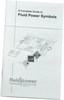
Description: Can you remember all of the graphic symbols? Why should you when you can have this pocket-sized reference manual at your finger tips? Graphic symbols cross language barriers. This booklet promotes a universal understanding of fluid power systems by representing those symbols which are
-
Supplier: Princess Auto Limited
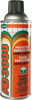
Description: AD3000 Corrosion Barrier Film
- Functions: Corrosion Inhibitor / Rust Preventative
-
Supplier: Brady Corporation
Description: Keep aisles and walkways slip free. Barrier Spill Matting's needle-punched polypropylene fibers and non-stick backing prevents fluids from penetrating through to the floor. It can absorb water, oil, or chemicals.
-
Supplier: 80 - 20 Marketing, Inc.
Description: Free Shipping on all orders. Unisex White ASEP Barrier Lab Coat. 100 % Polyester ASEP Barrier Fabric. The Collar can be worn open or SNAPPED closed to cover the neck..This Barrier Lab Coat has REINFORCED concealed snap front closure which provides greater protection from
- Clothing Type: Jacket/Coat
- Industry: Pharmaceutical/Medical
-
Supplier: Polyguard Products, Inc.
Description: have a series of fluid-applied flashings and detail products.
- Thickness: 0.04 inch
- Length / Height: 75 ft
- Width: 0.5 to 3 ft
- Material: Aluminum, Other, Polyethylene
-
Supplier: ASTM International
Description: fluid health and safety. 1.3 This terminology standard defines primary metalworking operations, fluid types, and other terms germane to the practice of metalworking fluid management. 1.4 This standard does not purport to address all of the safety concerns, if any, associated
-
Supplier: Polyguard Products, Inc.
Description: membranes. As an alternative, we have a series of fluid-applied flashings and detail products.
- Thickness: 0.028 inch
- Length / Height: 100 ft
- Width: 0.5 to 2.3333333333333335 ft
- Applications: Building Wrap, Walls
-
Supplier: ASTM International
Description: 1.1 This test method covers determining the activity and coke selectivity of either equilibrium or laboratory deactivated fluid catalytic cracking (FCC) catalysts. The activity is evaluated on the basis of mass percent conversion of gas oil feed in a fluidized bed reactor. The coke yield is
-
Supplier: ASTM International
Description: additional information on pumpability topics found in companion guides for evaluating heat transfer fluids, Guides D5372 and D7665. 1.2 Pumpability of heat transfer fluids is dependent on both fluid properties and the design of the fluid handling system that stores and
-
Supplier: ASTM International
Description: 1.1 This classification covers and is designed to standardize and consolidate the terminology, nomenclature, and classification of metalworking fluids and related materials. 1.2 Metalworking fluids includes both metal removal and forming fluids. These are the coolants and
-
Supplier: ASME
Description: language barriers are presented herein. This standard shows the basic symbols, describes the principles on which the symbols are based, and illustrates some representative composite symbols. Composite symbols can be devised for any fluid power component by combining basic symbols.
-
Supplier: ASME Standards and Certification
Description: language barriers are presented herein. This standard shows the basic symbols, describes the principles on which the symbols are based, and illustrates some representative composite symbols. Composite symbols can be devised for any fluid power component by combining basic symbols.
-
Supplier: Polyguard Products, Inc.
Description: fluid-applied flashings and detail products.
- Thickness: 0.04 inch
- Length / Height: 75 ft
- Width: 0.5 to 3 ft
- Applications: Building Wrap, Walls
-
Supplier: Mechanical Research & Design, Inc.
Description: MRD Environmental is Mechanical Research & Design, Inc.’s product brand for environmental hazards mitigation including Pressure Barrier Isolation and Testing Products. Many of our products are used for the Sealing and Containment of sensitive or hazardous solids and fluids as well as
-
Description: Covers the connection assembly of cables to gas-insulated metal-enclosed switchgear in single- or three-phase arrangements where the cable terminations are fluid-filled and there is a separating insulating barrier between the cable insulation and the gas insulation of the switchgear.
-
Supplier: AGC Chemicals Americas, Inc.
Description: FibraLAST® non-fluorinated oil/water repellents are ideal for technical textiles. When applied as a thin polymeric coating on textiles, they form a microscopically rough texture that acts as a chemical barrier. This treatment enables textiles to repel oil-based stains and fluids,
- Features: Chemical / Oil Resistant, Coating, Other, Waterproof / Water Repellant
- Location / Orientation: Exterior
- Industry: Food and Beverage
- Form: Liquid
-
Supplier: SAE International
Description: for SFI (Structure-Fluid Interaction) applications were evaluated in this research. The three methods, including two computational gas dynamic methods, the CV/UP and CPM methods, and one computational fluid dynamic method, the ALE method, were employed to simulate the fifteen benchmark
-
Supplier: CSA Group
Description: This standard covers the connection assembly of fluid-filled and extruded cables to gas-insulated metal enclosed switchgear (GIS), in single- or three-phase arrangements where the cable-terminations are fluid-filled or dry type and there is a separating insulating barrier
-
Description: This standard covers the connection assembly of fluid-filled and extruded cables to gas-insulated metal enclosed switchgear (GIS), in single- or three-phase arrangements where the cable-terminations are fluid-filled or dry type and there is a separating insulating barrier
-
Supplier: AENOR
Description: Geosynthetic barriers - Characteristics required for use as a fluid barrier in the construction of tunnels and underground structures
-
Supplier: AENOR
Description: Geosynthetic barriers - Characteristics required for use as a fluid barrier in the construction of tunnels and underground structures
-
Description: Single liquid nitrogen feedthroughs are constructed with single coaxial tube geometries. This thermal barrier effectively reduces condensation and ice buildup on the atmosphere side of the feedthrough around the mounting flange interface, protecting the seal's integrity. This is necessary
- Vacuum Rating: 0.00000000009908234233080288 torr
- Temperature Range: -270 to 450 C
- Tubing Diameter: 0.375 inch
- Feedthrough Mount: Flange Mount
-
Description: Dual liquid nitrogen feedthroughs are constructed with dual coaxial tube geometries. This thermal barrier effectively reduces condensation and ice buildup on the atmosphere side of the feedthrough around the mounting flange interface, protecting the seal's integrity. This is necessary because
- Vacuum Rating: 0.00000000009908234233080288 torr
- Temperature Range: -270 to 450 C
- Tubing Diameter: 0.375 inch
- Feedthrough Mount: Flange Mount
-
Supplier: CIMCOOL
Description: MILFORM 115 is a semi-synthetic formulated for use as a stator and rotor lamination stamping fluid.
- Viscosity Index: 44
- Features: Corrosion Inhibitor / Rust Preventative, Metal Working Fluid, Sealing / Barrier
- Function: Metal Forming
- Composition / Chemistry: Synthetic / Semi-synthetic, Water Soluble / Emulsion
-
Supplier: Houghton International, Inc.
Description: line and on the tandem mill, while providing a physical barrier against scratching and gouging in the coiling, coil handling and uncoiling processes. The sulfur additive in these products is inactive and non-staining, and it minimizes or eliminates certain carbon defects that occur in the
- Features: Fluid / Oil, Metal Working Fluid, Specialty
- Function: Lubricant, Metal Forming









Find Suppliers by Category Top
Featured Products Top
-
 crystallize in the atmosphere, an appropriate quench connection or barrier fluid must be provided. Various attempts have been made to improve the performance of mechanical seals in order to meet regulations pertaining to emissions. Examples include double acting mechanical seals of "tandem (read more)
Browse Gear Pumps Datasheets for Dickow Pump Company, Inc. -
in the atmosphere, an appropriate quench connection or barrier fluid must be provided. Various attempts have been made to improve the performance of mechanical seals in order to meet regulations pertaining to emissions. Examples include double acting mechanical seals of "tandem design (read more)
Browse Gear Pumps Datasheets for Dickow Pump Company, Inc. -
-grade, synthetic seal faces against fixed, stainless steel seal faces. The HB is sized following standards of the Conveyor Equipment Manufacturers Association (C.E.M.A.) and their metric equivalents. The HB Seal cavity is charged with low-pressure air/gas, which acts as a barrier fluid to provide (read more)
Browse Mechanical Seals Datasheets for Woodex MECO Industries -
are available in hardcoat-anodized aluminum, type 316L stainless steel, or FDA Nylon. The HB Seal cavity is charged with low-pressure air or gas, which acts as a barrier fluid to provide pneumatic seal face loading. This is a simple (read more)
Browse Mechanical Seals Datasheets for Woodex MECO Industries -
mechanical seals, along with external fluid reservoirs or barrier fluid circulating systems. Due to the fact that 90% of pump failures and required service base on leaking mechanical seals, the sealless design will save maintenance and spare parts costs remarkably (read more)
Browse Liquid Handling Pumps Datasheets for Dickow Pump Company, Inc. -
, the static shroud replaces double acting mechanical seals, along with external fluid reservoirs or barrier fluid circulating systems. Due to the fact that 90% of pump failures and required service base on leaking mechanical seals, the sealless design will save maintenance and spare parts costs (read more)
Browse Chemical Pumps Datasheets for Dickow Pump Company, Inc. -
safety, especially when handling toxic, explosive or other dangerous liquids which react on contact with the atmosphere. For all such services, the static shroud replaces double acting mechanical seals, along with external fluid reservoirs or barrier fluid circulating systems. Due to the fact that 90 (read more)
Browse Chemical Pumps Datasheets for Dickow Pump Company, Inc. -
mechanical seals, along with external fluid reservoirs or barrier fluid circulating systems. Due to the fact that 90% of pump failures and required service base on leaking mechanical seals, the sealless design will save maintenance and spare parts costs remarkably (read more)
Browse Centrifugal Pumps Datasheets for Dickow Pump Company, Inc. -
seal face, spring-loaded against a single, bearing-grade, polymeric stationary seal face. The seal does not require a barrier fluid. A wide selection of materials is available, allowing service in diverse processes. The fully-split seal is custom-designed for (read more)
Browse Mechanical Seals Datasheets for Woodex MECO Industries -
additional cooling is required when the media has vapor pressure greater than atmospheric pressure at operating temperatures. Additionally, when handling fluids that crystallize in the atmosphere, an appropriate quench connection or barrier fluid must be provided. Various attempts have been (read more)
Browse Chemical Pumps Datasheets for Dickow Pump Company, Inc.
Conduct Research Top
-
Field-Effect Sensors for Fluid Detection Applications (.pdf)
Field-Effect sensing has the unique ability to detect fluids and semi-solid materials without making direct contact. If the material being targeted is conductive in nature (for example, water), and the barrier wall is non-conductive, then Field-Effect is the technology of choice. Field-Effect
-
Skin Treatment Cycle
with the procedures specified in the Regulations of the Federal Hazardous Substance Act. Results from these testing procedures show that CIMCOOL metalworking fluids are mild at their recommended use dilutions. Healthy skin's first line of defense against irritation is its "barrier layer
-
Interphex Booth Previews
Training in Fluid Bed Systems spring seminar, April 20 to 21, 2004, presenting the principles of fluidization, airflow entrainment, spray rates and nozzle configurations. Each principle is discussed in theory and demonstrated in ACT's laboratory. molded silicone fittings are supplied as assemblies
-
Interphex Preview, Part Deux
This quick, one-time registration gives you access to members-only site benefits. provides solutions for pharmaceutical, nutraceutical, veterinary and biotechnology packaging. This includes barrier isolation technology, filler, washers, depyrogenation tunnels, cappers, and inspection equipment
-
Moving Beyond the Batch
By Bill Swichtenberg, Senior Editor Changing the status quo is always difficult. In pharmaceutical manufacturing, history is on the side of batch processing, which explains why continuous processing continues to face high barriers to acceptance. Not every pharma process can, or should, run
-
Isolator Systems Take On Clean Rooms
Despite the need for higher sterility, Lysfjord and Porter's biennial review of "barrier isolators, " published in in 2001, suggests that interest in new installations has leveled or may be declining. The authors note that a combination of complexity and limited personnel are causing manufacturers
-
MSilica Nanoparticles Treated by Cold Atmospheric-Pressure Plasmas Improve the Dielectric Performance of Organic-Inorganic Nanocomposites
chamber geometries by. imposing a dielectrophoresis (DEP) force on the beads. In cDEP the electrodes are not in. direct contact with the fluid sample but are instead capacitively coupled to the mixing. chamber through thin dielectric barriers, which eliminates many of the problems. encountered
-
A Microfluidic System for Biological Particle Enrichment Using Contactless Dielectrophoresis
conductive. fluid to act as electrodes and provide the necessary electric. field. These reservoirs are placed adjacent to the main microfluidic. channel and are separated from the sample by a thin. barrier of a dielectric material as shown in Figure 1H. The. application of a high-frequency electric field
-
Relays: Principle of Operation for Engineers
well the practical advantages of modern technology. Like their counterparts for fluid control, these apparently simple devices are much more sophisticated than they appear. For example, Ledex-BLP 200 relays use a contact configuration which solves a long-standing problem with high-current contactors
-
Designing Atmospheric-Pressure Plasma Sources for Surface Engineering of Nanomaterials
electrode channels, containing a. high-conductive solution, are isolated from the sample. channel by thin insulating membranes [29, 30]. The geometry. of the fluid electrode channels as well as the sample channel,. which incorporates insulating barriers, creates the electric. field non-uniformities
More Information Top
 Indicates content that may require registration and/or purchase.

-
Code of Federal Regulations > Title 40 - Protection of Environment > Clean Air Act / Air Programs (CAA) > [40 CFR Part 63] National Emission Standards for Haza...
(iii) Indications by a sensor that a seal or barrier fluid system has failed; or .
-
Federal Register > Tuesday, June 29, 1999 > [64 FR 34854] National Emission Standards for Hazardous Air Pollutants: Generic Maximum Achievable Control Technolo...
Each pump equipped with a dual mechanical seal system that includes a barrier fluid system is exempt from the requirements of paragraph (b) of this section, provided the requirements specified in paragraphs (e)(1)(i) through (e)(1)(viii) of this section…
-
USA - Arkansas - Universal Waste Rule: Arkansas Regulation 23, Section 273 (2003)
(d) Each pump equipped with a dual mechanical seal system that includes a barrier fluid system is exempt from the requirements of paragraph (a) of this section, provided the following requirements are met: .
-
Federal Register > Monday, March 26, 2012 > [77 FR 17898] National Uniform Emission Standards for Storage Vessel and Transfer Operations, Equipment Leaks, and ...
We are also proposing specific monitoring and repair requirements for pumps equipped with a dual mechanical seal system that includes a barrier fluid system, pumps with no externally actuated shaft penetrating the pump housing, pumps located within the boundary of an unmanned…