
Products & Services
See also: Categories | Featured Products | Technical Articles | More Information-
Supplier: TiMOTION Technology
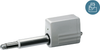
Description: TiMOTION’s TA23 series is a compact linear actuator primarily used for medical applications that require high force and high speed. This linear actuator also has the ability to save installation space by mounting the control box to the actuator. The TA23
- Rated Speed: 1.55511811023622 in/sec
- Rated Force: 2,248 lbs
- Material: Aluminum, Plastic
- Mounting Type: Clevis or Eye
-
Supplier: Ewellix
Description: High safety factor The Runner is a very compact and powerful linear actuator up to 12 000 N, targeting high load applications for medical devices. The series is medically approved and available with options such as anti pitching, incremental position feedback and emergency lowering.
- Stroke or X-Axis Travel: 1.968505 to 19.68505 inch
- Rated Speed: 0.31496062992126 in/sec
- Motor Voltage: 24 volts
- Actuation Type: Electrical
-
Supplier: IntelLiDrives, Inc.
Description: I-Force linear actuator comprise of direct drive core-less and hysteresys-free linear brushless motor with integrated position sensing and bearings. They feature extremely high dynamic response and force linearity. For use in applications with force control
-
-
Supplier: IntelLiDrives, Inc.
Description: I-Force linear actuator comprise of direct drive core-less and hysteresys-free linear brushless motor with integrated position sensing and bearings. They feature extremely high dynamic response and force linearity. For use in applications with force control
-
Supplier: Progressive Automations
Description: When you’re looking for power and performance, the PA-03, 12 volt linear actuators are the only one you need. No matter what your use, these models add the automation you need to any project or application. These actuators can be found everywhere across hundreds of industries.
- Stroke or X-Axis Travel: 1 to 40 inch
- Rated Force: 200 to 600 lbs
- Material: Aluminum
- Actuation Type: Electrical
-
Supplier: IntelLiDrives, Inc.
Description: I-Force linear actuator comprise of direct drive core-less and hysteresys-free linear brushless motor with integrated position sensing and bearings. They feature extremely high dynamic response and force linearity. For use in applications with force control
-
Supplier: IntelLiDrives, Inc.
Description: I-Force linear actuator comprise of direct drive core-less and hysteresys-free linear brushless motor with integrated position sensing and bearings. They feature extremely high dynamic response and force linearity. For use in applications with force control
-
Supplier: PI (Physik Instrumente) L.P.
Description: position and force control OEM Linear Actuator PIMag® Voice coil linear drive, high velocity and high dynamics. Low wear and high lifetime. Integrated linear encoder for reliable position control and repeatable accuracy. Position sensor resolution: 0.01 µm.
- Force Constant (KF): 1.7984 lb/amp
- Peak Force (FP): 2.248 lbs
- Linear Stroke: 0.787402 inch
- Electrical Time Constant: 375 µs
-
Supplier: PI (Physik Instrumente) L.P.
Description: Force up to 20 N Velocity up to 750 mm/s Integrated linear encoder, 0.01 µm resolution Weight force compensation Optional force sensor with 1 mN resolution OEM Linear Actuator PIMag® voice coil linear drive, high velocity and high dynamics. Low wear
- Force Constant (KF): 3.0348 lb/amp
- Peak Force (FP): 4.496 lbs
- Linear Stroke: 0.393701 inch
- Electrical Time Constant: 430 µs
-
Supplier: PI (Physik Instrumente) L.P.
Description: 20 mm Travel Range Extremely High Resolution High Force to 800 N Holding Force Self-Locking at Rest Non-Magnetic and Vacuum-Compatible Working Principle Cleanroom Compatible
- Stroke or X-Axis Travel: 0.787402 inch
- Rated Speed: 0.015748031496063 to 0.0393700787401575 in/sec
- Rated Force: 67.44 to 179.84 lbs
- Material: Aluminum
-
Supplier: Progressive Automations
Description: The PA-07 micro linear actuator is by far the smallest linear actuator we have in stock, making it ideal for projects and applications where limited space is a necessity and little force is required. Its small size and force output make it popular in
- Stroke or X-Axis Travel: 0.8 to 4 inch
- Rated Speed: 0.59 in/sec
- Rated Force: 5 lbs
- Material: Aluminum
-
Supplier: Progressive Automations
Description: When you need high-force, power and performance combined with a reliable automation solution there is only one unit for you, the PA-17 iIndustrial linear actuator. These heavy duty units are perfect for jobs that require a large amount of force and can be found anywhere
- Stroke or X-Axis Travel: 1 to 24 inch
- Rated Speed: 0.24 to 0.59 in/sec
- Rated Force: 850 to 2,000 lbs
- Mounting Type: Double-end Mount
-
Supplier: Progressive Automations
Description: CUSTOM MINI ACTUATORS: Having an actuator for every single project or application would be next to impossible, but we’ve created a service that gets you the unit you need every time. Our custom actuator service takes your specifications and creates the actuator that you
- Stroke or X-Axis Travel: 1 to 40 inch
- Rated Speed: 0.59 to 2 in/sec
- Rated Force: 35 to 150 lbs
- Material: Aluminum
-
Supplier: ProMation Engineering, Inc.
Description: Designed and engineered for precision operation of linear process control valves. Up to 4400 lbs (19.57 kN) of force 2 inches (50mm) travel. Field Selectable Stops – Travel stops can be set by location with a mechanical switch or by a rated force switch, either on the down or up
- Stroke or X-Axis Travel: 2 inch
- Rated Speed: 0.044 in/sec
- Rated Force: 1,200 lbs
- Motor Voltage: 24 to 230 volts
-
Supplier: PI (Physik Instrumente) L.P.
Description: Travel Range 10 mm Resolution to 0.025 nm Open-Loop,5 nm Closed-Loop Up To 50 N Force Generation and 70 N Holding Force Self-Locking at Rest, No Heat Generation Non-Magnetic and Vacuum-Compatible Working Principle Cleanroom Compatible
- Stroke or X-Axis Travel: 0.393701 inch
- Rated Speed: 0.015748031496063 to 0.0393700787401575 in/sec
- Rated Force: 11.24 to 15.736 lbs
- Material: Aluminum
-
Supplier: EDrive Actuators, Inc.
Description: The Eliminator SS™ Super Speed ball screw linear actuator provides a strong, durable, and precise linear motion actuator for industrial automation. Our Super Speed Linear Actuators Functionality The Eliminator SS™ ball screw actuator, using your motor
- Stroke or X-Axis Travel: 12 to 48 inch
- Rated Speed: 65 in/sec
- Rated Force: 2,000 lbs
- Drive Type: Ball Screw
-
Supplier: EDrive Actuators, Inc.
Description: The Eliminator SD™ Super Duty ball screw linear actuator provides a strong, durable, and precise linear motion actuator for industrial automation. Our Super Duty Linear Actuators Functionality The Eliminator SD™ ball screw actuator, using your motor
- Stroke or X-Axis Travel: 6 to 48 inch
- Rated Speed: 12 in/sec
- Rated Force: 30,000 to 100,000 lbs
- Drive Type: Ball Screw
-
Supplier: EDrive Actuators, Inc.
Description: The Eliminator HD™ Heavy Duty ball screw linear actuator provides a strong, durable, and precise linear motion actuator for industrial automation. Our Heavy Duty Linear Actuators Functionality The Eliminator HD™ ball screw actuator, using your motor
- Stroke or X-Axis Travel: 12 to 48 inch
- Rated Speed: 8 to 23 in/sec
- Rated Force: 2,000 to 25,000 lbs
- Drive Type: Ball Screw
-
Supplier: Exlar
Description: Exlar FT Series force tubes use a roller screw mounted inside a telescoping tube mechanism. The follower is attached to the moveable force tube, which then extends and retracts as the screw rotates. The FT Series is designed to be compatible with a wide variety of standard motors.
- Stroke or X-Axis Travel: 12 inch
- Rated Speed: 15.8 in/sec
- Rated Force: 44,600 to 49,750 lbs
- Features: Adjustable Stroke, Closed Loop Control, Multi-position, Other
-
Supplier: Bansbach Easylift®
Description: Our small bestseller is now also available as easyE-35i with integrated controller, the intelligent inline actuator solution.The perfect addition without compromising on design and efficiency. The integration of the controller results in the following advantages: Very compact design despite
- Stroke or X-Axis Travel: 1.968505 to 29.527575 inch
- Rated Force: 26.976 to 494.56 lbs
- Material: Aluminum, Stainless Steel, Steel
- Device Type: Rod Type
-
Supplier: Iris Dynamics Ltd.
Description: velocity controlled. This means their logic controllers deliver commands to move to a specific position or at a specific velocity. Our motors are inherently force controlled which means they can feel the force they are imparting. This is a critical safety feature in
- Stroke or X-Axis Travel: 5.1 inch
- Rated Speed: 0.7 to 1.8 in/sec
- Rated Force: 116 to 247 lbs
- Motor Type: DC Brushless
-
Supplier: OMEGA Engineering, Inc.
Description: DLT Linear Thruster Slides are fabricated with precision ground shafts and incorporate preloaded linear ball bushing for a robust guided air cylinder with excellent linear motion control. Shock absorbers and precision stop blocks create pneumatic linear motion with
- Stroke or X-Axis Travel: 0.2 to 6 inch
- Positioning Accuracy: 0.001 inch/inch
- Orientation: Horizontal, Inverted, Vertical
- Motor Features: Linear Position Feedback
-
Supplier: Portescap
Description: 26DAM-K Linear Actuator Stepper Motor 26DAM-K The 26DAM-K is a captive linear actuator that provides up to 120 oz of linear force in a 26 mm frame size. Product Highlights High continuous linear force output for size Digitally controlled
- Stroke or X-Axis Travel: 0.51968532 inch
- Motor Voltage: 5 volts
- Device Type: Rod Type
- Motor Type: Stepper
-
Supplier: H2W Technologies
Description: a system that is capable of intricate position, velocity, and acceleration control. These actuators can also be used for precise force control because of the linear force versus current characteristics. If you would like to see these actuators without a built-in
- Force Constant (KF): 0.13 lb/amp
- Linear Stroke: 0.1 inch
- Electrical Time Constant: 40 µs
- Continuous Power: 2 watts
-
Description: reliable – compact – precise cyber force motors integrate the ball/planetary screw directly into the motor for a uniquely compact package with flexible mounting. The resulting linear force assembly is reliable, durable and precise. Product Features Integrated assembly –
- Rated Speed: 11.8110236220472 in/sec
- Rated Force: 2,697.6 lbs
- Drive Type: Ball Screw, Direct Drive
- Actuation Type: Electrical
-
Supplier: TrimTeck
Description: Dynamic positioning accuracy means precise control. Optimux’s spring cylinder actuator is a key element to the OpGL™ excellent shutoff characteristics. The OpTK™ delivers more than three times the linear force offered by traditional diaphragm actuators while providing
- Air Supply Pressure: 150 psi
- Operating Temperature: -40 to 350 F
- Air Supply Pressure Range: 150 psi
- Acting type: Double Acting (Air to Air)
-
Supplier: KSB AG
Description: characteristic Equal- percentage/Linear Actuating signal 4- 20mA Actuator closing time 0 s Max. torque 16 002 Min. ambient temperature, actuator 70 °C Ambient temperature, actuator 20- °C Actuator limit switch Yes Actuator position feedback Yes Face-to-face
- Operating Temperature: -4 to 158 F
- Features: Electric
- Control Signal Input: Milliampere Control Signal
- Location: Non-hazardous
-
Supplier: SAE International
Description: implement advanced and innovative VVA managements on four-stroke engines. ElectroMechanical Valve Actuator (EMVA) formed by two opposite magnets and two balanced springs seem to be a very promising solution among several camless actuation systems. This type of valve actuator is
-
Supplier: KSB AG
Description: characteristic Equal- percentage/Linear Actuating signal 4- 20mA Actuator closing time 0 s Max. torque 16 002 Min. ambient temperature, actuator 70 °C Ambient temperature, actuator 20- °C Actuator limit switch Yes Actuator position feedback Yes Face-to-face
- Operating Temperature: -4 to 158 F
- Features: Electric
- Control Signal Input: Milliampere Control Signal
- Location: Non-hazardous
-
Supplier: H2W Technologies
Description: includes a 1 micron resolution linear encoder on each axis. It is ideal for high force positioning applications. Each voice coil has a 0.80" [20.3 mm] stroke; generate 35 lbs [159 N] of continuous force and 105 lbs [477 N] of peak force, or a combined 70 lbs [318 N]
- Stroke or X-Axis Travel: 0.8 inch
- Y-Axis Travel: 0.8 inch
- Bearing Type: Ball/Roller Bearing
- Drive Type: Direct Drive
-
Supplier: Assured Automation
Description: Description: The VA Series combines a pneumatic actuator and fast on-off control valve into one body, eliminating packing glands, actuators and mounting kits. There are no exposed moving parts, eliminating pinch points and increasing operator safety. Since the actuator is part
- Valve Size: 0.375 to 2 inch
- Pressure Rating: 150 psi
- Number of Ports/Ways: 2
- Flow (Cv): 8 to 81
-
Supplier: Badger Meter
Description: linear retraction of the valve stem upon an increasing instrument signal. A decrease in instrument signal causes the stem to extend and close the valve. Downward closing force is generated by the spring, bearing on the diaphragm plate. An increasing pressure in the diaphragm cavity
- Stem Diameter: 0.25 to 0.5 inch
- Operating Temperature: -20 F
- Features: Hydraulic
-
Supplier: SAE International
Description: valve seat angle and the throttle diameter of the high speed on-off valve have great effects on the flow force. At last the effects of structural parameters of the high speed on-off valve on extending the range of the linear control are proposed, serving as references for improving the
-
Supplier: ETEL S.A.
Description: AQUARIUS ST is the latest generation of our short stroke actuators specifically designed for “Test & Scan” turret applications. This series offers improved force control repeatability and higher throughput, which ultimately reduces the total cost of ownership of the machine. In “Test &
- Rated Speed: 39.37007874015748 in/sec
- Rated Force: 48.1072 lbs
- Motor Continuous Power: 0.0268044076980564 HP
- Motor Voltage: 48 volts
-
Supplier: LINAK U.S. Inc.
Description: The TWINDRIVE® TD5 is a dual actuator especially developed for box spring beds where a high force is required. With a force of 7,000 N on both back and leg ends, the TD5 is the strongest dual actuator in the LINAK HOMELINE® portfolio. The TD5 Standard is for bed systems
- Motor Type: DC
- Actuation Type: Electrical
- Device Type: Rodless












Find Suppliers by Category Top
Featured Products Top
-
 , the ST series allows a higher force control repeatability and a higher throughput, reducing the final machine cost of ownership. In this application, short move and settle time as well as smooth force limitation at low force level are key parameters that can now be (read more)
Browse Linear Actuators Datasheets for ETEL S.A. -
We're thrilled to announce one of the new additions to our product lineup, the P8-R Linear Servo. Based on our powerful P8 platform, the P8-R is an ideal solution for projects requiring dependable linear motion in a compact form factor, with standard servo control. This servo represents a (read more)
Browse Linear Actuators Datasheets for Actuonix Motion Devices -
(TUCANA and AQUARIUS), the ST series allows a higher force control repeatability and a higher throughput, reducing the final machine cost of ownership. More Information (read more)
Browse Linear Actuators Datasheets for ETEL S.A. -
allows a higher force control repeatability and a higher throughput, reducing the final machine cost of ownership. In this application, short move and settle time as well as smooth force limitation at low force level are key parameters that can now be fulfilled with less (read more)
Browse Linear Actuators Datasheets for ETEL S.A. -
.). The APES 17 offers 40% more force than competitive size 17 designs. ElectroCraft hybrid stepper-based linear actuators provide original equipment manufacturers the precision, performance and reliability that is needed for a wide variety of motion control positioning applications. From medical (read more)
Browse Linear Actuators Datasheets for ElectroCraft -
Linear Actuators for Micropositioning and Precision Alignment – Now Available with Fast Delivery High Precision Actuators with Stepper Motors and Servo Motors For tasks (read more)
Browse Linear Actuators Datasheets for PI (Physik Instrumente) L.P. -
ensures tailored solutions for prototyping and production. With over a century of expertise, Bansbach Easylift’s electric linear actuators set the standard for precision, reliability, and innovation in motion control (read more)
Browse Linear Actuators Datasheets for Bansbach Easylift® -
micro linear servo is ideal for projects where higher force or speed is required, and RC or Arduino control is preferred. Applications where minor actuator customization or remote position monitoring is necessary are also a good fit. Using our Ext-R board saves you designing a custom controller or a custom actuator. (read more)
Browse Linear Actuators Datasheets for Actuonix Motion Devices -
and designers seeking advanced motion control features in compact applications. The Linear Actuator Attachment combines a lead screw and resin nut into a streamlined, gearhead-style mounting adapter. Now integrated with the AZ Series, users benefit from simplified return-to-home functions (read more)
Browse Linear Slides and Linear Stages Datasheets for Oriental Motor USA -
: Gas Springs (Standard, locking, traction, stainless steel, and customized gas springs) easyE® (Electric Linear Actuators (read more)
Browse Linear Actuators Datasheets for Bansbach Easylift®
Conduct Research Top
-
Force Feedback in Linear Actuators
When specifying the initial system, designers may benefit from selecting electric actuators with internal load cells. This option is a practical solution that provides optimum alignment, protection of load cell sensors, and streamlines the path of cables from actuator to controls.
-
How to Select a Linear Solenoid / Linear Actuator
such as the required stroke and force, along with the duty cycle are 3 key determinants in selecting the right linear solenoid for an application, other elements such as controllability, life expectancy, speed and cost are also taken into consideration.
-
5 Tips for Implementing an Integrated Stepper Linear Actuator System
positioning for many applications at an affordable price. The integrated stepper linear actuator design provides optimal performance in terms of linear force and speed, load rating, system efficiency and reliability. Fewer mechanical components mean lower costs and greater system accuracy. This integrated
-
A Finer Control of Linear Motion
Linear actuators essentially generate force and motion through a straight line. In a typical mechanical system, a device's output shaft would provide linear motion using a rotary motor through gears, a belt and pulley, or other mechanical components. Trouble is, these components must be coupled
-
The 5 Best Industry Applications For Linear And Rotary Solenoids
at high speeds. When a product needs to be released or diverted, it is a linear or rotary solenoid that controls these fast-paced movements. Johnson Electric solenoids can provide up to 30 pounds of force even though they are very compact (only about 2 inches long) - making them useful in canneries
-
Voice Coils vs. Solenoids: What is the Difference?
The question of whether to use voice coil actuators or solenoids for small displacement motion control applications comes up often. This article explains the key differences between each product and why you might choose one over the other for your application. A non-commutated DC linear actuator
-
Proportional Solenoids: Technical Overview
Proportional Solenoids are linear actuators with a force proportional to the current in a limited range. With the addition of a return spring in your application you can make the proportional solenoid into a positioning device, where the position is depending on the input current to the coil
-
Solenoids: Principle of Operation
. Whether your design includes linear or rotary actuation, we can help you determine the best solenoid to meet your application design requirements, such as: Exceptional Force/Torque. A linear solenoid can provide up to 30 pounds of force from a unit less than 2-1?4 inches long. A rotary solenoid can
More Information Top
 Indicates content that may require registration and/or purchase.

-
Mechanical assembly and magnetic actuation of polydimethylsiloxane-iron composite interconnects for microfluidic systems
Without the magnetic field, disassembly forces of 36-71mN were measured by a controlled force linear actuator for PDMS-iron cylinders from PDMS and PDMS-iron holes.
-
Low‐Magnitude Mechanical Loading Becomes Osteogenic When Rest Is Inserted Between Each Load Cycle
The tibia diaphysis then was placed under “cantilever” bending in the medial-lateral plane by applying force to the lateral distal tibia metaphysis via a computer- controlled linear force actuator .
-
Noninvasive Loading of the Murine Tibia: An In Vivo Model for the Study of Mechanotransduction
(B) A computer controlled linear force actuator attached to a distal loading bracket applies small forces (0.3N is sufficient to induce physiological magni- tude strains) to the distal tibial metaphysis (dorsal view).
-
PLOS Computational Biology: Rescuing Loading Induced Bone Formation at Senescence
Briefly, with the mouse anesthetized with inhaled isoflurane (2%), the device grips the proximal tibia and applies controlled loads to the distal tibia in the M-L direction via a computer controlled linear force actuator .
-
A multisensory linear actuator system
Index Terms— Force control , linear actuator , position control, sensors.
-
RESEARCH
The seismic waves were generated with two, 25-lb force - controlled linear actuators oper- ated as shakers.
-
Design and Evaluation of the LOPES Exoskeleton Robot for Interactive Gait Rehabilitation
Finally, the forwards and backwards motion is driven by an open-loop force - controllable linear actuator .
-
Electromagnetic actuation systems-design and applications
Fig 7 shows a schematic of such a system, the main elements being a speed-controlled brushless dc motor, a force - controlled linear actuator , and an LVDT position transducer - whlch monitors the burn-off length of the stud, and controls the rotational…