
-
Description: UANBEN’s RFID reader is a low-cost solution to read RFID tags. The built-in automatic tuning circuit regulates circuit parameters to cope with different working environments, increasing its anti-interference capability. The RFID reader is designed with an
- Frequency: 125,000 to 134,200 Hz
-
Description: 1.Overview The RFID (Radio Frequency Identity) RFH-1332-114C is a non-contact high frequency RFID reader, specially designed for use in embedded applications such as address reading or proximity control of AGV and other industrial application. It can be worked in a
- Frequency: 13,560,000 Hz
- Detection Range: 7 to 8.999999999999998 cm
- Operating Temperature: -10 to 70 C
- Features: Other
-
Supplier: GAO Tek, Inc.
Description: This HF Mifare RFID reader/writer module is an ideal device for system integrators providing a high performance, secure, cost-effective platform to provide almost any device with RFID reader technology.
-
-
Supplier: GAO Tek, Inc.
Description: 211001 RFID Code Verifier Proximity Reader with LCD Display is so-called RFID card reader and it is based on RFID technology.
-
Supplier: GAO Tek, Inc.
Description: This high frequency RFID reader/writer is designed to read and write Mifare MF1 tags
-
Supplier: GAO Tek, Inc.
Description: This high frequency RFID reader/writer is ideally suited for such applications as jewelry management, laundry management and document tracking
-
Description: 1. Overview The RFID (Radio Frequency Identity) RFH-1332-114D is a non-contact high frequency RFID reader, specially designed for use in embedded applications such as address reading or proximity control of AGV and other industrial application. It can be worked in
- Frequency: 13,560,000 Hz
- Detection Range: 7 to 8.999999999999998 cm
- Operating Temperature: -20 to 70 C
- Features: Other
-
Supplier: Newark, An Avnet Company
Description: RFID READER, 960MHZ, XQFN-8; Frequency Min:860MHz; Frequency Max:960MHz; RFID IC Type:Reader; Programmable Memory:3.25Kbit; Output Power:-; RF IC Case Style:XQFN; No. of Pins:8Pins; Supply Voltage Min:1.8V; Supply Voltage Max:3.6V; RoHS Compliant: Yes
-
Description: 1.Overview The RFID (Radio Frequency Identity) RFH-1332-114B is a non-contact high frequency RFID reader, specially designed for use in embedded applications such as address reading or proximity control of AGV and other industrial application. It can be worked in a
- Frequency: 13,560,000 Hz
- Detection Range: 7 to 8.999999999999998 cm
- Operating Temperature: -20 to 70 C
- Features: Other
-
Supplier: Newark, An Avnet Company
Description: RFID, READER, 13.56MHZ, HXSON-4; Frequency Min:-; Frequency Max:13.56MHz; RFID IC Type:Reader; Programmable Memory:-; Output Power:-; RF IC Case Style:HXSON; No. of Pins:4Pins; Supply Voltage Min:-; Supply Voltage Max:-; Current RoHS Compliant: Yes
-
Supplier: Newark, An Avnet Company
Description: RFID READER, 13.56MHZ, SOIC-32; Frequency Min:-; Frequency Max:13.56MHz; RFID IC Type:Reader; Programmable Memory:-; Output Power:-; RF IC Case Style:SOIC; No. of Pins:32Pins; Supply Voltage Min:3V; Supply Voltage Max:3.6V; Current RoHS Compliant: Yes
-
Supplier: Newark, An Avnet Company
Description: RFID READER, 13.56MHZ, HVQFN-32; Frequency Min:-; Frequency Max:13.56MHz; RFID IC Type:Reader; Programmable Memory:-; Output Power:-; RF IC Case Style:HVQFN; No. of Pins:32Pins; Supply Voltage Min:3V; Supply Voltage Max:5.5V; CurrentRoHS Compliant: Yes
-
Supplier: Win Source Electronics
Description: Win Source Part Number: 1235622-SPSPRDR1-8NA Category: RF/IF and RFID>RFID Reader Modules Type: Read Only Standard Package: 1 Frequency: 865MHz ~ 868MHz, 902MHz ~ 928MHz Standards: ISO 18000-6 Package / Case: Module Fake Threat In the Open Market: 62 pct. MSL Level: Not
- Frequency: 865,000,000 to 928,000,000 Hz
-
Supplier: RFID, Inc.
Description: Active Tag Reader is a revolutionary new product utilizing 433.92 MHz frequency addressing AVI (Automated Vehicle Identifcation), Personnel/Asset Tracking, or any long range industrial identifcation application. The Active Tags sold in conjunction with this line have replaceable 3 year
- Frequency: 433,920,000 Hz
- Detection Range: 91.43995062242666 to 18,287.99012448533 cm
- Operating Temperature: -40 to 70 C
- Technology: Active
-
Supplier: Advantech
Description: RFID Reader for UTC-510 Series HF RFID R/W: ISO 15693, ISO14443A, ISO14443B NFC R/W Mode: NFC Type V/2/3/4 Frequency: 13.56MHz USB connection to UTC
- Frequency: 13,560,000 Hz
- Interface: USB
-
Supplier: Advantech
Description: RFID Reader for UTC-300 Series USB connection to UTC Frequency: 13.56 MHz RFID R/W Mode: ISO15693, ISO14443A/B, Felica, Mifare Ultralight NFC: Suport NFCIP-1 (ISO 18092), NFCIP-2 (ISO/IEC21481) Color: Black/ White
- Frequency: 13,560,000 Hz
-
Supplier: RFID, Inc.
Description: Active Tag Reader is a revolutionary new product utilizing 433.92 MHz frequency addressing AVI (Automated Vehicle Identifcation), Personnel/Asset Tracking, or any long range industrial identifcation application. The Active Tags sold in conjunction with this line have replaceable 3 year
- Frequency: 433,920,000 Hz
- Operating Temperature: -40 to 55 C
- Technology: Active
- Features: Anticollision / Multi-read, Noncontact, Portable, Read / Write
-
Supplier: Advantech
Description: RFID Reader for UTC-100 series Frequency: 13.56 MHz RFID R/W Mode: Supports Mifare Ultralight NFC Card Mode: Simulates ISO14443A/B mode OS Support: Windows 10 & Android Dimensions: 101 x 37 x 25 mm Operating Temperature: 0 ~ 40° C Interface: USB
-
Description: A Primer on Radio Frequency Identification (RFID) This broad overview and guide to RFID technology and its application provides the initial "homework" for the reader interested in better understanding RFID technology and tools. It is written to provide an
-
Supplier: BARTEC
Description: iRFID500 is a powerful handheld passive RFID reader that can connect to your smart devices via Bluetooth or work as a standalone device for operational flexibility. The iRFID500 is designed to streamline business processes like tracking assets, monitoring maintenance tasks and
- Interface: Wireless
-
Description: This lecture provides an introduction to Radio Frequency Identification (RFID), a technology enabling automatic identification of objects at a distance without requiring line-of-sight. Electronic tagging can be divided into technologies that have a power source (active tags), and those
-
Supplier: SICK
Description: Radio-based RFID technologies in the HF (high frequency) and UHF (ultra high frequency) ranges supplement SICK’s industrial automation portfolio. In applications where process-relevant data is modified remotely, RFID makes it possible to store data on writable and
- Frequency: 13,560,000 Hz
- Detection Range: 100 cm
- Features: Noncontact, Read / Write
-
Supplier: ifm efector inc.
Description: With four channels for the connection of RFID antennas High protection rating for the requirements in industry and logistics RFID evaluation unit for passive UHF antennas Complies with the requirements of FCC for operation in the American frequency range From May 1st 2025,
- Frequency: 902,000,000 to 928,000,000 Hz
- Operating Temperature: -20 to 55 C
- Features: Other
-
Supplier: Milwaukee Cylinder
Description: RFID reader displays all the necessary cylinder information, including the serial number, seal kit product number, and more, as well as information regarding when the last maintenance was done. UNDERSTANDING RFID High-Frequency (HF) RFID tags use passive
-
Supplier: Printronix, Inc.
Description: The SL4M MP2 RFID Printer Upgrade Kit transforms the T4M thermal bar code printer into an SL4M MP2 RFID printer in the field for an easy transition to RFID when needed. The Printronix SmartLine SL4M RFID Upgrade Kit allows companies to purchase the thermal bar code
- Operating Temperature: 5 to 40 C
- Features: Read / Write
-
Supplier: MPI Label Systems
Description: name on a screen upon entering a meeting. This happens as they pass by the RFID reader. Data collected from the information associated with each attendee’s badge can be helpful for planning future events. Uses for RFID badges include: Track people and assets at events (shows &
- Frequency: 13.56 to 915,000,000 Hz
-
Supplier: SAE International
Description: This paper contains RF radiated emission and susceptibility data from passive Radio Frequency Identification (RFID) tags and readers operating at 13.56 MHz, 915 MHz, and 2.45 GHz. Laboratory test procedures incorporated the methods of RTCA DO-160D (test procedures for aviation
-
Supplier: Abracon, LLC
Description: RoHS/RoHS II Compliant Part LEAD (Pb) FREE Series: ARR Type: RFID Protocol: ISM, LPWA, RFID Reader Antennas Frequency Range: 915 Bandwidth Range: 20 Length: 50 mm Width: 50 mm Height: 6.2 mm Gain Display: 3 Polarization: RHCP Mounting: Thru-Hole Mount Part Status: Active
- Primary Frequency Range: 0.000915 MHz
- Gain: 3 dB
- Applications: RFID
- Polarization: Right Hand Circular (RHCP)
-
Supplier: Radwell International
Description: RADIO FREQUENCY INDENTIFICATION READER, UNIT ONLY, 24VDC@2.1A. FREE 2 YEAR RADWELL WARRANTY
-
Supplier: Win Source Electronics
Description: Win Source Part Number: 1373322-MFRC52201HN1,115 Category: RF and Wireless - RFID, RF Access, Monitoring ICs Package: Tape & Reel Temperature Range - Operating: -25°C ~ 85°C Fake Threat In the Open Market: 55 pct. Type: RFID Reader MSL Level: 1 (Unlimited) Mfr: NXP USA Inc.
- Frequency: 13,560,000 Hz
- Operating Temperature: -25 to 85 C
-
Description: This document defines how to use the RFID air interface standards of the ISO/IEC 18000 series that are based on backscatter technology for localization of RFID tags, specifically tags which are ISO/IEC 18000‑4, ISO/IEC 18000‑61, ISO/IEC 18000-62, ISO/IEC 18000-63 and ISO/IEC 18000-64
-
Supplier: Win Source Electronics
Description: Win Source Part Number: 973982-AS3930-BQFT Category: RF/IF and RFID>RFID, RF Access, Monitoring ICs Type: RFID Reader Package: Tape & Reel Standard Package: 1,000 Mounting: SMD (SMT) Frequency: 110kHz ~ 150kHz Interface: SPI Voltage - Supply: 2.4V ~ 3.6V Package /
- Supply Voltage (Vi): 2.4 to 3.6 volts
- Operating Temperature: -40 to 85 C
- Output Options: Inverting
-
Description: This book provides an insight into the ‘hot’ field of Radio Frequency Identification (RFID) Systems In this book, the authors provide an insight into the field of RFID systems with an emphasis on networking aspects and research challenges related to passive Ultra High
-
Description: ISO/IEC TR 24729-3:2009 provides reference information and practical knowledge in the selection, installation and application of ISO/IEC 18000-6C RFID Readers. RFID Readers include fixed mounted (such as portal, conveyor, and wrap stations), handheld (tethered and










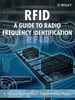
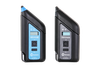
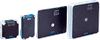





Find Suppliers by Category Top
Featured Products Top
-
 High-Performance Multi-Protocol UHF RFID Reader IC for Industrial Applications The ST25RU3993-BQFT from STMicroelectronics is a compact, QFN48 (7 × 7 mm) packaged UHF RFID (read more)
Browse RFID Chips Datasheets for Win Source Electronics -
The RSS36 is designed for application in safety circuits monitoring the position of hinged, sliding or removable guards using a specifically coded, passive RFID tag in the actuator. Radio-frequency identification (RFID) is a technology that uses radio waves to provide a wireless data (read more)
Browse Noncontact Safety Interlock Switches Datasheets for Schmersal Inc. -
Radio-frequency identification (RFID) is a technology that uses radio waves to provide a wireless data exchange of a coded identification number between a target (tag, label, or chip) and a reader – a device which transmits an encoded radio signal to the target. Schmersal has applied this (read more)
Browse Noncontact Safety Interlock Switches Datasheets for Schmersal Inc.
Conduct Research Top
-
RFID Battles the Elements
By Paul Thomas, Managing Editor Radio frequency identification, or RFID, is best known as the technology inside those little boxes on windshields that allow drivers to cruise, unimpeded, through tollway E-Z Pass lanes. While RFID has applications across all industries, the place where the action
-
It's Time for Open RFID
This quick, one-time registration gives you access to members-only site benefits. By Daniel Deavours, Director, RFID Alliance Lab RFID is the future, at least that's what everyone says, but RFID equipment sure seems expensive. Last fall I bought a high-end multi-protocol reader for close to $3500
-
Passive RFID Basics
Radio Frequency Identification (RFID) systems use radio frequency to identify, locate and track people, assets, and animals. Passive RFID systems are composed of three components an interrogator (reader), a passive tag, and a host computer. The tag is composed of an antenna coil and a silicon chip
-
RFID Tag and COB Development Guide with Microchip's RFID Devices
A passive RFID tag contains an RFID integrated circuit (IC), resonant capacitor (C), and antenna (L), as shown in Figure 1. The antenna and capacitor form a parallel LC resonant circuit. The LC circuit must be tuned to the reader?s carrier frequency for maximum performance (read range).
-
RFID Standards and Drug Security in the Year Ahead
to be resolved by general use of either of two coding structures, HIBCC or GS1 (formerly EAN/UCC), as well as advances in bar code readers that can identify and read virtually any symbology automatically. Debate over which RFID frequency to use offers many parallels. While pallet- and carton-level
-
The Myths of LF vs. HF
Depending upon application requirements, low-frequency passive RFID tags and readers often outperform their high-frequency counterparts so why do people believe otherwise?. Dec. 21, 2009 Being on the sales front of RFID hardware for many years, and as a hands-on owner of an RFID hardware
-
Smarter than Smart Labels ?
This quick, one-time registration gives you access to members-only site benefits. Radio frequency identification (RFID) is gaining wider adoption among consumer packaged goods (CPG) suppliers, driven in large part by a recent mandate by Wal-Mart Stores Inc. In 2004, Wal-Mart announced that its
-
Purdue Pharma Blazes a Trail for Drug Security Purdue Ceases Palladone Manufacturing Citing safety concerns, FDA has forced the drug off the market By Gregg Carlstrom Purdue Pharma L.P. is halting production of its prescription painkiller Palladone,
, is best for item-level tags and readers. EPCglobal has approved Generation 2 standards for 915 MHz ultra-high frequency (UHF) equipment, and the standards are expected to be adopted soon by ISO without major changes. This has encouraged RFID OEMs to develop and market much-needed Gen 2 products. ISO
-
Cardinal Bets on UHF
makes Cardinal s project, which began in January and will conclude in August, a bit more intriguing is that it bucks conventional wisdom that says high frequency (HF) RFID tags are the only surefire technology for proper item-level tracking and authentication of product. Both Pfizer
-
Drug Makers Fight Back!
, and it already exists and is being used, so it's easy to extend. However, 2-d readers are expensive. Electronic tagging using radio frequency identification (RFID) or chipless tags also can be used to authenticate product. The devices vary in cost from a few cents to several dollars depending