
Products & Services
See also: Categories | Featured Products | Technical Articles | More Information-
Supplier: Savage Engineering, Inc.
Description: Electrically heated platen upacting lab press in vacuum chamber to improve product quality. Used in circuitboard manufacturing.
-
Supplier: Accuris
Description: Circular Vacuum Test Procedure - Laminated Fabrics
-
Supplier: Accuris
Description: Extensibility of Cavity Vacuum Forming of Laminate Fabrics
-
-
Supplier: Flexaust
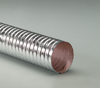
Description: • Light weight laminate of fiberglass & vacuum metallized polyester film • Heat reflective to 625°F • Light weight & flexible • Smooth bend radius • 2.64-inch compression per foot of hose • Designed for brake ducting & ventilation of drive compartments in racecars Standard Color : silver
- Inside Diameter: 3 inch
- Working Pressure: 30 psi
- Maximum Vacuum: 29 in Hg vac
- Temperature Range: -65 to 625 F
-
Description: layers of vacuum-deposited ITO, or PSA (Pressure Sensitive Adhesive) on the back of a copper laminate. Our product offerings include Copper metalized films Aluminum metalized films ITO coated films Copper foil laminates Aluminum foil laminates Flat cable tape with a shielded layer
- Materials: Aluminum Foil / Cladding, Copper Foil / Cladding, Metal Foil / Cladding
-
Description: We have core strength in vacuum deposition via sputtering ad thermal evaporation. Our materials are used for numerous applications, including passive thermal control for satellites and launch vehicles, thermal insulation for F1 racing cars and fire suits, and robust materials for audio and
- Industry: Aerospace, Automotive, Electronics, Medical / Food (Sanitary / FDA), Military / Government (MIL-SPEC / GG), OEM / Industrial
- Features: Flame Retardant (e.g. UL 94 Rated), Laminating / Composites, Specialty / Other, Thermal Insulation / Heat Insulating
-
Supplier: Wabash MPI
Description: Compression molding or laminating on a press equipped with a vacuum chamber pays off in faster production, higher quality and reduced scrap parts. Surrounding the workpiece with a vacuum removes heated gases and trapped air from the part, thereby eliminating defects. The Wabash
-
Supplier: TTG Inc.
Description: Our polyester spunbond pleated line of vacuum filtration media allows bagless vacuums to collect dust without returning it to the air. Our HEPA grade laminates provide end users with a re-generable, washable filter that protects people and equipment with each use. Our membrane
- Construction: Filter Mat, HEPA / ULPA Filter
- Features: Pleated, Reusable / Washable
- Media Type: Poly / Cotton Nonwoven Media, Polyester
-
Supplier: SynSysCo
Description: SDS Series and GHD Series Industrial Dry Screw Pumps SynSysCo's line of dry screw pumps provide robust and reliable vacuum for Industrial Vacuum Processes such as: Aeronautical Glass Architectural Glass Casting Concentration CVD Degasification Drying Freeze Drying Lamination Metallurgy
- Ultimate Operating Vacuum: 0.3 torr
- Pumping Speed: 88 CFM
- Motor Power: 7.37121211696551 HP
- Application: Chemical / Corrosive Gas, Food Processing, General Purpose / Industrial, Manufacturing Processing, Medical / Laboratory, Pharmaceutical / Sanitary
-
Supplier: ANVER Corporation
Description: Model #: E200M20-580-10/44PF Description: Twenty Pad Electric Powered Vacuum Lifter Application: Lifting & Handling Aluminum Sheet (Laminate) 53 ft x 8 ft (16m x 2.4m) up to 2,000 lbs (907 kg)
- Maximum Load Capacity: 1 tons
- Product Type: Lifter, Vacuum Lifter
- Features: Other
- Use: Sheet / Plate
-
Supplier: SynSysCo
Description: high process gas flows. All DD series pumps can be combined with VFD Driven Mechanical Boosters for higher pumping speeds, lower vacuum pressures, and energy management benefits. The DD105 Series, based on the same fundamental design as the DD255 Series, provides the same excellent
- Ultimate Operating Vacuum: 0.0005 to 0.003 torr
- Pumping Speed: 2,148 CFM
- Operating Temperature: 50 to 104 F
- Motor Power: 21.3095041199548 HP
-
Supplier: ANVER Corporation
Description: Eight Pad Electric Powered Vacuum Lifter with Powered Tilt Application: Lifting & Tilting Laminated Glass 160" x 72" (4.1 m x 1.8 m) up to 2000 lbs (907 kg)
- Maximum Load Capacity: 1 tons
- Product Type: Lifter, Vacuum Lifter
- Features: Other
-
Supplier: LOT Vacuum America
Description: Mechanical Boosters for higher pumping speeds, lower vacuum pressures, and energy management benefits. The DD105 Series, based on the same fundamental design as the DD255 Series, provides the same excellent performance for 200mm and 150mm applications. Recommended Applications: Crystal
- Ultimate Operating Vacuum: 0.005 to 0.03 torr
- Pumping Speed: 53 to 62 CFM
- Operating Temperature: 50 to 104 F
- Features: AC Three Phase
-
Supplier: LOT Vacuum America
Description: Mechanical Boosters for higher pumping speeds, lower vacuum pressures, and energy management benefits. The DD105 Series, based on the same fundamental design as the DD255 Series, provides the same excellent performance for 200mm and 150mm applications. Recommended Applications: Crystal
- Ultimate Operating Vacuum: 0.0005 to 0.003 torr
- Pumping Speed: 410 to 500 CFM
- Operating Temperature: 50 to 104 F
- Features: AC Three Phase
-
Supplier: CSA Group
Description: the manufacturing glulam products that will have a 1 h and 2 h fire rating c) procedures to allow the use of edge-glued lamina in glulam have been approved d) requirements have been added to the Standard for vacuum pressure cycle testing of end joints e) the sampling requirements have been
-
Supplier: ASTM International
Description: This specification covers the general requirements for vacuum insulation panels (VIP). These panels have been used wherever high thermal resistance is desired in confined space applications, such as transportation, equipment, and appliances. The panel barrier consists of one or more layers of
-
Supplier: TTG Inc.
Description: Due to the unique chemical and thermal resistance properties of TTG’s ePTFE membrane, we apply our filtration laminates in several liquid-solids separation applications. Candle Filters in Pulp Mills – Our polypropylene laminates are designed to remove the black liquor dregs in the caustic recovery
- Filtration Grade (Micron Rating): 0.7 µm
- Filtration Product: Chemicals
- Type: Micro Filtration
- Filter Medium Material: Polypropylene (PP)
-
Supplier: SAE International
Description: AMS6885/1 gives information about the technical requirements and qualification procedure for unidirectional carbon fiber tape epoxy repair prepreg capable of curing under vacuum for repair of carbon fiber reinforced epoxy structures. The repair system includes an epoxy film adhesive to be
-
Supplier: ASTM International
Description: to evaluate adhesives as well as the adhesive bonds in nonstructural-glued-lumber products. Dry test, soak test, elevated temperature test, boil test, and vacuum pressure test shall be performed to meet the requirements prescribed. The precision and bias of exposure condition shall be tested
-
Supplier: SAE International
Description: AMS6885/2 gives specific information about the qualification program for unidirectional carbon fiber tape epoxy repair prepreg capable of curing under vacuum for repair of carbon fiber reinforced epoxy structures. The prepreg system shall include an epoxy film adhesive to be applied in a
-
Supplier: ASTM International
Description: which tablets or capsules are placed. The trays are then sealed with a polymer, paper-backed or foil-based flexible laminate lidding material. 1.2 Leaks Detected-This test method detects leaks in blister packs by measuring the deflection of the blister pack surface in response to an applied
-
Supplier: SAE International
Description: AMS6885/5 is the Material Specification (MS) which defines the requirements of a unidirectional carbon fiber tape epoxy repair prepreg capable of curing under vacuum for repair of carbon fiber reinforced epoxy structures. It also defines the requirements of an epoxy film adhesive to be
-
Supplier: Baumann Paper Co., Inc.
Description: Laminated Poly-Nylon Vacuum Pouch. 8" x 15". 3.00 Mil. Clear.
-
Supplier: SynSysCo
Description: SDS Series and GHD Series Industrial Dry Screw Pumps SynSysCo's line of dry screw pumps provide robust and reliable vacuum for Industrial Vacuum Processes such as: Aeronautical Glass Architectural Glass Casting Concentration CVD Degasification Drying Freeze Drying Lamination Metallurgy
- Ultimate Operating Vacuum: 0.01 torr
- Pumping Speed: 376.32 CFM
- Features: AC Three Phase
- Application: Chemical / Corrosive Gas, Food Processing, General Purpose / Industrial, Manufacturing Processing, Medical / Laboratory, Pharmaceutical / Sanitary
-
Supplier: Schmalz Inc.
Description: Round, flat suction cup for handling furniture parts, parquet flooring, laminated and unlaminated chipboard, etc. Version with vulcanized insert, for vacuum systems in rough operating conditions, where the suction cups are not always fully covered or may be placed directly on the edge of the
- Diameter / Maximum Dimension: 4 mm
- Stroke (if Applicable): 3 mm
- Type: Flat
- Material: Rubber
-
Supplier: Schmalz Inc.
Description: Round, flat suction cup for handling furniture parts, parquet flooring, laminated and unlaminated chipboard, etc. Version with vulcanized insert, for vacuum systems in rough operating conditions, where the suction cups are not always fully covered or may be placed directly on the edge of the
- Diameter / Maximum Dimension: 6 mm
- Stroke (if Applicable): 4 mm
- Type: Flat
- Material: Rubber
-
Supplier: Schmalz Inc.
Description: Round, flat suction cup for handling furniture parts, parquet flooring, laminated and unlaminated chipboard, etc. Version with vulcanized insert, for vacuum systems in rough operating conditions, where the suction cups are not always fully covered or may be placed directly on the edge of the
- Diameter / Maximum Dimension: 6 mm
- Stroke (if Applicable): 4 mm
- Type: Flat
- Material: Rubber
-
Supplier: Schmalz Inc.
Description: Round, flat suction cup for handling furniture parts, parquet flooring, laminated and unlaminated chipboard, etc. Version with vulcanized insert, for vacuum systems in rough operating conditions, where the suction cups are not always fully covered or may be placed directly on the edge of the
- Diameter / Maximum Dimension: 4 mm
- Stroke (if Applicable): 3 mm
- Type: Flat
- Material: Rubber
-
Supplier: PAC Machinery Group
Description: The PVB has all the available features of our PB constant heat sealer, with the added capability of vacuum and gas flush. Like the PB, the PVB is designed to seal MIL spec barrier bags, coated paper, film and foil laminates, as well as provide the ability to vacuum the air out of the
- Packaging: Bag / Pouch
- Industry: Chemical / Petrochemical, Household Product / Merchandise, Industrial / General Use
- Goods: Consumer Packaging
- Closing Method: Heat Seal
-
Description: layers of vacuum-deposited ITO, or PSA (Pressure Sensitive Adhesive) on the back of a copper laminate. Our product offerings include Copper metalized films Aluminum metalized films ITO coated films Copper foil laminates Aluminum foil laminates Flat cable tape with a shielded layer
- Features: Dielectric / Insulating, EMI / RFI Shielding
-
Description: layers of vacuum-deposited ITO, or PSA (Pressure Sensitive Adhesive) on the back of a copper laminate. Our product offerings include Copper metalized films Aluminum metalized films ITO coated films Copper foil laminates Aluminum foil laminates Flat cable tape with a shielded layer
- Thickness: 0.005 to 0.007 inches
- Features: EMI / RFI Shielding
- Type: Metallized
- Materials: PET / Polyester
-
Supplier: SDI
Description: Sealant Tapes are used for most vacuum assisted laminating processes and autoclave applications and are compatible with most bagging films, providing maximum bag sealing security. Available in 1/2 in. x 1/8 in. x 25 ft. (12.5mm x 3mm x 7.5 meters). 40
- Width: 0.5 inches
- Thickness: 0.125 inches
- Temperature Resistance: 215 C
- Adhesive: Pressure Sensitive (PSA)
-
Supplier: Saint-Gobain Tape Solutions
Description: Norseal Silicone Rubber Press Pads are available to meet the full range of lamination requirements in today's multiple or high-temperature resin systems, including both low- and high-pressure lamination in hydraulic and vacuum-assisted hydraulic presses as well as autoclave operations. In
- Thickness: 0.0017716545 to 0.009842525 inch
- Operating Temperature: -99.4 F
- Features: Color Options
- Material: Foam, Silicone Rubber
-
Supplier: Novaflex Group
Description: AF Liner Rubber two-ply light duty material handling hose/rubberized ducting, wire reinforced. Constructed without glue, eliminating any potential de-lamination. A low pressure hose, designed to be extremely lightweight, but offer high flexibility and abrasion resistance in vacuum and
- Product Form: Hose (including Duct)
- Features: Reinforced
- Media: Solids / Particulate
- Application: Suction / Vacuum
-
Supplier: Adhesives.org
Description: percentage of wood failure of Test Method D 906 specimens, tested wet after either a vacuum-pressure soak-dry or boil-dry treatment, correlates with the percentage of panels that delaminate in outdoor exposure without protection.

















Find Suppliers by Category Top
Featured Products Top
-
 Glue pots Laminating Equipment Liquid Heat Exchangers Packaging Seal Bars Plastic Extruder Barrels Plastic Extrusion Dies Platen Heaters Silicon Wafer Processing Equipment Silk Screen Equipment Vacuum Forming Equipment Wave Solder Equipment (read more)
Browse Cast-In Heaters Datasheets for Tempco Electric Heater Corporation -
the automotive, aerospace, military, and construction industries. Vacuum bag molding improves the laminate’s mechanical properties, by which liquid resin is applied to reinforcing fibers before a vacuum is used to force out excess resin and trapped (read more)
Browse Mold Making Services Datasheets for Osborne Industries, Inc. -
Model VCBSDM-1/8TX 6x5 includes a bag top trimmer, vacuum scrap removal, and dual motor drive. Features: • USDA approved Vertical Rotary Band Sealing System with Lower Carry Synchronized Conveyor. • Supplied with Lower Carry Belts and interfaced Variable Speed (read more)
Browse Sealing Machines Datasheets for All Packaging Machinery Corporation -
integrated vacuum system for trim scrap removal (standard). Continuous band sealer designed to seal and trim materials such as Tyvek, foil, polyethylene, polypropylene, nylon, coextrusions, polylaminates, and poly-coated paper (read more)
Browse Closing Machines Datasheets for All Packaging Machinery Corporation -
applications including chokes Wide bandwidth output transformers for Single Ended and Push-Pull vacuum tube applications C-cores and EI & F laminations Studio FX: compressors and microphone pre-amps Moving coil, interstage and pre-amp output transformers (read more)
Browse Audio Transformers Datasheets for Triad Magnetics -
, General Plastics composite core foams provide a non-decaying alternative to wood that supports fiberglass laminating production processes. From the impact resistance required for a hockey stick blade to the durability of a wing tip, General Plastics’ LAST-A-FOAM® offers high (read more)
Browse Composites and Composite Materials Datasheets for General Plastics Manufacturing Co. -
/or Litz wire for higher frequencies Our designs can be tailored to meet all relevant CSA & UL consumer safety standards or MIL PRF 27 requirements in aerospace and military applications. Our components are either vacuum varnished or molded using any of a variety of (read more)
Browse Inductors, Coils, and Chokes Datasheets for Triad Magnetics
Conduct Research Top
-
Secure Clamping of Small Panels with Vacuum
When producing tabletops and facing, or working with material to construct merchandise fixtures, chutes, drawers and shelving, ASSTEC normally uses high-pressure laminate (HPL) panels processed on a CNC router. These panels are clamped on a vacuum table. The vacuum pump generates a consistently
-
Void Reduction during Low Pressure Lamination of Electronic Assemblies
the laminate in the absence of air, i.e., under vacuum. Differential vacuum pressure lamination (DVPL) is an alternative to the standard vacuum bag process widely utilized today for lamination of populated electronic assemblies. It is shown that the DVPL process dramatically reduces void content
-
Clear the Air: Boat Manufacturer Improves Air Quality by 94.4% with Nilfisk CFM Industrial Vacuums (.pdf)
hulls and parts are either hand-laminated or feature mechanically applied fiberglass roll stock and resin.
-
Principles of Operation For Force-Decay Leak Testing of Flexible Packages
Non-destructive leak testing for flexible packages can be accomplished by several methods that utilize. various properties of the package form and materials. Techniques include vacuum bubble test, pressure/. vacuum decay, displacement change, trace gas and force-decay, and each method provides
-
Talk About Temperature: High and Low
Although Cobra Solid Lubricant is beneficial in so many applications that do not involve high temperatures (freezer conveyors; freezing tunnels; free spinning; drip free; maintenance free; vacuum; radiation; food grade; etc.) high temperature applications are the most frequently seen (it's just
-
Dielectric Materials for Use in Radomes
as relative permittivity ( e ) or D/K, the dielectric constant represents a material's ability to store electrostatic energy in an applied electric field. It is a dimensionless number representing the ratio of the permittivity of a material relative to that of a vacuum (evacuum = 1.0). Low relative
More Information Top
 Indicates content that may require registration and/or purchase.

-
An Enhanced Vacuum Cure Technique for On-Aircraft Repair of Carbon-Bismaleimide Composites
A poorly processed vacuum laminate showed around 15% reduction in OHC strength compared to AC and well prepared vacuum laminates.
-
Final Technical Report - Recovery Act: Organic Coatings as Encapsulants for Low Cost, High Performance PV Modules
Performance of photovoltaic modules from this experimental design were compared to standard‐design photovoltaic modules prepared using vacuum lamination of encapsulating films (Figure 1a).
-
Proceedings of the American Society for Composites 2013-Twenty-Eighth Technical Conference
It is believed that the cylindrical shapes emerge in the lower vacuum laminates because of coalesce of many spherical voids which were diffusing under the force of the vacuum pressure, but the forces were not enough to diffuse them toward the edges …
-
http://www-pub.iaea.org/MTCD/publications/PDF/te_1337_web.pdf
The tenderness and juiciness of roast beef slices sterilised at 45 kGy (in vacuum laminated pouches at –40°C to –20°C) can be optimised by the pre-treatment of the meat with polyphosphates and sodium chloride injection.
-
Electronic Materials and Processes Handbook, Third Edition > Printed Circuit Board Fabrication
This assembly is then placed in a vacuum lamination chamber, and pressure is applied.
-
Vacuum-lamination process for metallized polymer films
In this experiment only part of a metallized specimen was vacuum laminated (see the inset in Fig. 4) so that it was possible to compare results of laminate and Sellotape tests on the same metal/polymer interface.
-
Advanced Polymer PV System; PVMaT 4A1 Final Report; September 1995 - December 1997
This new encapsulant can be laminated in air, and so has also allowed for the development of a continuous, non- vacuum lamination process as well.
-
PVMaT improvements in the Solarex photovoltaic module manufacturing technology: Annual subcontract report: May 5, 1998 -- April 30, 1999
The lamination process, including the cure, is performed in a vacuum lamination system.
-
PVMaT Improvements in the BP Solar Photovoltaic Module Manufacturing Technology: Final Subcontract Report, 4 May 1998 - 30 November 2001
The lamination process, including the cure, is performed in a vacuum lamination system.
-
Advanced polymer PV system: PVMaT 4A1 annual report, September 1995--September 1996
Identificationand deployment of a novel encapsulantthat should lead to longer life and permit non- vacuum lamination ; 3.