
Products & Services
See also: Categories | Featured Products | Technical Articles | More Information-
Supplier: MonoDAQ
Description: High performance IEPE accelerometers are the basis for high quality vibration measurement with MonoDAQ 1xACC amplifiers. DJB A/120 is a general purpose IEPE accelerometer available in two versions with different sensitivity. Specifications Voltage sensitivity (+-10%): 10 mV/g |
- Frequency Range: 1 to 9,000 Hz
- Minimum Accuracy: 5 +/-% FS
- Maximum Vibration: 1,000 g
- Operating Temperature: -58 to 365 F
-
Supplier: Kistler Group
Description: High precision accelerometer for shock and vibration measurements in laboratory applications. Primarily a reference accelerometer. Type 8002K is a high precision accelerometer for shock and vibration measurements in laboratory applications. Its excellent
- Acceleration: -1,000 to 1,000 g
- Frequency Range: 0 to 6,000 Hz
- Operating Temperature: -94 to 248 F
- Maximum Acceleration / Shock: -1,000 to 1,000 g
-
Supplier: Accuris
Description: Mechanical Shock and Vibration Accelerometer Selection
-
-
Supplier: Shenzhen Rion Technology Co., Ltd
Description: AKE390B voltage type accelerometer sensor series products is RION company imported the Switzerland patented technology to produce for using widely, suitable for vibration testing, impact testing and more fields. This series products with firm structure,low power consumption, excellent
- Acceleration: 1 to 40 g
- Operating Temperature: -40 to 185 F
- Sensor Technology: MEMS
- Device Category: Sensor / Transducer
-
Supplier: Accuris
Description: ACCELEROMETER-BASED VIBRATION MONITORING SYSTEM
-
Supplier: Qualitrol Company, LLC
Description: Iris Power EVAII sensor kits are non-metallic fiber optic accelerometers used to measure, analyze and trend vibration of the generator stator endwindings. The sensors are able to simultaneously measure vibration in the radial and tangential directions safely in high voltage and
-
Supplier: Shenzhen Rion Technology Co., Ltd
Description: AKE392B-Wireless three-axis accelerometer sensor series products is RION company imported the Switzerland patented technology to produce for using widely, suitable for vibration testing, impact testing and more fields. The product uses a digital interface output, RS232/485/TTL
- Acceleration: 1 to 40 g
- Frequency Range: 5 to 300 Hz
- Operating Temperature: -40 to 185 F
- Sensor Technology: MEMS
-
Supplier: Accuris
Description: Vibration and shock - Mechanical mounting of accelerometers
-
Supplier: Accuris
Description: Mechanical Vibration and Shock - Mechanical Mounting of Accelerometers
-
Description: Mechanical vibration and shock -- Mechanical mounting of accelerometers
-
Supplier: Wilcoxon Sensing Technologies
Description: Premium dual-output sensor: acceleration (100 mV/g sensitivity, ±5% tolerance) and temperature, side exit 3 pin MIL-C-5015 connector
- Acceleration: 80 g
- Frequency Range: 1 to 12,000 Hz
- Operating Temperature: -58 to 248 F
- Sensor Outputs: Acceleration, Temperature
-
Supplier: RS Components, Ltd.
Description: Vibration sensor,Accelerometer
- Acceleration: 5.09683995922528 g
-
Supplier: RS Components, Ltd.
Description: VIBRATION METER (Auto Memory, USB interf
- Sensor Input: Accelerometer
- Features: Other
-
Supplier: Convergence Instruments
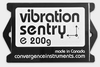
Description: Product Description The Vibration Meter Data Logger – Vibration Sentry E-200g is a new generation of smart data logger that can record acceleration, inclination, vibration and impacts. It includes a 3-axis +-200g MEMS accelerometer, an accurate date/time clock and a
- Acceleration: 200 g
- Maximum Vibration: 200 g
- Operating Temperature: -4 to 140 F
- Sensor Input: Accelerometer
-
Supplier: LORD MicroStrain Sensing Systems
Description: Wireless Accelerometer Node Overview The G-Link® -LXRS™ Wireless Accelerometer Node features on-board triaxial ±2 g or ±10 g MEMS accelerometers and an internal temperature sensor. G-Link® -LXRS™ can be employed to measure vibration or acceleration, or as a tilt sensor or
- Acceleration: -10 to 10 g
- Frequency Range: 1 to 512 Hz
- Operating Temperature: -4 to 140 F
- Features: Acceleration, Battery Powered, Stud or Bolt-on, Triaxial, Wireless
-
-
Supplier: DigiKey
Description: VIBRATION SENSOR,ACCELEROMETER,3
- Frequency Range: 0 to 4,500 Hz
- Operating Temperature: -22 to 185 F
- Features: Other
- Device Category: Sensor / Transducer
-
Supplier: Columbia Research Labs, Inc.
Description: The Columbia Model VM-300 Vibration Meter is a general-purpose vibration measuring instrument for periodic routine vibration checks of industrial machinery and general field use where portability and ease of use are required. This hand-held device is the ideal preventive
- Acceleration: 0.1 to 300 g
- Frequency Range: 1 to 1,000 Hz
- Minimum Accuracy: 4 +/-% FS
- Linear Velocity: 300 in/sec
-
Supplier: Hottinger Brüel & Kjær A/S
Description: Dytran 3133A Series is an Ultra-Miniature, Hermetically Sealed, IEPE Triaxial Accelerometer used in Environmental Stress Screening (ESS), HALT/HASS, Modal and Structural Analysis, and General Purpose Triaxial Vibration Measurements.
- Acceleration: 3,567.787971457696 g
- Frequency Range: 0.7 to 10,000 Hz
- Operating Temperature: -67 to 320 F
- Sensor Mounting: Adhesive Base
-
Supplier: Embedded Data Systems
Description: for wet environments Internal loop antenna Low cost Part # 3005-19 - Point Sensor Vibration, 418 MHz The Point Sensor Vibration sensor is a battery operated digital vibration sensor with a microprocessor controlled 418 MHz. FCC certified radio transmitter. The Point Sensor
- Frequency Range: 418,000,000 Hz
- Operating Temperature: -40 to 185 F
- Features: Battery Powered
-
Supplier: DigiKey
Description: Accelerometer Z Axis ±2g 150Hz
- Acceleration: 2 g
- Frequency Range: 150 Hz
- Operating Temperature: -40 to 257 F
- Sensor Outputs: Acceleration
-
Supplier: Rieker, Inc.
Description: The BDK Series are dynamic accelerometers that measure vibration and acceleration of any object over a wide frequency range without the influence of gravity. All models are supplied with a ratiometric type analog output. Features Single Supply Input Very Low Power Consumption
- Acceleration: -10 to 10 g
- Frequency Range: 1 to 800 Hz
- Maximum Shock: 10,000 g
- Operating Temperature: -40 to 185 F
-
Supplier: Hottinger Brüel & Kjær A/S
Description: The Dytran model 3010M14 is a primary transfer standard accelerometer, and is designed to transfer standard vibration calibration data from standards organization such as NIST, to back-to-back calibration accelerometers such as Dytran series 3120 and 3123, which are then used to
- Acceleration: 500 g
- Frequency Range: 1 to 5,000 Hz
- Operating Temperature: -58 to 248 F
- Features: Other, Piezoelectric
-
Supplier: ifm efector inc.
Description: For reliable vibration detection on machines and plants in 3 measurement axes (x, y and z) For connection to a diagnostic electronics for vibration sensors High protection rating for the requirements of harsh industrial environments Compact and robust stainless steel housing with high
- Acceleration: -40 to 40 g
- Frequency Range: 0 to 4,500 Hz
- Minimum Accuracy: 10 +/-% FS
- Maximum Shock: 50 g
-
Supplier: Columbia Research Labs, Inc.
Description: The Model 7001 and 7001HT Piezoelectric Accelerometers are excellent choices for general-purpose shock and vibration measurement work, and are especially well suited for testing of small specimens. They are designed for the measurement of medium frequency, moderate to high-level shock
- Acceleration: 1,000 g
- Frequency Range: 2 to 8,000 Hz
- Minimum Accuracy: 5 +/-% FS
- Maximum Shock: 5,000 g
-
Supplier: Columbia Research Labs, Inc.
Description: The Model 962 Piezoelectric Accelerometer is designed for the measurement of high frequency, moderate to high-level shock and vibration. It incorporates a hybrid electronic assembly within a rugged, welded, double-wall stainless steel body to enhance its operation in humid and dirty
- Acceleration: -1.75 to 1.75 g
- Frequency Range: 0.01 to 1,500 Hz
- Maximum Shock: 100 g
- Maximum Vibration: 50 g
-
Supplier: PCE Instruments / PCE Americas Inc.
Description: PCE-VDR 10 is a single-axis accelerometer or vibration analyzer with real-time measurement and data logging capabilities. This vibration monitor records acceleration (m/s, g, ft/s) as well as speed (mm/s, cm/s, in/s) measurements and saves the measured data to an included SD
- Acceleration: 0.0509683995922528 to 20.377166156982668 g
- Linear Velocity: 0.01968503937007875 to 7.870078740157484 in/sec
- Frequency Range: 10 to 1,000 Hz
- Minimum Accuracy: 5 +/-% FS
-
Supplier: TE Connectivity
Description: Type : Wireless Vibration Sensor Product Type : Wireless Accelerometers Signal Characteristics Frequency Band (MHZ) : 2400 Frequency Response (HZ) : 2 to 15000 Usage Conditions Operating Temperature Range : -40 - 80 DEGC [-40 - 176 DEGF ]
- Frequency Range: 2 to 15,000 Hz
- Operating Temperature: -40 to 176 F
- Features: Wireless
-
Supplier: TE Connectivity
Description: (GFORCE) : 500 Nonlinearity (PCTFSO) : ±1 Overall Acceleration Range (±) (GFORCE) : 20 - 500 Sensitivity (MVG) : 4 Sensitivity Range (MVG) : 4 - 100 Product Type Features Accelerometer Type : 3-Wire Voltage Embedded Accelerometer Sensor Type : AC Response Embedded Accelerometers
- Acceleration: 500 g
- Frequency Range: 1 to 8,000 Hz
- Operating Temperature: -40 to 212 F
-
Supplier: Hottinger Brüel & Kjær A/S
Description: The Dytran 3365A Series is a family of single-axis, hermetically sealed IEPE accelerometers engineered for precision vibration measurements in demanding industrial and aerospace environments. Designed with a planar shear ceramic sensing element and housed in a rugged titanium
- Acceleration: 500 g
- Frequency Range: 1 to 5,000 Hz
- Operating Temperature: -67 to 249.8 F
- Features: Other, Piezoelectric
-
Supplier: Columbia Research Labs, Inc.
Description: The Columbia Models SR-107RFR and SR-207RFR are precision force balance angular accelerometers. This design makes use of the fluid rotor concept of sensing angular acceleration and in conjunction with the Columbia patented HP suspension system provides the ultimate in reliability and
- Acceleration: 0.1 to 300 g
- Frequency Range: 1 to 1,000 Hz
- Minimum Accuracy: -4 to 4 +/-% FS
- Linear Velocity: 0.1 to 300 in/sec












Find Suppliers by Category Top
Featured Products Top
-
 Product Overview As wearable devices, IoT endpoints, and battery-powered systems continue to advance, low-power sensors have become critical to system design. LIS2DW12TR is a widely adopted MEMS accelerometer designed for low-power, always-on sensing, where power (read more)
Browse Accelerometers Datasheets for Win Source Electronics -
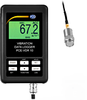
The accelerometer has a measuring range of 0 ... 200 m/s² for acceleration. In addition to acceleration, the vibration meter can also measure speed, displacement, frequency and an ISO 18016-3 measurement. During the vibration measurement, an FFT view is simultaneously displayed on the (read more)
Browse Accelerometers Datasheets for PCE Instruments / PCE Americas Inc. -
The vibration measuring device PCE-VM 20 is a compact device for the direct evaluation of the vibration behavior of a machine. The device can measure and display various vibration parameters, such as vibration acceleration, vibration velocity or vibration (read more)
Browse Vibration Measurement Instruments and Vibration Analyzers Datasheets for PCE Instruments / PCE Americas Inc. -
The accelerometer is ideal for maintenance workers to quickly check vibrating parts, machines and systems. This vibration meter shows the vibration acceleration, vibration velocity and vibration displacement directly on the display. You can use the device to quickly and reliably detect machine (read more)
Browse Accelerometers Datasheets for PCE Instruments / PCE Americas Inc. -
to 30µg/√Hz. And MEMS accelerometers are designed to operate in harsh environments such as high temperature and dust. Piezoelectric is a technology used for decades by accelerometer sensors designed for vibration measurement of industrial rotative equipment. Over the (read more)
Browse Vibration Measurement Instruments and Vibration Analyzers Datasheets for Tronics Microsystems -
The os7500 family of accelerometers covers a wide range of vibration measurement applications. These sensors can be used as a replacement for conventional accelerometers while offering the added benefits of EMI immunity, robust packaging and lightning/corrosion resistance. Specifically (read more)
Browse Nondestructive Testing (NDT) Equipment Datasheets for Luna Innovations -
-performance digital MEMS accelerometer with ±14 g input range for industrial applications operating under shock and vibration. AXO314 offers a low-SWaP digital, and cost-effective alternative to bulky and expensive tactical-grade quartz accelerometers. It brings a robust (read more)
Browse Accelerometers Datasheets for Tronics Microsystems -
A distinctive feature of the accelerometer is the ability to work in the following modes: Classic vibrometer - means using the device as an indicator of the overall vibration level, measuring peak values, displacement or diagnosing rolling bearings using the crest (read more)
Browse Vibration Measurement Instruments and Vibration Analyzers Datasheets for PCE Instruments / PCE Americas Inc. -
One time diagnostic or continuous vibration monitoring of rotative equipment mainly rely on analogic IEPE accelerometers which ask for dedicated convertor and cable to connect with Operational Technology network. Leveraging standard CAN or MODBUS protocol, digital based MEMS accelerometers (read more)
Browse Vibration Measurement Instruments and Vibration Analyzers Datasheets for Tronics Microsystems -
When used to continuously monitor vibrations of rotative equipment, large bandwidth 20 000Hz Digital MEMS accelerometer can deliver raw data up to 1Mb/s. Existing IIoT networks often offer 100kb/s or less band pass. With embedded computation capabilities, Edge accelerometer computes (read more)
Browse Vibration Measurement Instruments and Vibration Analyzers Datasheets for Tronics Microsystems
Conduct Research Top
-
Back-to-Back Accelerometer Calibration
To calibrate a vibration accelerometer is to accurately determine its sensitivity (in mV/g or pC/g) at various frequencies of interest. The ISA approved back-toback comparison method is probably the most convenient and least expensive technique.
-
Vibration Measurements: Accelerometer Basics
...discuss and compare several different accelerometer types that can be used for vibration measurement.
-
Introduction to Charge Mode Accelerometers
Dytran charge mode accelerometers are designed to measure shock and vibration phenomena over a broad temperature range. These accelerometers, unlike the Low Impedance Voltage Mode (LIVM) types, contain no built-in amplifiers. Dytran's charge mode accelerometers utilize high sensitivity piezoceramic
-
Accelerometer Mounting Considerations
An accelerometer is an instrument that senses the motion of a surface to which it is attached, producing an electrical output signal precisely analogous to that motion. The ability to couple motion, (in the form of vibration or shock), to the accelerometer with high fidelity, is highly dependent
-
Low Outgassing Accelerometers and Cables for Thermal Vacuum and Vibration Test Environments
and obscure them, rendering them useless during their intended application. During random vibration, swept sine or shock testing prior to flight, spacecraft payloads are often fitted with accelerometers in hard to reach mounting locations. As the space structure is built up around them, it can become
-
Introduction to LIVM Accelerometers
Low Impedance Voltage Mode (LIVM) accelerometers are designed to measure shock and vibration phenomena over a wide frequency range. They contain integral IC electronics that converts the high impedance signal generated by the piezo crystals to a low impedance voltage that can drive long cables
-
Basic Installation Techniques for Accelerometers
This technical note describes basic installation techniques for accelerometers and other vibration sensors. It will allow qualified field technicians to install vibration sensors in a variety of applications and environments. Some techniques will be general to all installations, whereas others may
-
AKF392B MEMS Digital Accelerometer
AKE392B-Wireless three-axis accelerometer sensor series products is RION company imported the Switzerland patented technology to produce for using widely, suitable for vibration testing, impact testing and more fields. The product uses a digital interface output, RS232/485/TTL optional, can be set
More Information Top
 Indicates content that may require registration and/or purchase.

-
Encyclopedia of Structural Health Monitoring Complete Document
The global measurements are derived from ambient vibration accelerometer records.
-
Avionics Navigation Systems 2nd Edition Complete Document
233 GPS limit, 248 inertial equations, 365 ff VG correction, 434-436 See also Accelerometer; Vibration Accelerometer : bias estimation, 87 cross-coupling, 320, 323 description, 317-324 electrolytic level, 429 error model, 323-324 flexure pivot, 317,319-321 flight control, 324 …
-
The History of the Accelerometer (.pdf)
In 1959 their brother Dr. Vernon F. Alibert joined the business and applied his background in physics and environmental testing to develop a product line of ferroelectric ceramic shock and vibration accelerometers .
-
Special Topics in Structural Dynamics, Volume 6
Large medical devices (CAT scanners, X-ray machines), medical equipments sensitive to vibrations Accelerometers , displacement transducers .
-
Mechanical and Materials Engineering of Modern Structure and Component Design
In the beginning of the last century, the United States National Institute of Standards and Technology has made criterions of dynamic testing calibration methods for high temperature- vibration accelerometer specifi- cations from different aspects, which is international standard ISO16063-11, Methods for …
-
Special Topics in Structural Dynamics, Volume 6
The resulting frequency response functions (FRF) were too noisy in the low frequency range of interest to be of any value, therefore prohibiting the use of the small vibration accelerometers for the purpose of modal testing of the rover test article.
-
Modern Sensors Handbook
Technological limitations: shocks and vibrations Accelerometers are sensitive to shocks and vibrations.
-
NERI Final Project Report: On-Line Intelligent Self-Diagnostic Monitoring System for Next Generation Nuclear Power Plants
4.2.1.3 Vibration Accelerometers ............................................................