
Shock and Vibration Testing Shakers Information
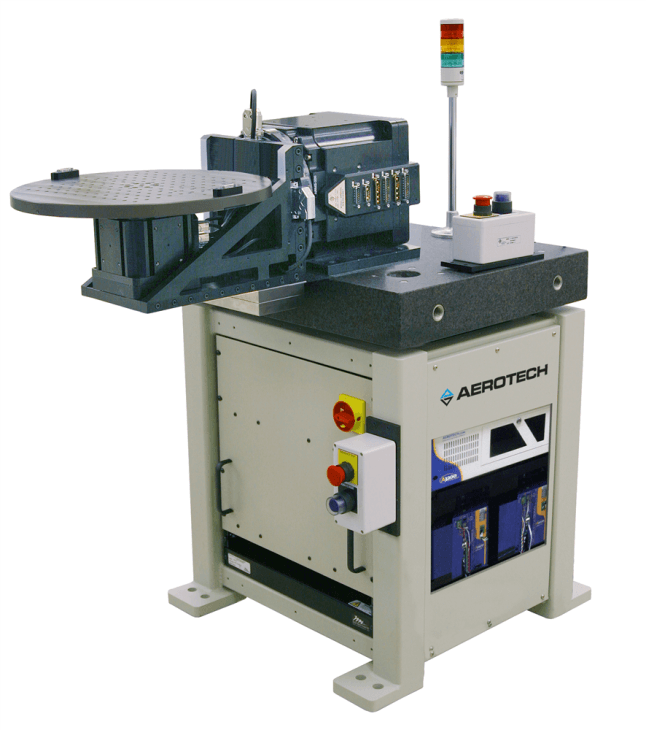 Shock and vibration testing shakers are force generators, or transducers, that provide a vibration, shock, or modal excitation source for testing and analysis. Shakers are used to determine product or component performance under vibration or shock loads, detect flaws through modal analysis, verify product designs, measure structural fatigue of a system or material, or simulate the shock or vibration conditions found in aerospace, transportation, or other areas. Many types of shock and vibration testing shakers are available.
Types of Shock and Vibration Testing Shakers
Shock and vibration testing shakers can operate under a number of different principles.
Mechanical shakers use a motor with an eccentric on the shaft to generate vibration.
Electrodynamic shakers use an electromagnet to create force and vibration.
Hydraulic shakers are useful when large force amplitudes are required, such as in testing large aerospace or marine structures or when the magnetic fields of electrodynamic generators cannot be tolerated.
Pneumatic shakers, known as "air hammer tables," use pressure air to drive a table.
Piezoelectric shakers work by applying an electrical charge and voltage to a sensitive piezoelectric crystal or ceramic element to generate deformation and motion.
Specifications
Selecting shock and vibration testing shakers requires an analysis of specifications and features. The most important specifications are:
- peak sinusoidal force
- frequency range
- displacement
- peak acceleration
- peak velocity
Some of these specifications may be ratings without a load, as the manufacturers cannot always predict how the shakers will be used. Common features for shock and vibration testing shakers are integral slip table and active suspension. An integral slip allows horizontal or both horizontal and vertical testing of samples. The slip table is a large flat plate that rests on an oil film placed on a granite slab or other stable base. An active suspension system compensates for environmental or floating platform variations.
Features
There are three main test modes for shock and vibration testing shakers: random vibration, sine wave vibration, and shock or pulse mode. With random vibration test mode, the force and velocity of the table and test sample will vary randomly over time. Sine wave test mode varies the force and velocity of the table and test sample sinusoidally over time. With a shock test, the test sample is exposed to high amplitude pulses of force. Specialty and proprietary shock and vibration testing shakers are also available.
Related Information
CR4 Community—Random Vibration—Designing an Electrodynamic Shaker
Image credit:
- Accelerometer Calibration
- Electrodynamic
- Integral Slip Table / Multi-Axis Capability
- Mechanical
- Mechanical Impedance Measurements
- Modal Excitation Source
- Piezoelectric
- Pneumatic
- Product Qualification / Testing
- R&D / Product Design Verification
- Random Vibration
- Reliability / Durability Testing
- Seismic Simulation
- Semiconductors / Electronics Screening
- Shock / Pulse Mode
- Sine Wave Vibration
- Structural Fatigue Testing
- Transportation / Aerospace Simulation
- 2120 CSI vibration analyzer
- CSI accelerometer
- vibration exciter
- shaker test
- vibration calculator
- CSI vibration analysis
- schenk vibration
- vibration accelerometer
- vibration analysis software
- vibration calibrator
- air scrap shaker
- CSI instrument
- eccentric mass shaker
- hero paint shaker
- industrial shaker
- lds vibration
- portable vibration calibrator
- railcar shaker
- shakers performance
- vibration velometer
- oil pressure sensor piezo