
Rotary Shafts Information
Last revised: February 10, 2025
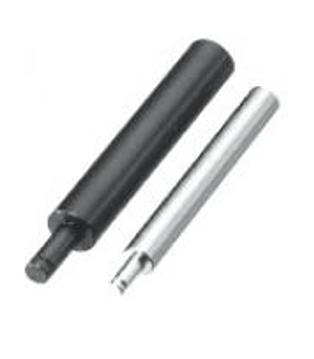
Rotary shafts are elongated, rod-shaped devices that rotate about a longitudinal axis and transmit torque. They are similar in shape to linear shafts, but are designed to withstand torsional forces. Some rotary shafts have tapped or untapped axial holes for mounting to support structures. Others are grooved for the placement of snap rings or channeled for keyways. Solid or hollow rotary shafts with male or female threads and stepped or chamfered ends are also available. Rotary shafts with break edges are deburred, but not chamfered. Precision ground products are also available.
Materials
Most rotary shafts are made of:
- aluminum
- alloy steel
- carbon steel
- stainless steel
- composite materials
- plastics
Alloy steel is harder than carbon steel and provides superior durability. Stainless steel is well-suited for applications in which corrosion resistance is an important consideration. Aluminum rotary shafts provide good electrical and thermal conductivity, high reflectivity, and resistance to oxidation. Composite materials are often made of carbon fibers bonded together by resins. They are not as strong as metal shafts, but are lightweight and help reduce energy requirements.
Features
Rotary shafts are usually coated or hardened to improve durability. Anodizing is a protective surface coating process used mainly with aluminum products. Black oxide coatings are applied to steel or stainless steel shafts to prevent ion corrosion. Ceramic coatings provide a wear-resistant finish while chromium coatings improve corrosion resistance and reduce friction. Rotary shafts with nickel or nitride coatings are also available. Teflon, a registered trademark of DuPont Dow Elastomers, is a class of fluoropolymer resins that is resistant to high temperatures, chemical reactions, corrosion, and stress cracking. Rotary shafts that are coated with polytetrafluoroethylene (PTFE) are used in a variety of applications. Some steel shafts are case-hardened with carbon or nitrogen. Others are through-hardened to ensure that the entire shaft has the same hardness.
There are several ways to measure the hardness of rotary shafts. The Rockwell hardness test presses a steel or diamond cone against a test sample and measures the depth of the resulting indentation. Higher measurements indicate harder materials. For rotary shafts, common Rockwell hardness ranges are 50 to 59, 60 to 69, and 70 to 79. The Brinell hardness test subjects a test material to a load of 3000 kg with a hardened steel or carbide ball that is 10 mm in diameter. The Knoop hardness test also measures a material’s hardness through its resistance to indentation. The Vickers hardness test indents a test material with a diamond indenter that is shaped into a right pyramid with a square base and an angle of 136° between opposite faces.
Specifications
Important specifications for rotary shafts include:
- shaft diameter or width
- maximum length
- weight
- height
- tolerance
Most rotary shafts have circular or square cross sections and are produced in standard lengths that can be cut to size for specific applications. Weight is measured in per unit distance, typically pounds per feet. Height is the distance from the guide or rail base to the center of the guide or rail. Ultra precision shafts have a very tight tolerance. Standard grade and precision grade shafts are also available.
Rotary Shafts FAQs
How do the design features of rotary shafts impact their performance in different engineering applications?
The design features of rotary shafts significantly impact their performance in various engineering applications. Here are some key aspects:
Coatings and Hardening
Rotary shafts are often coated or hardened to enhance durability. Coatings such as anodizing, black oxide, ceramic, chromium, nickel, and nitride improve corrosion resistance and reduce friction. Teflon coatings provide resistance to high temperatures and chemical reactions.
Hardening processes, such as case-hardening with carbon or nitrogen, or through-hardening, ensure the shaft's durability and uniform hardness.
Shaft Shape and Material
The shape of the shaft, such as hexagonal, can influence the type of bearing used and the application. Hex shafts, for example, are beneficial in power transmission applications due to their bending deflection and increased fatigue life.
The material of the shaft, such as medium to high carbon steel or stainless steel, affects sealing performance and overall durability.
Hardness and Surface Finish
The hardness of the shaft, measured by tests like Rockwell, Brinell, Knoop, and Vickers, impacts its wear resistance and ability to withstand loads.
A proper surface finish, achieved through processes like plunge grinding, is crucial for optimal sealing performance and reducing friction.
Tolerances and Precision
Tighter tolerances and precision in manufacturing, such as those required for drive shafts, are essential for high-speed applications and ensure efficient torque transmission.
Preloading and ensuring shaft rigidity can enhance load capacities and reduce vibration, which is critical for demanding environments.
Shaft Eccentricity and Alignment
Eccentricities, such as shaft-to-bore misalignment and dynamic run-out, can affect the performance of seals and the overall efficiency of the shaft in its application.
What are the different types of coatings used on rotary shafts?
The different types of coatings used on rotary shafts are designed to enhance their performance by improving durability, corrosion resistance, and reducing friction. Here are some of the key coatings used:
Anodizing
Primarily used with aluminum products, anodizing provides a protective surface coating that enhances durability.
Black Oxide Coatings
Applied to steel or stainless steel shafts, these coatings prevent ion corrosion.
Ceramic Coatings
These provide a wear-resistant finish, making the shafts more durable in abrasive environments.
Chromium Coatings
Known for improving corrosion resistance and reducing friction, chromium coatings are commonly used in various applications.
Nickel and Nitride Coatings
These coatings are available for rotary shafts to enhance their surface properties.
Teflon (PTFE) Coatings
Teflon, a type of fluoropolymer resin, is resistant to high temperatures, chemical reactions, corrosion, and stress cracking. Shafts coated with PTFE are used in a variety of applications due to these properties.
What is the process of anodizing and its benefits for rotary shafts?
Anodizing Process for Rotary Shafts
Anodizing is a surface treatment process primarily used for aluminum products, including rotary shafts. It involves electrolytic oxidation, which enhances the surface properties of the metal. Here's a detailed look at the process and its benefits:
Process Overview
Electrolytic Oxidation: The anodizing process involves submerging the aluminum part (anode) and a cathode, often made of lead, in an electrolytic acid solution. A DC power source is applied, causing oxygen to form at the anode, creating an oxide layer on the surface.
Coating Characteristics: The anodic coating consists of hydrated aluminum oxide, which is hard, durable, and resistant to corrosion and abrasion. The coating thickness typically ranges from 0.1 to 1.0 mil and can be transparent or colored.
Benefits for Rotary Shafts
Corrosion Resistance: Anodizing provides a protective oxide layer that significantly enhances the corrosion resistance of aluminum shafts, making them suitable for harsh environments.
Durability: The anodized coating is hard and durable, ensuring that it will not peel or wear through under normal conditions, thus extending the lifespan of the shaft.
Surface Hardness: Anodizing increases the surface hardness of the shaft, which can improve wear resistance and reduce maintenance needs.
Aesthetic and Functional Versatility: Anodized coatings can be colored for aesthetic purposes or to meet specific design requirements, while maintaining the natural luster and texture of the metal.
Types of Anodizing Processes
Anodizing is a surface treatment process that enhances the properties of aluminum products, including rotary shafts. While the documents provided do not detail specific types of anodizing processes, they do offer insights into the general anodizing process and its benefits:
General Anodizing Process
Electrolytic Oxidation: This involves submerging the aluminum part (anode) and a cathode in an electrolytic acid solution. A DC power source is applied, causing oxygen to form at the anode, creating an oxide layer on the surface.
Coating Characteristics: The anodic coating consists of hydrated aluminum oxide, which is hard, durable, and resistant to corrosion and abrasion. The coating thickness typically ranges from 0.1 to 1.0 mil and can be transparent or colored.
Benefits of Anodizing
Corrosion Resistance: Provides a protective oxide layer that enhances corrosion resistance, making aluminum shafts suitable for harsh environments.
Durability and Surface Hardness: The anodized coating is hard and durable, ensuring it will not peel or wear through under normal conditions, thus extending the lifespan of the shaft.
Aesthetic and Functional Versatility: Anodized coatings can be colored for aesthetic purposes or to meet specific design requirements, while maintaining the natural luster and texture of the metal.
What are the specific applications of anodized rotary shafts in engineering?
Anodized rotary shafts are used in various engineering applications due to their enhanced surface properties. Here are some specific applications:
Corrosion-Resistant Environments
Anodized rotary shafts are ideal for applications where corrosion resistance is critical. The anodizing process creates a protective oxide layer that significantly enhances the shaft's ability to withstand corrosive environments, making them suitable for marine and chemical processing applications.
Wear-Resistant Applications
The hard and durable anodic coating provides excellent wear resistance, making anodized shafts suitable for applications involving high friction or abrasive conditions. This includes machinery components that experience frequent contact and movement.
Aesthetic and Functional Design
Anodized shafts can be colored for aesthetic purposes while maintaining the natural luster and texture of the metal. This makes them suitable for applications where both appearance and functionality are important, such as in consumer electronics and automotive components.
High-Temperature Applications
The anodized coating's ability to withstand high temperatures makes these shafts suitable for applications in environments where thermal stability is required, such as in aerospace and industrial heating systems.
Precision Engineering
Anodized rotary shafts are used in precision engineering applications where surface hardness and durability are essential. This includes use in precision machinery and equipment where tight tolerances and high performance are required.
What are the advantages of using ceramic coatings on rotary shafts?
Ceramic coatings on rotary shafts offer several advantages that enhance their performance in various engineering applications. Here are some key benefits:
Wear Resistance
Ceramic coatings provide a wear-resistant finish, which is particularly beneficial in abrasive environments. This helps extend the lifespan of the rotary shafts by protecting them from wear and tear.
High-Temperature Capabilities
Ceramic materials boast exceptional thermal stability, allowing them to withstand high temperatures. This makes ceramic-coated shafts suitable for applications in high-temperature environments such as furnaces and kilns.
Corrosion Resistance
Ceramic coatings offer inherent corrosion resistance, protecting the shafts from aggressive environments or contaminants. This is crucial for applications where corrosion could significantly shorten the lifespan of the components.
Enhanced Load Capacity
The superior hardness of ceramic coatings improves the load-bearing capabilities of the shafts, allowing them to handle higher loads without failure.
Minimal Thermal Expansion
Unlike metals, ceramic materials exhibit minimal thermal expansion, ensuring consistent performance across a wide temperature range and reducing the risk of seizure and dimensional deformation.
Electrical Insulation
Ceramic coatings provide electrical insulation, which can be advantageous in applications where electrical conductivity needs to be minimized.
Rotary Shafts Media Gallery
References
GlobalSpec—Ball Bearings: Specifications and Selection Criteria for Engineers
GlobalSpec—Linear Shafts Information
GlobalSpec—Anodizing Services Information
GlobalSpec—Precision Shafting Information
GlobalSpec—Surface Preparation Information
Image credit: