
Codec ICs Information
Last revised: October 24, 2024
Reviewed by: Scott Orlosky, consulting engineer
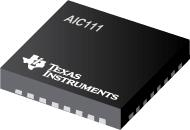 Codec IC chips are used to encode and decode or compress and decompress various types of data, particularly when bulk storage is required. Codec is an abbreviation for coder-decoder or compressor/decompressor. The input voltage of 1.42 volt is used for codec chips.
The input signal in the form of assembly language is interpreted by the programmable logic of the codec chips in high-level language. The high-level language is understandable by the central processing unit of the codec IC chips and then it performs operations based on the input signals received by the central processing unit.
Types of Chips
There are many different types of codec chips. Examples include a WM8731 audio codec chip, ADV202 video codec chip, MP3 codec chip, and a WMV codec chip. A WM8731 audio codec chip is designed for use in portable digital audio sets. A WM8731 audio chip works on a software algorithm that requires less power and uses high quality audio codec integration.
A user can download audio codec logic and implement it in the circuit. An ADV202 video codec chip is used in applications that require high-quality and image compressed video. MP3 codec chips have largely been replaced by MP4.
An MP4 codec chip or video codec are designed specifically for use in a high-level of integration and performance in speech and audio applications. A WMV codec chip is abbreviated for Windows Media and is an audio codec chip. A WMV codec chip can be used interchangeably either as an audio or video chip. Other codec chips are also commonly available.
How do Codec ICs Work?
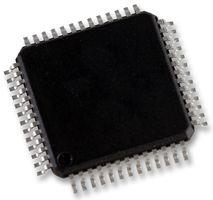 There are several ways in which codec chips function. Codec IC chips work by receiving signals in the form of assembly language and then interpreting it into high-level language. The operations are then performed on the basis of received input signals.
A WM8731 audio codec chip requires resistance power ranging from 50mW on16 Ohms and supply voltage of range from 1.42 to 3.6 volts. A WM8731 audio codec chip also requires a sampling frequency ranging from 8 to 96 kHz. An ADV202 video codec chip operates in the temperature range of -40 to 85 ºC and requires a 2.5 to 3.3 volt of power supply.
An MP4 codec chip is probably the most commonly used video codec, though this is migrating to HEVC, short for High Efficiency Video Coding. A WMV codec chip requires an operating voltage of 2.5 volts and power of 40mW. Codec chips are designed and manufactured to meet most industry specifications.
How are Codec ICs Used?
Codec IC chips are used in many applications. Codec IC chips are used in personal computers and home theaters. In addition, codec chips are also used in the movie industry, consumer audio sets, and automobiles. The H.323 standard standardized the transfer of conferencing data on a network. Codec IC chips should adhere to the H.323 standard.
Codec ICs FAQs
Can you explain the role of Codec ICs in signal processing for various engineering systems?
Codec ICs play a crucial role in signal processing for various engineering systems. Here is an overview of their roles.
Codec ICs, which stands for either enCOde/DECode or COmpress/DECompress, are integral in converting analog signals to digital form and vice versa. This conversion is essential for processing, storing, and transmitting audio and video data efficiently.
Codec ICs are widely used in audio and video applications. For instance, audio codecs are employed in personal computers, home theaters, and consumer audio sets to manage audio signals. Video codecs, like the ADV202, are used in applications requiring high-quality compressed video.
In communication systems, codec ICs are used to compress and decompress data, making it easier to transmit over networks. This is particularly important in systems like GSM for mobile communications, where efficient data handling is crucial.
Codec ICs are designed to enhance audio quality by incorporating various filters and controls. These features help in reducing distortion and maintaining sound clarity, which is vital for applications in mobile devices and other audio systems.
A key role of codec ICs is to reduce the size of data for storage and transmission. This involves compressing audio or video files and decompressing them for playback, ensuring that sound quality is maintained while minimizing computational complexity.
How do Codec ICs enhance audio quality in mobile devices?
Codec ICs enhance audio quality in mobile devices through several mechanisms, as outlined below:
Each block within the audio codec, from microphone inputs to headphone outputs, is designed to deliver high audio quality while consuming minimal power. This ensures that the sound is clear and free from distortion, which is critical for mobile devices where battery life and performance are key considerations.
Codec ICs incorporate various filters and controls that enhance sound quality. These features help in reducing distortion and maintaining sound clarity, which is vital for applications in mobile devices and other audio systems.
Codec ICs compress audio data to reduce its size for storage and transmission, and decompress it for playback. This process maintains sound quality while minimizing computational complexity, for efficient performance in mobile devices.
How do Codec ICs manage power consumption in mobile devices?
Each block within the audio codec, from microphone inputs to headphone outputs, is designed to deliver high audio quality while consuming minimal power. This ensures that the sound is clear and free from distortion.
What are the challenges in designing Codec ICs for mobile devices?
Designing Codec ICs for mobile devices presents several challenges.
Codec ICs must be designed to deliver high audio quality while consuming minimal power; important devices where battery life is a significant concern. Each block within the audio codec, from microphone inputs to headphone outputs, is optimized for low power consumption to ensure efficient performance without compromising sound quality.
Efficient data compression algorithms present the most difficult challenge in reducing the size of audio data for storage, transmission, and decompression for playback. This process must maintain sound quality while minimizing computational complexity, which is vital for the efficient operation of mobile devices.
Codec ICs need to be highly integrated to fit within the compact form factors of mobile devices. They must also deliver high performance in terms of audio quality and processing speed, which requires careful design and optimization of the IC architecture.
Codec ICs must adhere to industry standards, such as H.323 standard for conferencing data transfer, to ensure compatibility and interoperability with other devices and systems.
How do Codec ICs maintain sound quality during data compression?
Codec ICs use sophisticated algorithms to compress audio data, which reduce the size of the data for storage and transmission. These algorithms are designed to minimize the loss of audio quality during the compression process, ensuring that the sound remains clear and accurate when decompressed for playback.
By optimizing the compression and decompression processes, codec ICs maintain sound quality while minimizing computational complexity.
Codec ICs incorporate various filters and controls that enhance sound quality. These features help in reducing distortion and maintaining sound clarity, in mobile devices and other audio systems.
What are the specific algorithms used in codec ICs for audio compression?
Codec ICs use a variety of algorithms for audio compression, each designed to efficiently reduce data size while maintaining sound quality. Here are some specific algorithms and techniques used in codec ICs for audio compression:
Low Complexity Subband Coding (LC3 and LC3plus)
LC3 and LC3plus are frame-based codecs that analyze audio in small sections (7.5 or 10 msec, with 2.5 msec available for LC3plus). They use the Low Delay Modified Discrete Cosine Transform (LC-MDCT) to convert the signal into a time-frequency representation. This is followed by noise shaping tools like the Spectral Noise Shaper (SNS) and the Temporal Noise Shaping Module (TNS) to minimize perceived quantization noise and reduce pre-echo artifacts.
MPEG Audio
MPEG audio compression includes four layers: I, II, III, and MP4. Layer I is a simplified version of MUSICAM, providing low compression rates at low cost. Layer II employs full MUSICAM technology for higher compression rates, used in digital audio broadcasting (DAB) and digital television (DTV). Layer III, commonly known as MP3, combines features from both MUSICAM and ASPEC for extremely high compression rates, suitable for music downloads and telecommunications. MPEG-4 and other MPEG derivatives have expanded the world of audio and video codecs providing expanded offerings for a variety of commercial and consumer products. The market has also seen new players and codecs, which are open sourced and others that require a licensing fee.
Adaptive Differential Pulse Code Modulation (ADPCM)
ADPCM is used to compress audio data by encoding differences between successive samples. It is implemented in various digital signal processors and microcontrollers, such as the TMS320 DSP family from Texas Instruments and the ADSP-2100 family from Analog Devices. The IMA Reference Algorithm simplifies the mathematical complexity of ITU G.721 ADPCM by using table lookups. This is used mostly in microcontrollers and games. It’s simple but can be lossy. It is known for fast compression of voice content.
ITU-T G.700 Series Recommendations
These include several coding algorithms like G.723.1, G.729A, G.711, G.728, and G.729B, which are used in IP telephony for voice codec rates ranging from 5.3 to 13 kbit/s. These algorithms are designed to ensure interoperability and efficient data compression in telecommunication systems.
How do codec ICs differ in their approach to video versus audio compression?
Codec ICs differ due to the distinct nature of audio and video data and the specific requirements for processing each type. Here are some key differences:
Audio Compression: Audio data is generally less complex and smaller in size compared to video data. Audio codecs focus on maintaining sound quality while reducing data size through techniques like noise shaping and spectral quantization.
Video Compression: Video data is more complex and larger in size, requiring more sophisticated algorithms to efficiently compress and decompress data. Video codecs often use techniques like motion estimation and compensation to handle the temporal and spatial redundancy in video frames.
Audio Codecs: Algorithms such as LC3, LC3plus, and MPEG Audio Layers are used for audio compression. These algorithms focus on reducing the size of audio files while preserving sound quality, often using psychoacoustic models to minimize perceived audio loss.
Video Codecs: Video codecs like the ADV202 are designed for high-quality image compression. They often employ complex algorithms to manage the higher data rates and resolutions associated with video content.
Audio Codecs: Audio processing typically requires less computational power and can be optimized for low power consumption, which is crucial for mobile devices.
Video Codecs: Video processing demands higher computational resources due to the need to handle large amounts of data and complex algorithms, which can impact power consumption and processing speed.
Codec ICs Media Gallery
References
GlobalSpec—Get Streaming!: Quick Steps to Delivering Audio and Video Online
GlobalSpec—Applied Speech and Audio Processing: With MATLAB Examples
GlobalSpec—Newnes Guide to Television and Video Technology
GlobalSpec—Next Generation SONET/SDH
Image Credits: Texas Instruments High-Performance Analog | 1-Source Electronic Components